Supramolecular Cyclodextrin-Enhanced Spectrofluorimetric Determination of Serotonin in Human Urine Mechanisti...
A sensitive and robust spectrofluorimetric method for the determination of serotonin (5-HT) in human urin...
View More
8th Edition of Advanced Chemistry World Congress
 Dear Colleagues and Fellow Researchers,
It is a great pleasure to extend a warm welcome to the 8th Advanced Chemistry World Congress, to be held on March 18–19, 2027, in the beautiful city of Vienna, Austria Read more
Sincerely,
Safwan Omari,
Lewis University, USA
------------------------------------------------------------------------------------------------------------------
 Dear Colleagues,
I am pleased to invite you to participate in the 8th Advanced Chemistry World Congress, to be held on March 18–19, 2027, in Vienna, Austria.
I consider its multidisciplinary nature one of its greatest strengths. It offers a valuable Read more
Sincerely,
Graciela M. L. Ruiz-Aguilar
University of Guanajuato, Mexico
--------------------------------------------------------------------------------------------------------------------
 Dear colleagues!
I sincerely invite you to participate in the upcoming 8th World Congress on Advanced Chemistry! I had the pleasure of being a participant in the 7th World Congress on Advanced Chemistry, which took place in Rome on 26th and Read more
With best wishes,
Oleksandr Radchenko,
Frantsevich Institute for problems of material Science NAS of Ukraine, Ukraine
------------------------------------------------------------------------------------------------------------
 Supporting Journal:
Extended manuscripts from conference participants will be published in the Scopus Indexed--Journal of Experimental and Theoretical NANOTECHNOLOGY with a nominal publication fee.
































Wayne State University School of Medicine,
USA
University of Hawai,
USA
Ascension St Joseph Hospital, Chicago,
USA
Lewis University,
USA
North Carolina Agricultural and Technical State University,
USA
Suarez Auburn University,
USA
Federal University of Campina Grande,
Brazil
The University of Tokyo,
Japan




Advanced Semiconductors

Why the Topic Matters Now:
In 2026, we have reached the physical limits of traditional silicon. Advanced Semiconductors matter now because they are the "oxygen" for two massive global shifts:
>The AI Infrastructure Boom: Generative AI and "Physical AI" (robotics) require specialized chips (GPUs, NPUs) that can handle massive data throughput. Silicon alone can no longer keep up with the heat and speed requirements.
>The Power Paradox: Data centers are consuming so much electricity that they are straining national grids. We need new semiconductor materials that operate with near-zero heat loss to make AI sustainable.
>Beyond the "Moore's Law" Wall: As transistors shrink toward the size of a single atom, classical physics breaks down. Advanced chemistry is the only way to navigate the quantum effects that take over at this scale.
Global Urgency & Research Gaps:
The industry is currently facing a "structural divergence" where demand is outstripping scientific readiness:
>The Sustainability Gap: Semiconductor manufacturing is water and energy-intensive. There is an urgent global push for "Circular Semiconductor Chemistry"—finding ways to recycle rare earth elements and use non-toxic, bio-based precursors in fabrication.
>Thermal Management: We can build faster chips, but we can't cool them efficiently. Research is lagging in the development of high-thermal-conductivity substrates (like synthetic diamond or boron arsenide) that can pull heat away from AI processors instantly.
>Supply Chain Resilience: The "Zero-Sum" competition for wafer capacity has led to a research gap in flexible, low-cost alternatives to high-end silicon, which are needed for "Edge AI" in everyday consumer items.
Real-World Impact:
These chemical breakthroughs are already changing daily life in 2026:
>Medical Wearables: Ultra-thin, flexible semiconductors are powering "Smart Rings" and "Skin-Patches" that monitor blood chemistry and heart health in real-time with zero latency.
>Tandem Solar Cells: By layering Perovskite (an advanced semiconductor) over traditional Silicon, solar panels have reached record efficiencies of over 34%, making solar viable for electric vehicles and small rooftops.
>Autonomous Mobility: New Gallium Nitride (GaN) and Silicon Carbide (SiC) semiconductors allow EVs to charge 50% faster and drive 20% further by reducing energy loss during power conversion.
Challenges Scientists are Solving:
Advanced Chemistry is tackling the "Atomic Frontier" of hardware:
>Deterministic Doping: At the nanoscale, even one misplaced "impurity" atom can ruin a chip. Scientists are perfecting "Single-Ion Implantation" to place individual atoms with mathematical precision.
>Exciton Control: In 2D materials like Tungsten Disulfide, researchers are trying to manage excitons (electron-hole pairs) to create "light-based" computers that are 1,000x faster than electronic ones.
>The Sim-to-Real Gap: Just like in catalysis, AI-designed materials often fail in the "messy" environment of a manufacturing fab. Closing this gap is the primary focus of 2026 R&D.
Emerging Technologies & Methods:
The 2026 "Advanced Chemistry" toolkit for semiconductors includes:
>Heterogeneous Integration (Chiplets): This approach "mixes and matches" specialized chiplets made from different materials (e.g., Silicon + GaN) on one package. It maximizes performance by using the best material for each specific function.
>2D Van der Waals Solids: Chips are built layer-by-layer using materials only one atom thick (like Graphene). These layers are held together by weak molecular forces, enabling ultra-thin, flexible, and high-speed electronics.
>Mie-Void Heterostructures: Scientists carve nanoscopic "air traps" into crystals to manipulate light at the atomic scale. This is a critical step for photonic computing, which uses light instead of electricity.
Market Analysis:
The global advanced semiconductor market is estimated at approximately USD 65.2 billion in 2025 and is projected to reach around USD 115.8 billion by 2030. This represents a Compound Annual Growth Rate (CAGR) of approximately 12.1% for the 2025–2030 period. Key drivers include the massive expansion of Artificial Intelligence (AI) data centers, the transition to Electric Vehicles (EVs) requiring silicon carbide power modules, and the global push for sovereign chip manufacturing capabilities.
Key Market Players:
NVIDIA Corporation (U.S.) / Taiwan Semiconductor Manufacturing Co. (TSMC) (Taiwan)/ Intel Corporation (U.S.) / Samsung Electronics (South Korea) / ASML Holding N.V. (Netherlands) / Applied Materials, Inc. (U.S.) / Wolfspeed, Inc. (U.S.) / STMicroelectronics (Switzerland) / Infineon Technologies AG (Germany) / Advanced Micro Devices, Inc. (AMD) (U.S.) / Broadcom Inc. (U.S.) / Arm Holdings (UK) / Tokyo Electron Ltd. (Japan) / Texas Instruments (U.S.)
Agricultural Chemistry

Why Agricultural Chemistry Matters Now:
In 2026, the global food system is at a breaking point due to the "triple threat" of soil degradation, chemical runoff, and climate instability. Agricultural chemistry is the bridge that converts biological waste into high-value chemical inputs, shifting farming from a high-emission industry to a carbon-negative resource. As global populations approach 8.3 billion, we can no longer afford to "dispose" of nutrients; we must chemically recover and recirculate them to ensure long-term food security.
Global Urgency & Research Gaps:
The urgency is driven by a 70% global freshwater withdrawal rate and the rapid depletion of natural Phosphorus—a non-renewable element critical for plant life.
>Research Gap: There is a massive "Phygital Divide"—a lack of integration between chemical sensors in the field and AI-driven decision systems.
>The Nutrient Leak: Millions of tons of nitrogen and phosphorus leak into waterways annually. Scientists are urgently researching how to chemically "trap" these nutrients from wastewater and return them to the soil in a stable, slow-release form.
Real-World Impact:
Moving to circular agricultural chemistry has immediate, measurable benefits for both the environment and the economy:
>Soil Restoration: Using chemically engineered biochar and biogas slurry has helped restore soil organic carbon, reversing fertility loss that had reached 25% in some regions by 2025.
>Farmer Income: "Waste-to-Wealth" initiatives, such as India's GOBARdhan scheme, have turned cattle dung and crop residues into compressed biogas (CBG) and organic manure, creating new revenue streams for smallholder farmers.
>Water Security: Advanced chemical treatments are allowing for "More Crops Per Drop," using reclaimed wastewater for irrigation without the risk of pathogen or heavy metal contamination
Challenges Scientists are Solving:
Scientists are currently tackling the "12 Principles of Green Chemistry" within the farm gate:
>PFAS & Microplastics: Developing chemical filtration and microbial degradation methods to remove "forever chemicals" and plastics from organic fertilizers and sewage sludge.
>Abiotic Stress Memory: Using Epigenome Engineering to help plants "remember" past droughts or heatwaves through chemical signals, allowing them to adapt without genetic modification (Non-GMO).
>Controlled-Release Efficiency: Designing "smart" fertilizers that only release nutrients when triggered by specific chemical signals from plant roots, preventing waste and runoff.
Emerging Technologies & Methods:
The following technologies represent the "Circular Frontier" in 2026:
The 2026 Tech Suite: > * Engineered Biochar: Biomass waste is thermally treated and chemically "functionalized" to act as a sponge for nutrients and a permanent carbon sink.
>Phage Therapy for Crops: A chemical-biological hybrid approach using viruses to target specific crop pathogens, reducing the need for broad-spectrum toxic pesticides.
>Digital Twins & Agentic AI: Creating a digital chemical replica of a field to simulate nutrient flows and predict the exact chemical needs of a crop in real-time.
>Additive Manufacturing (3D Printing): Using bio-based resins derived from agricultural waste to 3D print irrigation parts and farming tools on-demand, reducing the supply chain carbon footprint.
Market Analysis:The worldwide agrochemicals market is projected to continue its growth trajectory, with some reports indicating a Compound Annual Growth Rate (CAGR) of around 3.8% for the forecast period between 2025 and 2032, reaching an estimated USD 482.48 billion by 2032. Other projections show a CAGR of 4.1% reaching $328.0 billion by 2027. This growth is primarily driven by the increasing global population and the subsequent demand for higher food production from limited arable land.
Key Market Players: Bayer Crop Science - Agriculture (Germany) / Syngenta Group (Switzerland) / Corteva Agriscience (US) / Nutrien Ltd (US) / The Dow Chemical Company (US) / Helena Agri-Enterprises, LLC (US) / Sumitomo Chemical Co., Ltd (Japan) / Arysta LifeSciences Corporation (now part of UPL (Japan) / ADAMA Ltd. (Israel) / Yara International ASA (Norway) / SABIC (Saudi Arabia) / SQM S.A. (Chile) / Novozymes A/S (Denmark) / Lallemand Inc (Canada)
Biochemistry

Why Biochemistry Matters Now (2026):
We have entered the era of Programmable Biology. The ability to treat biological systems like software—where DNA is the code and proteins are the hardware—has made biochemistry the primary engine for solving global crises.
>Post-Genomic Precision: We have moved beyond just "mapping" genes to actively "editing" them with surgical precision to cure inherited diseases.
>The Proteome Revolution: While the genome is the blueprint, the proteome (the entire set of proteins) is where the action happens. Modern biochemistry focuses on dynamic protein folding and misfolding, which is the root of diseases like
Alzheimer’s and Parkinson’s.
Global Urgency & Research Gaps:
Despite rapid progress, significant "blind spots" remain in our biochemical map:
>The "Undruggable" Proteome: Approximately 85% of human proteins are currently considered "undruggable" because they lack obvious binding pockets for traditional small-molecule drugs.
>Equity Gaps: A 2026 WHO report highlights that over 80% of genomic and biochemical research is concentrated in high-income countries, leaving a massive gap in understanding the biochemical diversity of populations in the Global South.
>Communicable Diseases: While oncology (cancer) receives the lion's share of funding, biochemical research into emerging tropical diseases and antibiotic-resistant "superbugs" remains dangerously underfunded.
Real-World Impact:
Biochemistry has moved from the laboratory to the center of the global economy:
>Personalized Medicine: In 2026, clinicians use Multi-Omics (combining genomics, proteomics, and metabolomics) to prescribe drugs tailored to a patient’s specific enzyme activity levels, drastically reducing adverse drug reactions.
>Sustainable Manufacturing: "Green" biochemistry uses engineered enzymes to replace harsh industrial catalysts, allowing for the carbon-neutral production of plastics, fuels, and textiles.
>Agricultural Resilience: Biochemical interventions are being used to enhance RuBisCO (the enzyme responsible for carbon fixation in plants) to help crops thrive in the higher $CO_2$ and temperature environments of the mid-2020s.
Challenges Scientists are Solving:
Scientists are currently wrestling with three "Grand Challenges":
>The Delivery Problem: We can edit a gene in a dish, but delivering that biochemical "machinery" (like CRISPR) to the specific organ—without the immune system destroying it—is the ultimate hurdle.
>Protein Design from Scratch: Instead of using what nature provides, researchers are trying to solve De Novo Protein Design—creating entirely new proteins that don't exist in nature to capture carbon or neutralize toxins.
>Metabolic Engineering: Redesigning the metabolic pathways of bacteria to turn waste (like plastic or sewage) into high-value chemicals.
Emerging Technologies & Methods:
The "Biochemist’s Toolkit" has been transformed by two major shifts:
>AI-Native Biology: Tools like AlphaFold 3 and its successors have turned protein structure prediction into a "solved" problem, allowing scientists to simulate biochemical reactions in seconds that previously took years of "wet lab" work.
>Organ-on-a-Chip & NAMs: New Approach Methodologies (NAMs) use microfluidic chips lined with human cells to simulate human biochemistry, rapidly phasing out the need for animal testing in drug development.
>Cell-Free Protein Synthesis (CFPS): This allows for the production of complex proteins outside of a living cell, bypassing the "toxicity" limits of using live bacteria or yeast.
Market Analysis:
The global analytical laboratory instrument market is experiencing strong growth, with projections indicating significant expansion ahead. It's anticipated to reach approximately $82.5 billion by 2028, demonstrating a compound annual growth rate (CAGR) of about 6.3%. Looking further out, the market could potentially hit between $77 billion and $98 billion by the 2030-2034 period, with CAGRs generally expected to range from 5% to 7.8%. Some more optimistic forecasts even suggest the market might reach around $167.94 billion by 2029, driven by a 7.8% CAGR in the preceding years.
Key Market Players:
Roche Diagnostics GmbH (part of F. Hoffmann-La Roche Ltd.) (Germany) / F. Hoffmann-La Roche Ltd. (Switzerland) / Abbott Laboratories (US) / Siemens Healthineers AG (Germany) / Merck KGaA (Germany) / Bayer AG (Germany) / Johnson & Johnson (US) / Novartis AG (Switzerland) / Sanofi S.A. (France) / Koppert Biological Systems (Netherlands) / AbbVie Inc. (US)
AI in Catalysis

Why AI Catalysis Matters Now:
The year 2026 is often cited by chemists as the "tipping point" for digital chemistry.
>Speed vs. Crisis: Traditional catalyst discovery takes an average of 10–20 years. To meet 2030 climate goals, we need breakthroughs in months. AI provides this "digital speed."
>Inverse Design: Scientists no longer search for a catalyst and see what it does; they define a desired reaction outcome and use AI to reverse-engineer the exact atomic structure needed to achieve it.
>Energy Optimization: As energy prices fluctuate, the ability of AI to find catalysts that lower activation energy ($E_a$) by even a fraction of a percent can save industries billions of dollars and massive amounts of carbon.
Global Urgency & Research Gaps:
While AI has made massive leaps, there are significant gaps that the current 2026 research frontier is scrambling to fill:
>The "Negative Data" Problem: AI models are often "biased" toward success because scientists rarely publish failed experiments. There is a global push for Open Science initiatives to provide AI with "failed" data, which is essential for accurate learning.
>Transition Metal Complexity: While organic molecules are easier to model, the d-orbitals of transition metals (iron, nickel, platinum) are extremely complex. Simulating their electronic behavior accurately remains a massive computational hurdle.
>Sim-to-Real Gap: Many catalysts that look perfect in an AI simulation fail when exposed to the "messy" conditions of a high-pressure industrial reactor—a phenomenon known as the "Valley of Death" in catalyst scaling.
Real-World Impact:
AI-driven catalysis is currently solving some of the world's most stubborn problems:
>Green Hydrogen: AI has recently validated MoFeNC (Molybdenum-Iron-Nitrogen-Carbon) catalysts. These offer a stable, dirt-cheap alternative to the platinum and iridium previously required for water splitting.
>Plastic Upcycling: Researchers have used reinforcement learning to develop catalysts achieving 95% conversion of polyethylene waste into high-value lubricants in under 4 hours—a process that used to take days or produce toxic byproducts.
>Pharmaceutical Synthesis: LLM-based "Catalysis Agents" are now used to "edit" the structure of finished drug molecules directly, bypassing dozens of traditional synthetic steps.
Challenges Scientists are Solving:
The "Three Pillars of Resistance" currently being tackled by advanced chemistry teams are:
>Selectivity: Ensuring a catalyst produces only the desired molecule. AI is being used to map out competing reaction pathways to "block" the formation of toxic side-products.
>Longevity: Most lab catalysts die after 10 hours. AI-driven Self-Driving Labs (SDLs) are now running 500-hour stress tests autonomously to predict catalyst degradation.
>Explainability (XAI): Chemists are moving away from "Black Box" AI. New tools allow scientists to see why an AI chose a specific dopant, allowing them to apply that chemical logic to other families of materials.
Emerging Technologies & Methods:
The following methods are the current "Gold Standard" in advanced catalytic research:
>Agentic Catalysis: This uses "crews" of AI agents (like Catal-GPT) that act as digital researchers—one mines the latest literature, one predicts reaction yields, and another controls the lab robots.
>Single-Atom Catalysis (SAC): AI is used to stabilize a single metal atom on a support surface. This maximizes efficiency and ensures that every single atom of an expensive metal (like Gold or Palladium) is actively working.
>Graph Neural Networks (GNNs): Unlike older AI, GNNs "see" chemical structures as 3D geometric graphs rather than flat text. This allows for much more accurate predictions of how a molecule "docks" onto a catalyst surface.
>Active Learning Loops: A "closed-loop" system where the AI runs an experiment via robotics, learns from the result, and immediately designs the next, better experiment without human intervention.
>Pareto-Front Mapping: Mathematical models used to find the perfect "sweet spot" between a catalyst's activity (how fast it works), selectivity (how clean it is), and cost.
Market Analysis:
The AI in Chemicals and Catalysis market is valued at approximately USD 2.29 billion in 2025 and is projected to reach roughly USD 10.5 billion by 2030 (on its way to a staggering USD 28 billion by 2034). This represents a Compound Annual Growth Rate (CAGR) of approximately 32% for the forecast period. Key drivers include the global mandate for Net-Zero emissions, the rise of "Agentic" AI systems, and the shift toward high-entropy alloys in green energy applications.
Key Market Players:
Microsoft (Azure Quantum / AI for Science) (U.S.) / NVIDIA Corporation (BioNeMo/Scientific AI) (U.S.) / SandboxAQ (U.S.) / BASF SE (Germany) / Schrödinger, Inc. (U.S.) / Johnson Matthey (UK) / Honeywell (Connected Plant / AI Operations) (U.S.) / XtalPi Inc. (China) / Evonik Industries (Germany) / DeepMind (Google/Alphabet) (UK/U.S.) / Citrine Informatics (U.S.) / Kebotix (U.S.) / Siemens Energy (Germany) / Dunia Innovations (Germany)
Chemical Engineering

Why Chemical Engineering Matters Now:
As of 2026, the global chemical industry is undergoing a "Dual Transition": Digitalization and Sustainability.
>The Decarbonization Mandate: Industry is responsible for roughly 30% of global greenhouse gas emissions. Chemical engineers are the primary architects of the "Net Zero" transition, redesigning processes that have remained unchanged since the Industrial Revolution.
>Energy Security: With geopolitical volatility affecting traditional fuels, chemical engineering provides the technology for green hydrogen production and next-generation battery chemistries.
>Resource Scarcity: As high-grade mineral ores and freshwater supplies dwindle, we rely on advanced chemical separation techniques to "mine" waste and desalinate water efficiently.
Global Urgency & Research Gaps:
Despite rapid progress, several "bottlenecks" define current high-level research:
>The "Valley of Death" in Scaling: Many breakthrough lab-scale green chemistries fail when transitioned to industrial volumes. Research is urgently focused on Process Intensification—shrinking massive factories into modular, high-efficiency units.
>Plastic Circularity Gap: While mechanical recycling exists, we lack efficient Chemical Upcycling methods that can break down complex, contaminated mixed plastics back into high-quality virgin monomers.
>Sustainable Feedstocks: Moving the industry away from petroleum-based feedstocks toward biomass or CO₂-captured carbon remains a massive economic and technical hurdle.
Real-World Impact:
The work of modern chemical engineers in 2026 directly affects every facet of life:
>Healthcare: Development of Microfluidic "Labs-on-a-Chip" for rapid disease diagnosis and the continuous manufacturing of personalized mRNA vaccines.
>Environment: Large-scale Direct Air Capture (DAC) plants that literally "scrub" CO₂ from the atmosphere to be stored underground or used in carbon-neutral aviation fuel.
>Agriculture: Engineering "Smart Fertilizers" that release nutrients only when needed, preventing the massive nitrogen runoff that creates "dead zones" in our oceans.
Challenges Scientists are Solving:
>Catalyst Precision: Moving from "trial and error" to Single-Atom Catalysis, where every single metal atom is active, drastically reducing the need for expensive precious metals like Platinum or Iridium.
>Electrification of Heat: Most industrial heat comes from burning fossil fuels. Scientists are developing Electrochemical Reactors that use renewable electricity instead of fire to drive chemical reactions.
>Waste-to-X: Turning "problem waste" (sewage sludge, food waste, carbon emissions) into "X"—where X is fuel, plastic, or protein.
Emerging Technologies & Methods:
In 2026, the "toolkit" of a Chemical Engineer has expanded far beyond the slide rule:
>ChemTech 4.0 & AI: Using Digital Twins—virtual replicas of chemical plants—to predict failures and optimize energy use in real-time. AI models now predict molecular structures and reaction yields in seconds rather than months of lab work.
>Circular Chemistry: A shift from "linear" (take-make-dispose) to "closed-loop" systems where the waste of one process is the raw material for the next.
>Synthetic Biology: Using engineered microbes as "living factories" to ferment chemicals that were previously only possible through high-pressure, high-heat petroleum refining.
>Advanced Separations: Using graphene-based membranes and "Ionic Liquids" to separate gases and liquids with 90% less energy than traditional distillation.
Market Analysis:
The Chemical Engineering market is set to reach $4304.71 billion in 2025 (4% CAGR). From 2025 to 2032, growth will be driven by the widespread integration of AI in chemical processes, optimizing efficiency and material discovery. The massive global energy transition (projected at $6.03 trillion by 2032) will heavily rely on chemical engineers for renewables, energy storage, carbon capture, and sustainable fuels. The profession will also focus on building resilient supply chains for critical materials, adapting to geopolitical shifts, and navigating evolving labor markets as AI creates new roles in automation and specialized fields like advanced materials and pharmaceuticals.
Key Market Players:
BASF SE (Germany) / Dow Inc. (USA) / Sinopec (China) / INEOS Group Limited (UK) / LyondellBasell Industries N.V. (Netherlands/USA) / LG Chem (South Korea) / Mitsubishi Chemical Group (Japan) / Evonik Industries AG (Germany) / ExxonMobil (Chemical Branch) (USA) / Shell (Netherlands/UK) / PetroChina (China) / Air Liquide (France) / Air Products and Chemicals, Inc. (USA)
Energy and Electrochemistry

Why it Matters Now:
The global shift toward Green Hydrogen and Electric Vehicles (EVs) requires new materials that are more efficient and cheaper than current rare-earth metals (like Platinum or Iridium).
>The Search Space: There are billions of possible combinations for battery electrolytes and fuel cell catalysts. Manual testing would take centuries; digital automation does it in days.
>Electrification of Industry: We are moving away from heat-based chemical reactions to electrically driven ones, requiring a massive redesign of chemical processes using digital tools.
Global Urgency & Research Gaps:
>The "Iridium Bottleneck": High-performance electrolyzers for hydrogen production rely on Iridium, one of the rarest elements on Earth. Scientists are using AI to find non-precious metal alternatives urgently.
>Real-Time Interface Gaps: We still don't fully understand what happens at the exact point where an electrode meets a liquid (the Double Layer). Digital models are trying to map this "black box" to prevent battery degradation.
Real-World Impact:
>Fast-Charging Batteries: In 2026, autonomous labs (like the Clio platform) have identified electrolyte recipes that allow EVs to charge to 80% in under 10 minutes while maintaining a long lifespan.
>Carbon-to-Fuel: Automated electrochemical cells are being used to capture $CO_2$ and instantly convert it into e-fuels (like methanol or ethylene), essentially turning pollution into a power source.
Challenges Scientists are Solving:
>Signal Drift: Electrochemical sensors are sensitive; they "drift" or get dirty (fouling) over time. Scientists are building self-calibrating robots that can clean and reset sensors without human help.
>Multi-Objective Optimization: A battery needs to be high-capacity, safe, and cheap. AI is solving these conflicting goals simultaneously using Bayesian Optimization.
Emerging Tech in Electrochemistry:
>Scanning Flow Cells (SFC): A robotic "stylus" that performs lightning-fast electrochemical tests. It screens 400+ catalysts daily, outperforming humans by 80x.
>Physics-Informed ML (PIML): AI trained on the laws of physics (like the Nernst Equation). It ensures AI-designed materials are scientifically possible, not just theoretical.
>Self-Driving Labs (SDLs): Fully autonomous "closed-loop" systems. The AI plans, the robot builds, and the system learns from results—compressing 5 years of research into 50 hours.
>e-Sensing & Data Lakes: Global databases of experimental "failures." This allows scientists worldwide to learn from each other's mistakes in real-time, ending redundant research.
Market Analysis:
The electrochemical sensor market is estimated near USD 12.90 billion in 2025 and is projected to reach around USD 19.2 billion by 2030. This represents a Compound Annual Growth Rate (CAGR) of approximately 8.3% for the 2025-2030 period. Key drivers include MEMS technology, miniaturization, solid-state sensor development, and strong demand from healthcare, environmental monitoring, and industry.
Key Market Players:
Thermo Fisher Scientific Inc. (U.S.) / Agilent Technologies, Inc. (U.S.) / Metrohm AG (Switzerland) / AMETEK, Inc. (U.S.) / Bio-Logic Science Instruments GmbH (Germany) / METTLER TOLEDO (Switzerland) / AMETEK, Inc. (U.S.) / Bio-Logic Science Instruments GmbH (Germany) / Hanna Instruments, Inc. (U.S.) / HORIBA, Ltd. (Japan) / Xylem (U.S.) / Yokogawa Electric Corporation (Japan) / Gamry Instruments (U.S.) / Scribner Associates Incorporated (U.S.)
Environmental Chemistry

Why the Topic Matters Now:
We have entered the Anthropocene, an epoch where human activity is the dominant influence on climate and the environment. Environmental chemistry provides the quantitative tools to track these changes.
>Molecular Feedback Loops: Understanding how rising temperatures affect the solubility of $CO_2$ in oceans or the release of methane from permafrost is critical for climate modeling.
>Chemical Complexity: The sheer volume of synthetic chemicals (over 350,000 currently registered) requires sophisticated chemical analysis to understand their persistence and bioaccumulation.
Global Urgency and Research Gaps:
The "tipping points" of Earth’s systems are approaching faster than previously predicted. Current research is racing to fill several critical gaps:
>The "Cocktail Effect": While we understand how individual toxins work, we lack data on the synergistic toxicity of multiple chemicals reacting together in the wild.
>Deep Ocean & Stratospheric Chemistry: Our understanding of chemical cycling in the deep sea and the upper atmosphere remains fragmented compared to terrestrial chemistry.
>Microplastic Degradation: We need to identify the exact chemical pathways through which polymers break down into nanoplastics and enter the food chain.
Real-World Impact:
Environmental chemistry translates directly into public health and economic stability:
>Clean Water Access: Advancements in Advanced Oxidation Processes (AOPs) allow for the removal of pharmaceuticals and endocrine disruptors from wastewater.
>Atmospheric Health: Chemistry was the hero of the Montreal Protocol, identifying CFCs as the culprits of ozone depletion and facilitating the transition to safer refrigerants.
>Food Security: Soil chemistry determines nutrient bioavailability; managing the nitrogen cycle is essential to prevent massive "dead zones" in our oceans caused by fertilizer runoff.
Challenges Scientists Are Solving:
>PFAS "Forever Chemicals": Scientists are struggling to find energy-efficient ways to break the incredibly strong Carbon-Fluorine (C-F) bond, which makes these chemicals virtually indestructible in nature.
>Carbon Sequestration: Moving beyond just "reducing emissions" to active Direct Air Capture (DAC)—using chemical sorbents to pull $CO_2$ out of the ambient air.
>Selective Sensing: Developing sensors that can detect specific heavy metal ions (like Pb2+or Hg2+) at parts-per-trillion levels in real-time.
Emerging Technologies & Methods:
The field is moving toward high-resolution, high-speed data collection:
>Green Chemistry (Sustainable Synthesis): Designing chemical processes that reduce or eliminate the use and generation of hazardous substances from the start.
>Metabolomics & High-Res Mass Spectrometry (HRMS): Using "non-target analysis" to identify unknown pollutants in environmental samples without knowing what to look for beforehand.
>Bioremediation via Synthetic Biology: Engineering bacteria with specific enzymes designed to "eat" plastic or neutralize radioactive waste.
>Machine Learning (ML): Using AI to predict the environmental half-life of new molecules before they are even manufactured.
Market Analysis:
The global environmental testing market is experiencing significant growth, with projections indicating a rise to approximately$30.46 billion by 2034. This expansion is fueled by increasing environmental awareness, more stringent government regulations globally, and a growing emphasis on sustainable business practices.
Key Market Players:
SGS SA (Switzerland) / Bureau Veritas (France) / Eurofins Scientific (Luxembourg) / Intertek Group PLC (UK) / TÜV SÜD (Germany) / ALS Limited (Australia) / Mérieux NutriSciences Corporation (US/France) / Pace Analytical (US) / Element Materials Technology (UK) / Montrose Environmental Group, Inc. (US) / Danaher Corporation (US) / Agilent Technologies, Inc. (US) / Shimadzu Corporation (Japan) / Waters Corporation (US) / PerkinElmer, Inc. (US) / Bruker Corporation (US)
Food Chemistry

Why Food Chemistry Matters Now:
Food chemistry has evolved from basic nutritional labeling to an advanced, multi-disciplinary science. It matters now more than ever due to a perfect storm of global shifts:
>The Alternative Protein Boom: The transition away from animal-based diets toward plant-based, cellular, and molecular agriculture requires deep chemical optimization. Replicating the exact texture, mouthfeel, and cooking chemistry (like the Maillard reaction) of real meat or dairy using plant proteins is an incredibly complex molecular puzzle.
>The "Food as Medicine" Shift: Consumer and clinical focuses have shifted toward chronic disease prevention. Food chemists are actively designing functional foods—biofortified or synthetically enhanced foods that deliver specific metabolic, gut-health, or cognitive benefits.
>Global Supply Chain Complexities: Food ingredients are shipped globally and processed multiple times. Understanding how physical interactions, transit times, and temperature fluctuations alter chemical stability and create toxic byproducts is vital for consumer safety.
Global Urgency & Research Gaps:
With the global population projected to reach nearly 10 billion by 2050, the current food system is unsustainable. Researchers are racing to fill massive gaps in scientific knowledge:
>The Toxicity of Novel Additives & Nanoparticles: As nanotechnology introduces nanoparticles to stabilize food emulsions or improve packaging, there is a severe lag in understanding how these materials interact with human cellular chemistry over long periods.
>Incomplete "Foodomics" Data: While we understand macronutrients (fats, proteins, carbs), thousands of micro-metabolites and bioactive compounds within our food remain unmapped. We lack the chemical profiles to know exactly how multi-ingredient processed foods interact at a systemic biological level.
>Under-researched Crop Chemistry: Historically, agricultural chemistry focused heavily on carbohydrate-rich cash crops (corn, wheat, rice). There is an urgent need to chemically profile and exploit hardy, climate-resilient, biodiverse crops (like indigenous grains and microalgae) to ensure nutritional security.
Real-World Impact:
Advanced food chemistry directly alters human health, economics, and law:
>Combating Food Fraud: Adulteration of high-value items (like substituting olive oil with cheaper oils, or mislabeling fish species and honey) is a multi-billion-dollar criminal enterprise. Food chemists protect global trade and consumer safety by creating chemical "fingerprints" to verify authenticity.
>Mitigating Process-Induced Toxins: When certain foods are cooked at high temperatures, toxic carcinogens like acrylamide (in starchy foods) or heterocyclic amines (in grilled meats) are formed. Food chemists design formulation tweaks (like utilizing specific enzymes) to block these chemical pathways before the food reaches shelves.
>Eradicating Food Waste: Roughly one-third of all food produced is lost or wasted. Chemical interventions—such as creating edible antioxidant coatings that prevent enzymatic browning and lipid oxidation—directly extend shelf life and prevent thousands of tons of waste.
Challenges Scientists Are Trying to Solve:
Advanced researchers are currently tackling several high-stakes molecular hurdles:
>The Texturization Challenge: Plant proteins behave differently than animal proteins. Plant proteins tend to clump or fold into spherical structures rather than forming the long, fibrous strands found in animal muscle tissue. Scientists are trying to unravel the precise cross-linking and denaturation chemistry required to make plant matter mimic meat.
>Off-Flavor Masking: Many nutrient-dense alternative ingredients (like pea protein or microalgae) carry potent "earthy," "beany," or bitter volatile compounds. Chemists must figure out how to chemically bind or mask these compounds without adding unhealthy synthetic additives.
>Bioavailability Optimization: It isn't enough for a food to contain a vitamin or antioxidant; the human body must be able to absorb it. Scientists are trying to engineer stable lipid-based nano-carriers or micelles that can shield sensitive micronutrients through the acidic environment of the stomach, ensuring they are safely released in the intestine.
Emerging Technologies & Methods:
To solve these issues, the laboratory toolkit has shifted away from traditional wet chemistry toward highly automated, analytical "big data" methods:
Advanced Analytical Methods
>Foodomics: The integration of Metabolomics and Proteomics. Chemists use high-resolution LC-MS/MS (Liquid Chromatography-Tandem Mass Spectrometry) and NMR (Nuclear Magnetic Resonance) spectroscopy to comprehensively map the entire molecular phenotype of a food item.
>Non-Targeted Fingerprinting: Instead of looking for a specific contaminant, chemists use Fourier Transform Ion Cyclotron Mass Spectrometry (FT-ICR-MS) to compile a comprehensive chemical spectrum of a sample. If even one peak deviates from an authentic sample, fraud or contamination is instantly flagged.
Emerging Processing Technologies:
>AI-Driven R&D: Machine learning algorithms are now deeply embedded in food chemistry. Instead of relying on years of trial-and-error benchwork, AI can simulate and predict how thousands of different proteins will interact, model sensory textures, and predict flavor stability in seconds.
>Shared Fermentation Platforms & Cellular Agriculture: Using precision fermentation, scientists engineer micro-organisms (like yeast or fungi) to act as biological factories, brewing identical dairy or egg proteins down to the exact molecular structure without involving an animal.
>Circular Upscaling (Waste-to-Value): Rather than discarding agricultural byproducts (like fruit peels or spent grains), chemists are using green extraction technologies (like supercritical fluid extraction) to isolate valuable biopolymers and antioxidants, turning waste into high-value functional ingredients.
Market Analysis:
The global integrated food ingredients market is poised for substantial growth, expanding from an estimated USD 81.74 billion in 2025 to roughly USD 117.24 billion by 2032, achieving a 5.4% compound annual growth rate (CAGR).A primary force behind this expansion is the flavor enhancer sector. This segment alone is anticipated to climb from USD 11.33 billion in 2025 to USD 14.66 billion by 2029, marking a 6.7% CAGR. This surge is largely driven by evolving consumer preferences for processed foods, convenience, and a growing inclination towards natural and "clean-label" ingredient solutions. The "Form" segment also remains a significant contributor, reflecting continuous innovation in how these ingredients are presented and utilized.
Key Market Players:
Cargill, Inc. (United States) / Archer Daniels Midland (ADM) (United States) / International Flavors & Fragrances (IFF) (United States) / Kerry Group Plc. (Ireland) / DuPont de Nemours, Inc. (United States) / Ingredion Incorporated (United States) / Tate & Lyle PLC (United Kingdom) / BASF SE (Germany) / Chr. Hansen Holding A/S (Denmark) / Corbion NV (Netherlands) / Novozymes A/S (Denmark) / Olam Food Ingredients (ofi) (Singapore) / CJ CheilJedang Corp (South Korea)
Forensic Chemistry

Why Forensic Chemistry Matters Now:
Forensic chemistry—the application of chemical principles, toxicological analysis, and analytical instrumentation to legal investigations—has entered a critically high-stakes era.
>The Synthetic Drug Epidemic: The rapid illicit synthesis of Novel Psychoactive Substances (NPS)—particularly fentanyl analogs, synthetic cannabinoids, and cathinones—presents a moving target for law enforcement. A minor tweak to a molecular structure can bypass existing drug laws and evade standard screening tests.
>Securing Legal Integrity: In an era of intense judicial scrutiny, traditional "visual" or qualitative forensics (like bite-mark analysis or subjective fiber matching) are being phased out due to human error. Courts now demand rigorous, quantitative chemical evidence that can definitively prove a molecular match with a known error margin.
>Environmental & Corporate Crime: Modern forensics is no longer just about blood splatter and drug busts. Forensic chemists are increasingly called upon to investigate environmental crimes, tracing illegal chemical dumping, industrial pollution sources, and corporate wildlife poaching back to their exact chemical origins.
Global Urgency & Research Gaps:
Despite its popularity in pop culture, forensic chemistry faces significant real-world scientific bottlenecks that researchers are urgently trying to resolve:
>The Isomer Differentiation Problem: Illicit drug chemists intentionally manufacture structural isomers—molecules with the exact same molecular formula but different atomic arrangements. Standard field tests cannot tell them apart, leading to false positives or unprosecutable cases.
>The "Degraded Evidence" Lag: Physical evidence is rarely found in pristine condition. Samples left at crime scenes are heavily exposed to UV light, microbial action, heat, and moisture. Traditional analytical methods fail when a chemical biomarker has partially decomposed, creating a massive need for formulas that map degradation pathways over time.
>Lack of Standardized Error Rates: Historically, many forensic chemical tests provided a binary "yes/no" answer. Modern legal systems demand chemometric modeling—attaching an exact mathematical probability and margin of error to every chemical match presented to a jury.
Real-World Impact:
Advanced forensic chemistry acts as the objective bridge between the crime scene and the courtroom, bearing a profound societal impact:
>Exonerating the Innocent: Post-conviction chemical testing regularly overturns wrongful convictions. Advanced toxicology and materials analysis can prove that a suspected toxin was actually a naturally occurring metabolite, or that a trace substance was due to environmental cross-contamination rather than criminal intent.
>Establishing Unbiased Timelines: Knowing what a substance is matters, but knowing when it got there changes cases. Estimating the post-mortem interval (PMI) or the precise age of a bloodstain allows investigators to verify or shatter a suspect’s alibi.\
>Counter-Terrorism and Ballistics: Forensic chemists analyze the organic and inorganic chemical residues left behind by explosives and firearms. By analyzing the ratios of heavy metals (like lead, barium, and antimony) in gunshot residue (GSR), chemists can pinpoint the proximity of a suspect to a discharged weapon.
Challenges Scientists Are Trying to Solve:
Researchers are pushing the boundaries of physical chemistry to solve several complex operational hurdles:
>Non-Destructive Testing: Traditional chemical analysis requires dissolving, burning, or reacting a piece of evidence, which destroys it. For irreplaceable trace evidence (like a single flake of automotive paint from a hit-and-run or a historic document), scientists must develop methods that gather molecular data without altering the sample.
>Eliminating Laboratory Backlogs: Millions of pieces of evidence sit in backlogs globally because samples must be meticulously packaged, transported to a centralized lab, and run through hours-long benchtop chromatography cycles. Scientists are working to compress complex lab workflows into rugged, field-deployable units.
>Deciphering Complex Mixtures: Real-world samples are messy. An illicit drug sample is rarely pure; it is typically cut with sugars, caffeine, brick dust, or other pharmaceuticals. Separating and identifying an active toxin present in a fraction of a percent within a highly chaotic chemical matrix remains a daily challenge.
Emerging Technologies & Methods:
To tackle these challenges, the forensic toolkit has embraced nanotechnology, portability, and computational chemistry.
Next-Gen Molecular Spectroscopy
>Surface-Enhanced Raman Spectroscopy (SERS): By placing trace analytes onto plasmonic nanostructures (such as gold or silver nanocubes), the chemical Raman signal is amplified by a factor of millions. This allows forensic chemists to achieve non-destructive, single-molecule detection of explosives or illicit drugs.
>Optical Photothermal Infrared (O-PTIR) Spectroscopy: This emerging technique allows sub-micrometer infrared spectroscopy without contact. Forensic scientists can now analyze layered materials—like multi-layered automotive paint from a hit-and-run—even if the layers are under 10 micrometers thick, which was previously impossible.
Market Analysis:
The global forensic technology market is experiencing significant growth, with an estimated value of USD 20.92 billion in 2024. Projections indicate continued expansion to approximately USD 59.33 billion by 2033, reflecting a robust CAGR of 12.28% from 2025 to 2033. This growth is primarily fueled by rising crime rates, including cybercrime, and ongoing advancements in forensic science and technology, such as AI-powered tools and next-generation DNA sequencing. Forensic technology is crucial for investigating, recovering, and analyzing evidence to support legal proceedings and regulatory compliance.
Key Market Players:
Thermo Fisher Scientific Inc. (US) / Agilent Technologies, Inc. (US) / PerkinElmer Inc. (US) / QIAGEN N.V. (Netherlands) / Promega Corporation (US) / Illumina, Inc. (US) / Waters Corporation (US) / HORIBA, Ltd. (Japan) / Analytik Jena AG (Germany) / Shimadzu Corporation (Japan)
Geochemistry

Why Geochemistry Matters Now:
Geochemistry is no longer just the passive study of rocks and deep-earth cycles; it has become a critical diagnostic tool for human survival.
Historically, Earth’s chemical systems shifted over millions of years. Today, human activity (anthropogenic forcing) drives chemical changes in the atmosphere, oceans, and soils at a speed never seen before in geologic history. If we want to safely navigate the green energy transition, engineer climate solutions, or track modern pollutants, we have to understand the chemical laws governing the Earth's crust and surface reservoirs.
Global Urgency & Research Gaps:
The scientific community is facing unprecedented blind spots due to the rapid pace of global change:
>The "Critical Minerals" Bottleneck: The global shift toward electric vehicles and renewable grids requires an explosive increase in Lithium (Li), Cobalt (Co), Nickel (Ni), and Rare Earth Elements (REEs). Geochemists urgently need to understand how these trace elements behave in the crust to find new deposits without causing catastrophic environmental damage during extraction.
>The Changing Cryosphere: As glaciers and permafrost rapidly retreat, they release trapped organic matter, ancient heavy metals, and unique chemical weathering products. The geochemical fate of these newly exposed landscapes is a major, rapidly evolving research gap.
>Urban and Agricultural Disruption: Human-engineered water systems and massive fertilizer use have fundamentally disrupted natural Nitrogen ($N$), Phosphorus ($P$), and Silicon ($Si$) cycles on a continental scale, triggering toxic algal blooms and altering soil fertility in ways we cannot fully predict yet.
Real-World Impact:
Geochemical research directly dictates global policy, economic security, and public health:
>Carbon Capture and Storage (CCS): Geochemistry is the backbone of permanent carbon removal. By studying how $CO_2$ reacts with magnesium- and iron-rich rocks (like basalt or steel slag byproducts), scientists can turn gaseous emissions into solid, harmless carbonate minerals permanently locked underground.
>Public Health & Ecotoxicology: Geochemists track how toxic heavy metals (like Arsenic, Lead, and Cadmium) migrate from abandoned mines and industrial sites into local groundwater networks, directly protecting millions from contaminated drinking water.
>Climate Change Forensics: By analyzing stable isotope ratios in ancient ice cores, marine sediments, and fossils, geochemists provide the baseline historical data that climate models rely on to forecast our future atmosphere.
Challenges Scientists Are Trying to Solve:
Advanced researchers in this field are currently tackling highly complex, multi-variable problems:
>Non-Linear Contaminant Modeling: Standard hydrogeological formulas often fail in complex underground networks like karst (limestone) aquifers. Because these systems feature a mix of rock matrices, fractures, and large voids, modeling exactly how and where heavy metal plumes will move during heavy rainfall is incredibly difficult.
>Kinetic vs. Thermodynamic Predictability: While we know the theoretical conditions required for minerals to trap pollutants or carbon, the real-world speed (kinetics) of these reactions in nature is highly unpredictable due to fluctuating biological activity, pressure, and temperature.
>Scaling Up "Enhanced Weathering": Scientists are trying to figure out if crushing billions of tons of silicate rocks and scattering them over agricultural fields will safely accelerate the Earth’s natural $CO_2$ consumption process without inadvertently shifting soil pH or mobilizing toxic trace elements.
Emerging Technologies & Methods:
The modern geochemist’s toolkit has evolved far beyond traditional lab titrations, embracing high-precision and automated technologies:
Advanced Analytical Instrumentation
>Laser Ablation ICP-MS (Inductively Coupled Plasma Mass Spectrometry): Allows scientists to fire a microscopic laser at a mineral sample and analyze its trace element and isotopic composition in real-time, mapping chemical zoning at the micron scale.
>PhotonAssay Technology: An eco-friendly, high-energy X-ray alternative to traditional fire assays. It non-destructively analyzes gold and critical metals in minutes without generating toxic chemical waste or relying on hazardous lead-based reagents.
>Clumped Isotope Geochemistry: A breakthrough method looking at heavy isotopes (like $^{13}C$ and $^{18}O$) that are physically bound or "clumped" together in a mineral lattice. The bonding efficiency is highly temperature-dependent, providing an incredibly accurate "paleo-thermometer" to measure exact Earth temperatures from millions of years ago.
Digital & Computational Tools
>Reactive Transport Modeling (RTM): Advanced computer software that couples fluid dynamics with chemical reaction kinetics. It allows scientists to simulate how complex chemical fluids migrate through porous rocks over hundreds of years.
>Machine Learning in Geochemical Exploration: AI algorithms are now trained to process thousands of regional soil and stream-sediment chemical samples, identifying hidden multi-element anomalies to predict subsurface mineral deposits with incredible precision.
Market Analysis:
The Geochemical Services Market is experiencing significant growth. In 2025, the market size was approximately USD 1.85 billion. It is projected to reach USD 3.49 billion by 2030, with a strong Compound Annual Growth Rate (CAGR) of 13.59%. This growth is driven by increasing demand for mineral and hydrocarbon exploration, advancements in analytical technologies, and stricter environmental regulations.
Key Market Players:
SGS SA (Switzerland) / Bureau Veritas (France) / Intertek Group (United Kingdom) / ALS Limited (Australia) / Activation Laboratories Ltd. (Actlabs) (Canada) / Environmental Geochemistry International (Australia) / Exploration Technologies (US) / ACZ Laboratories Inc. (US) / Fugro (Netherlands) / Eurofins Labtium (Finland) / Geochemic Ltd. (United Kingdom)
Green Chemistry

Green Chemistry (also called sustainable chemistry) is an advanced framework focused on the design of chemical products and processes that reduce or eliminate the use and generation of hazardous substances. Unlike environmental chemistry—which focuses on cleaning up pollutants after they have been released—green chemistry seeks to prevent pollution at its molecular source.
Why Green Chemistry Matters Now:
Historically, the chemical industry operated on a linear model: extract raw materials, synthesize products, and manage the toxic by-products later. This approach is no longer sustainable.
Today, human activity produces hundreds of millions of tons of hazardous waste annually. With global supply chains facing resource depletion and stricter environmental regulations, chemistry must shift toward circularity. Green chemistry provides the scientific roadmap to create materials, pharmaceuticals, and energy sources that are inherently safe, leaving zero toxic footprint.
Global Urgency & Research Gaps:
As the world transitions toward a circular economy, chemical researchers are racing to address critical blind spots:
>The Plastic Dilemma: While bio-based plastics exist, most do not truly degrade in natural environments or lack the mechanical performance of petroleum-based polymers. Developing infinitely recyclable polymers—plastics that can be chemically unzipped back into pure monomers without losing quality—is a massive global priority.
>Replacing "Forever Chemicals" (PFAS): Per- and polyfluoroalkyl substances (PFAS) are used globally for their water- and grease-resistant properties, but they do not break down in nature and bioaccumulate in human tissue. Finding non-toxic, structurally viable chemical alternatives to PFAS is an urgent challenge.
>E-Waste and Precious Metal Recovery: Electronics contain critical, toxic metals. Current recycling methods often rely on highly acidic, energy-intensive pyro-metallurgy. Developing green, ambient-temperature chemical solvents to selectively leach metals from e-waste is a vital research gap.
Real-World Impact:
Green chemistry fundamentally rewrites how everyday products are manufactured, yielding massive environmental and economic benefits:
>Pharmaceutical Synthesis (The Green USP): Making drugs traditionally generated massive amounts of waste—often 100 kg of waste per 1 kg of medicine. By redesigning synthetic pathways using enzymes (biocatalysis), pharmaceutical companies have dramatically reduced chemical steps, toxic solvent use, and hazardous emissions.
>Bio-Based Solvents: Traditional industrial solvents like dichloromethane and benzene are carcinogens and atmospheric pollutants. Green chemistry has replaced them with bio-derived alternatives like ethyl lactate (derived from corn) and supercritical carbon dioxide ($scCO_2$), which can be safely recycled.
>Energy-Efficient Manufacturing: By inventing highly active catalysts, chemical plants can run reactions at room temperature and atmospheric pressure, slashing global industrial energy consumption and carbon emissions.
Challenges Scientists Are Trying to Solve:
Shifting from established, century-old chemical processes to green alternatives presents deep thermodynamic and economic hurdles:
>Overcoming the "Atom Economy" vs. Cost Trade-off: A chemical reaction might be perfectly green on paper, utilizing 100% of the starting atoms into the final product. However, if the green reagents are ten times more expensive than traditional petroleum-derived reagents, scaling it industrially is incredibly difficult.
>Replacing Fossil-Fuel Feedstocks: Over 90% of organic chemicals are derived from crude oil. Transforming complex, highly oxygenated biomass (like lignin from wood pulp or agricultural agricultural waste) into pure chemical building blocks requires breaking stubborn chemical bonds without using excessive energy.
>Predictive Toxicology: Scientists are trying to design chemicals that are safe before they are even synthesized. This involves using advanced computational models to predict how a molecule will interact with biological systems and ecosystems based purely on its molecular structure.
Emerging Technologies & Methods:
The field is rapidly advancing beyond traditional round-bottom flasks, utilizing cutting-edge engineering and molecular biology:
Innovative Synthetic Frameworks
>The 12 Principles of Green Chemistry: This serves as the foundational checklist for modern researchers, covering concepts like Waste Prevention, Atom Economy, Less Hazardous Chemical Syntheses, and Design for Degradation.
>Mechanochemistry (Ball Milling): An emerging method where chemical reactions are driven by mechanical force (grinding materials together) rather than dissolving them in toxic solvents. This allows for entirely solvent-free chemical synthesis.
>Photoredox Catalysis: Utilizing visible light (even sunlight) and specialized catalysts to drive complex chemical reactions. This mimics photosynthesis, eliminating the need for harsh thermal energy or toxic heavy-metal reagents.
Digital & Biological Tools:
>Directed Evolution (Biocatalysis): Forcing enzymes to evolve in a laboratory setting so they can catalyze highly specific industrial reactions. This eliminates toxic inorganic catalysts and allows complex chemistry to take place in ordinary water.
>Continuous Flow Chemistry: Moving away from giant, inefficient batch reactors to microfluidic chips or continuous tubes. This maximizes heat and mass transfer, drastically reduces the risk of chemical runaway explosions, and optimizes chemical yields instantly.
Market Analysis:
The global green chemicals market is experiencing rapid growth, driven by increasing adoption of bio-based chemicals and stricter environmental regulations. The market size is projected to reach approximately USD 133.85 billion in 2025 and is expected to grow to USD 203.1 billion by 2029, at a Compound Annual Growth Rate (CAGR) of around 11.0%.
Key Market Players:
BASF SE (Germany) / Dow Inc. (US) / DuPont de Nemours, Inc. (US) / Cargill, Incorporated (US) / Evonik Industries AG (Germany) / Novozymes A/S (Denmark) / Amyris, Inc. (USA) / Braskem S.A. (Brazil) / Clariant AG (Switzerland) / Eastman Chemical Company (USA) / PTT Global Chemical Public Company Limited (Thailand) / GFBiochemicals (Netherlands) / EnginZyme (Sweden) / Tata Chemicals Limited (India) / Bharat Petroleum Corporation Limited (BPCL) (India)
Heterocyclic and Macro cyclic Chemistry

Why the Topic Matters Now:
>The Blueprint of Modern Medicine: Heterocyclic chemistry comprises over 60 to 70 percent of all marketed pharmaceuticals and holds a massive share in modern agrochemicals.
>Biological Mimicry: The presence of heteroatoms like nitrogen, oxygen, or sulfur allows these unique cyclic structures to mimic natural biological substrates, enabling them to bind precisely to cellular receptors in human bodies and pathogens.
>The Material Science Boom: Beyond medicine, heterocycles serve as the foundational building blocks for organic light-emitting diodes, organic semiconductors, and advanced photovoltaics because their unique electronic structures are utterly irreplaceable in our global transition to high-tech, flexible electronics.
Global Urgency and Research Gaps:
>The Petrochemical Dilemma: Traditionally, heterocyclic precursors are derived from finite fossil fuels, creating an urgent global push to source these complex rings from renewable biomass like lignin or cellulose to lower the chemical sector's carbon footprint.
>The Synthesis Gap: A massive synthesis gap exists because chemists often rely on lengthy, multi-step linear pathways that generate excessive chemical waste instead of achieving a high atom economy where every starting atom ends up in the final product.
>Dark Chemical Space: A vast amount of dark chemical space remains completely unexplored, meaning millions of theoretical heterocyclic frameworks with potentially life-saving properties have never been synthesized because traditional methods cannot easily construct their specific ring geometries.
Real-World Impact:
>Pharmaceutical Advancements: In the healthcare sector, these rings form the structural cores of major antiviral, antibiotic, and oncology medications, significantly enhancing drug solubility and metabolic stability so life-saving medicines can work effectively inside the body.
>Agricultural Security: In farming, heterocycles act as the active ingredients in targeted pesticides, herbicides, and plant growth regulators, which secures global food supplies while minimizing broad environmental toxicity.
>Next-Gen Tech and Energy: For energy and consumer electronics, these compounds enable energy-efficient displays and lightweight, flexible green-energy storage devices by powering the organic solar cells and fuel cell membranes of the future.
What Challenges are Scientists Trying to Solve?
>Skeletal Editing and Late-Stage Functionalization: Scientists are aggressively trying to swap a single carbon atom for a nitrogen atom directly within a fully formed, complex ring without tearing the rest of the molecule apart, which is the molecular equivalent of trying to replace a single brick at the bottom of a standing skyscraper.
>Circumventing Harsh Reaction Conditions: Researchers are trying to eliminate the harsh reaction conditions that have plagued the field for a century, seeking ways to force reluctant rings to close under mild, room-temperature conditions rather than relying on extreme heat and hazardous organic solvents.
>Selectivity Control: Controlling regioselectivity and stereoselectivity remains a constant battle, as scientists must find ways to ensure a ring forms with the exact three-dimensional spatial arrangement required when multiple reactive sites are present on a single molecule.
Emerging Technologies and Methods:
>Photoredox and Electrocatalysis: These methods use light or direct electrical currents to generate highly reactive radical intermediates, allowing chemists to construct fragile heterocyclic rings cleanly and sustainably without creating toxic byproducts.
>Biocatalysis and Enzyme Engineering: This technique utilizes tailored enzymes or engineered microbes to catalyze ring closures in water at room temperature, offering perfect spatial precision and entirely bypassing environmental hazards.
>Continuous Flow Chemistry: This approach moves reactions out of a batch flask and into micro-reactors where chemicals flow through narrow tubes, ensuring perfect heat transfer and allowing hazardous or highly volatile heterocyclic intermediates to be safely generated in real-time.
>AI and Generative Machine Learning: Artificial intelligence is being deployed to scan vast datasets and accurately predict novel synthetic routes, allowing researchers to model the stability and reaction pathways of unexplored heterocyclic space before ever stepping into a physical lab.
Market Analysis:
The Heterocyclic and Fluoro Organic Compounds Market is projected to grow from USD 616.7 million in 2025 to over USD 1.12 billion by 2034, driven by drug discovery and greener agrochemicals.The Macrocyclic Compounds Market is expected to reach USD 1.37 billion by 2030, fueled by their unique properties for targeting complex biological pathways in drug development and increased R&D investment. Both areas are focused on sustainable synthesis and continue to expand their applications.
Key Market Players:
Scribner Associates Incorporated (U.S.) / Tokyo Chemical Industry (TCI Chemicals) (Japan) / Merck KGaA (including Sigma-Aldrich) (Germany) / Biosynth Carbosynth (Switzerland) / BLD Pharmatech Inc. (China) / Toronto Research Chemicals Ltd. (Canada) / ChemDiv (U.S.) / Kanto Chemical Co., Inc. (Japan) / Fujifilm Wako Pure Chemical Corporation (Japan) / Boehringer Ingelheim Pharma GmbH & Co. KG (Germany) / IBC Advanced Technologies (U.S.)
Industrial Chemistry

Industrial chemistry is the practice of turning substance in usable amounts into functional products. This transformation of the materials available into more suitable ones typically involves a certain sort of process after a recette. The method may include grinding, combining different ingredients, dissolving, heating, engaging with ingredients (chemically or biochemically to shape new formulations, refrigerating, evaporating or distilling, rising crystals, filtering etc.
Why the Topic Matters Now:
Industrial Chemistry is no longer just about optimizing yield and maximizing corporate profit; it has shifted into a discipline focused on planetary survival and resource security.
>The Decarbonization Mandate: The chemical industry is historically one of the largest industrial consumers of energy and a massive emitter of greenhouse gases. Transitioning traditional, high-temperature thermal processes to electrified or bio-based alternatives is critical to hitting global net-zero targets.
>Geopolitical & Supply Chain Fragmentation: Recent global events have exposed severe vulnerabilities in raw material supply chains. Industrial chemistry is now tasked with finding geographical independence through localized manufacturing and alternative feedstocks (like transforming localized agricultural waste into platform chemicals).
>The "Forever Chemicals" Crisis: The widespread accumulation of persistent toxins like PFAS (per- and polyfluoroalkyl substances) in global water supplies has made the design of degradable, non-toxic alternatives a matter of immediate regulatory and public health necessity.
Global Urgency & Research Gaps:
Despite the clear need for change, major gaps exist between theoretical laboratory chemistry and viable industrial implementation.
>The Scale-Up "Valley of Death": A reaction that works flawlessly in a 50 mL glass flask often fails in a 5,000-liter stainless steel reactor due to unpredictable transport phenomena, localized overheating, and mixing inefficiencies.
>The Green Premium: Renewable or bio-based chemicals are often more expensive to produce than their fossil-fuel counterparts. Research is urgently needed to make green processes economically competitive.
>Lack of Multi-Carbon Bio-Feedstocks: While we are highly efficient at refining crude oil into complex carbon chain molecules ($C_2$ to $C_{10+}$), industrial methods to cleanly break down and rebuild complex bio-mass (like lignin from wood) into identical high-value chemical building blocks are still lacking.
Real-World Impact:
Industrial chemistry is the invisible backbone of modern civilization. Innovation in this sector directly changes human life:
>Agriculture and Food Security: Electrified, decentralized fertilizer production is allowing remote communities to create green ammonia using only air, water, and solar power—bypassing volatile global supply chains.
>Medicine and Healthcare: Advanced green synthesis techniques dramatically reduce the toxic solvent waste generated during the manufacturing of life-saving pharmaceutical drugs.
>The Circular Economy: Innovations in chemical recycling are allowing polymers to be broken down into their base monomers and rebuilt endlessly, offering a real path toward a plastic-free ocean ecosystem.
What Challenges Are Scientists Trying to Solve?
Scientists in industrial R&D are currently focusing on shifting the foundational paradigms of manufacturing:
>Replacing Precious Metal Catalysts: Traditional industrial reactions rely heavily on rare, expensive, and toxic metals like Palladium ($Pd$) and Platinum ($Pt$). Scientists are trying to engineer earth-abundant, benign alternatives—such as aluminum-based anions or iron catalysts—to perform the exact same heavy-lifting chemical transformations.
>Breaking Down Inactive Bonds: Activating highly stable chemical bonds (like the $C-H$ bond in methane or $C-F$ bonds in environmental pollutants) without requiring massive amounts of heat or pressure.
>Electrifying Chemical Reactors: Moving away from burning fossil fuels to heat industrial kilns and cracker units, and instead using clean electricity to drive chemical reactions directly.
Emerging Technologies & Methods:
The International Union of Pure and Applied Chemistry (IUPAC) and leading chemical engineering bodies highlight several disruptive technologies reshaping the landscape:
>Single-Atom Catalysis (SAC): Traditional catalysts use metal nanoparticles where only the surface atoms participate in the reaction, wasting the interior atoms. Single-atom catalysis anchors individual, isolated metal atoms onto a supportive matrix. This ensures 100% atom economy, maximizing efficiency and drastically reducing the amount of precious metal needed.
>Flow Chemistry & Process Intensification: Instead of performing reactions in massive, traditional "batch" tanks, flow chemistry pumps reagents continuously through narrow micro-tubes.
Benefits: It provides unmatched control over temperature and mixing, eliminates the risk of runaway explosions, and allows for seamless scale-up by simply running the tubes for a longer duration.
>Electrochemical and Plasma Synthesis: Using electricity or ionized gas (plasma) as a direct reagent to break and form chemical bonds under ambient temperatures and pressures.
Example: Electrocatalytic $CO_2$ capture and utilization, which pulls carbon dioxide directly from the air or industrial exhaust and electrochemically converts it into valuable synthetic fuels or plastics.
>AI & Multimodal Foundation Models: Artificial Intelligence is drastically shortening the R&D cycle. AI models can predict the outcomes of thousands of industrial formulations, flag potential scale-up glitches before a physical trial is ever run, and autonomously discover novel synthetic pathways for complex molecules.
Market Analysis:
The global chemical logistics market is experiencing significant growth, with projections placing its value between USD 293.53 billion and USD 305.83 billion in 2025. It's expected to reach approximately USD 382.93 billion by 2029, growing at a CAGR of about 5.8%. This expansion is fueled by rising chemical production and the increasing complexity of supply chains.
Key Market Players:
BASF (Germany) / Sinopec (China) / Dow (USA) / SABIC (Saudi Arabia) / LyondellBasell Industries (USA/Netherlands) / INEOS Group Limited (UK) / LG Chem (South Korea) / ExxonMobil (Chemical Branch) (USA) / Linde (Ireland) / DuPont (USA) / Air Liquide (France) / Evonik Industries (Germany) / Reliance Industries (India) / Formosa Plastics (Taiwan) / Covestro (Germany) / Toray Industries (Japan) / Bayer (Germany)
Inorganic Chemistry

Inorganic chemistry is concerned with inorganic compound properties and actions, which involve rocks, minerals, and organometallic compounds. Catalysts, pigments, coatings, surfactants, drugs, oils and more are classified as inorganic substances. They also have high melting points and different characteristics of high or low electrical conductivity which make them useful for specific purposes. If organic chemistry is known as the chemistry of hydrocarbon compounds and their derivatives, inorganic chemistry may be quite broadly represented as the chemistry of noncarbon compounds or as the chemistry of everything else.
Why the Topic Matters Now:
Inorganic chemistry is the literal engine driving the transition to a sustainable global infrastructure.
>The Clean Energy Transition: The shift away from fossil fuels relies entirely on the manipulation of inorganic materials. From the transition metal oxides inside lithium-ion batteries to the rare-earth elements required for wind turbine magnets, the clean energy economy is fundamentally built on inorganic synthesis.
>Quantum Computing and Next-Gen Electronics: As silicon-based microchips approach their physical limitations (TransistorScaling), inorganic chemists are needed to synthesize two-dimensional materials, topological insulators, and molecular magnets to power the next generation of computing.
>Artificial Photosynthesis: To truly combat climate change, we must mimic nature. Inorganic coordination complexes are the only materials capable of capturing solar energy and using it to split water into clean hydrogen fuel or fix carbon dioxide into usable chemicals.
Global Urgency & Research Gaps:
While the theoretical foundations of coordination and solid-state chemistry are robust, several critical bottlenecks remain.
>The Critical Minerals Bottleneck: Many of today’s advanced technologies rely on "critical materials" like Cobalt (Co), Lithium (Li), and Neodymium (Nd). These materials suffer from severe supply chain vulnerabilities and unethical mining practices. A major research gap lies in creating alternative coordination compounds that utilize earth-abundant metals (like Iron or Manganese) to achieve identical high-tech performance.
>Kinetic Barriers in Energy Storage: Current battery materials suffer from slow ion transport across the solid-electrolyte interphase (SEI), leading to degradation and slow charging speeds. We lack a fundamental atomistic understanding of how inorganic solid states behave under high electrochemical stress.
>Overcoming the Overpotential in Water Splitting: Generating green hydrogen requires splitting water (2H2O→2H2+O2). The Oxygen Evolution Reaction (OER) half-reaction is notoriously slow and inefficient. Finding an inorganic catalyst that can drive this reaction efficiently without relying on ultra-rare metals like Iridium (Ir) or Ruthenium (Ru) is a primary global race.
Real-World Impact:
Inorganic chemistry impacts global society at a macroeconomic level:
>The Hydrogen Economy: Advancements in fuel cell technology and hydrogen storage materials (such as metal-organic frameworks) are bringing zero-emission heavy transport (semis, trains, and aviation) closer to reality.
>Advanced Medical Therapeutics: Inorganic radiopharmaceuticals are revolutionizing cancer treatment. By chelating specific radioactive isotopes (like Lutetium-177 or Actinium-225) to targeting molecules, inorganic chemists are enabling "theranostics"—the ability to simultaneously image and selectively destroy cancer cells at the molecular level.
>Smart Glass and Energy-Efficient Infrastructure: Electrochromic inorganic thin-films (like Tungsten Trioxide, WO3) allow windows to dynamically change their tint based on electrical voltage, reducing building heating and cooling costs by up to 20%.
What Challenges Are Scientists Trying to Solve?
Advanced researchers are targeting several long-standing inorganic challenges:
>Room-Temperature Superconductivity: Finding or synthesizing an inorganic material (such as advanced cuprates or hydrides) that can conduct electricity with zero resistance at ambient temperatures and pressures, which would completely revolutionize global power grids.
>Nitrogen Fixation at Ambient Conditions: The industrial Haber-Bosch process fixes nitrogen gas (N2) into ammonia (NH3) for fertilizer, but consumes about 1-2% of global energy due to extreme temperature and pressure requirements. Inorganic chemists are trying to design biomimetic transition-metal complexes that can break the incredibly strong N≡N triple bond at room temperature.\
>Stabilizing High-Valent Metal States: Engineering ligands that can stabilize unusual oxidation states of metals (e.g., Fe(IV) or Ni(III)), which are highly reactive and could unlock entirely new pathways for chemical manufacturing and pollution remediation.
Emerging Technologies & Methods
The most profound advancements in inorganic chemistry leverage precision structural design and advanced computational modeling.
>Metal-Organic Frameworks (MOFs) and COFs: MOFs are crystalline compounds consisting of metal ions or clusters coordinated to organic ligands to form one-, two-, or three-dimensional porous structures.
The Impact: They possess the highest internal surface areas of any known materials (a single gram can have a surface area equivalent to a football field). They are being deployed for targeted carbon capture directly from the atmosphere, atmospheric water harvesting in deserts, and safe hydrogen gas storage.
>High-Entropy Alloys and Oxides (HEAs/HEOs): Instead of traditional alloys based on one dominant metal (like iron in steel), HEAs combine five or more metallic elements in roughly equal proportions. This creates severe lattice distortions that grant the material extreme thermal stability, radiation resistance, and unique catalytic properties perfectly suited for deep-space exploration and nuclear reactors.
>Molecular Quantum Qubits: Inorganic chemists are synthesizing coordinated transition metal and lanthanide complexes where the electron spin can be precisely manipulated. These "molecular qubits" maintain quantum coherence at higher temperatures than traditional systems, offering a highly scalable, chemically modifiable path toward quantum computing architectures.\
>Operando Spectroscopy: To see exactly how an inorganic catalyst or battery electrode functions, scientists are moving away from studying materials "before and after" a reaction. Operando techniques use synchrotron X-ray radiation to track electronic structures, oxidation states, and bond lengths in real-time while the chemical reaction is actively occurring.
Market Analysis:
The inorganic chemicals sector anticipates global growth around 3% annually through 2027. The US and India expect strong expansion, while China's growth is projected to slow. Europe faces high costs, leading to consolidation. The industry's focus is on cost efficiency, consolidation, and sustainability, including green chemistry and clean energy.
Key Market Players:
BASF SE (Germany) / The Dow Chemical Company (USA) / SABIC (Saudi Arabia) / INEOS Group Holdings S.A. (UK) / Formosa Plastics Corporation (Taiwan) / LyondellBasell Industries (USA/Netherlands) / Mitsubishi Chemical Group (Japan) / DuPont de Nemours, Inc. (USA) / Evonik Industries AG (Germany) / Yara International ASA (Norway) / Gujarat Fluorochemicals (GFL) / Nutrien (Canada)
Leather Chemistry and Technology

Leather Chemistry and Technology bridges biochemistry, organic synthesis, coordination chemistry, and chemical engineering. It focuses on the complex structure of raw hides (principally collagen matrix) and the chemical modifications required to transform a highly putrescible biological material into a stable, durable, and high-performance material for consumer goods.
Why the Topic Matters Now:
Historically viewed as a traditional trade, leather chemistry has shifted into a highly technical branch of materials science.
>The Scale of the Bio-Economy: Leather is one of the oldest and largest examples of upcycling. The global meat industry generates millions of tons of raw hides annually as an unavoidable by-product. Without leather manufacturing, these hides would rot in landfills, generating massive quantities of methane ($\text{CH}_4$) and carbon dioxide ($\text{CO}_2$).
>The Microplastic Paradox: While synthetic alternatives (such as polyurethane or PVC "vegan leathers") have grown in popularity, they rely on fossil fuels and shed non-biodegradable microplastics. Authentic leather offers a natural, highly durable alternative, provided its chemical processing can be made entirely non-toxic.
>Stricter Global Regulations: Regulatory frameworks like Europe's REACH and the US EPA have placed strict limit thresholds on volatile organic compounds (VOCs) and restricted substances. This forces a rapid chemical overhaul of industrial processes.
Global Urgency and Research Gaps:
The central urgency in modern leather chemistry is the separation of high-performance physical properties from heavy environmental footprints. Major research gaps include:
>The Cr(III) to Cr(VI) Oxidation Mechanism: Around 85–90% of global leather is tanned using trivalent chromium ($\text{Cr}^{3+}$) salts, which are generally safe. However, under specific environmental conditions (such as high pH, UV exposure, or thermal aging), trace amounts of $\text{Cr}^{3+}$ can oxidize into hexamalignant hexavalent chromium ($\text{Cr}^{6+}$), a known carcinogen. Fully mapping and permanently suppressing this kinetics pathway is a critical research priority.
>Biodegradability Kinetics: Traditional chrome-tanned leather can take centuries to degrade. There is an urgent need to engineer tanning chemicals that yield a stable product during its useful lifespan but allow the collagen fibers to quickly biodegrade in industrial compost settings at end-of-life.
>Effluent Complexity: Tannery wastewater is a complex mixture of high Chemical Oxygen Demand (COD), Biochemical Oxygen Demand (BOD), total dissolved solids (TDS), and heavy salts. Finding a cost-effective method to isolate and clean these streams remains an elusive target for environmental engineers.
Real-World Impact
Advancements in this discipline directly affect both micro-economies and global consumer ecosystems:
>Public Health in Tannery Hubs: Historically, regions with dense tanning operations (e.g., parts of South Asia and South America) suffered severe soil and groundwater contamination. Green leather chemistry directly improves the health and safety of millions of workers and nearby communities by eliminating toxic discharge.
>High-Spec Industrial Applications: The automotive and aviation sectors rely heavily on leather chemistry. Modern electric vehicles (EVs) require lightweight, highly flame-retardant, and low-VOC leather seats to maintain interior air quality within sealed cabins.
>Circular Agronomy: By-products from chemically optimized tanneries can be processed into nitrogen-rich organic fertilizers, protein hydrolysates for animal feed, or collagen sheets for biomedical applications.
Challenges Scientists Are Trying to Solve:
>Replacing the Chromium Standard Without Performance Loss: Chromium(III) is the undisputed king of tanning because it creates highly stable cross-links with the carboxyl groups of collagen, raising the shrinkage temperature ($T_s$) of the hide from around 60°C to well over 100°C. Alternative organic or vegetable tannins often yield a lower thermal stability, a stiffer handle, or require lengthy processing times (up to 60 days vs. 1 day for chrome). Scientists are trying to design a non-toxic mimic that achieves identical cross-linking efficiency.
>High Salt Loads and Water Deprivation: Conventional beamhouse operations (soaking, liming, unhairing) use massive amounts of sodium chloride ($\text{NaCl}$) to preserve hides and prevent swelling. This leads to a massive total dissolved solids (TDS) load in wastewater that conventional water treatment plants cannot eliminate without expensive reverse osmosis. Scientists are targeting entirely salt-free preservation methods.
>Formaldehyde and VOC Emissions in Finishing: Leather finishing involves applying polymers, pigments, and topcoats to protect the surface. Many traditional syntans (synthetic tannins) and resins release free formaldehyde or hazardous volatile organic solvents during manufacturing or daily use.
Emerging Technologies & Methods:
To solve these persistent challenges, researchers are deploying advanced green chemistry solutions:
>Enzyme-Driven Beamhouse Processing: Instead of using harsh sodium sulfide ($\text{Na}_2\text{S}$) and lime to chemically burn off hair and dissolve unwanted non-collagenous proteins, scientists are utilizing targeted microbial proteases and lipases. This biotechnology isolates the hair cleanly without destroying it, dropping the wastewater COD and suspended solids by up to 40%.
>Biomimetic and Polymeric Tanning Agents (Wet White): To completely avoid chromium, researchers have developed "Wet White" tanning systems using:
>Hyperbranched polymers and bio-based epoxy resins that react with the amino groups of collagen.
>Amphoteric copolymeric fatliquors that improve chemical uptake efficiency up to 85%, significantly reducing chemical runoff.
Market Analysis:
The global leather chemicals market is thriving, projected to reach USD 13.29 billion by 2029 at a CAGR of 7.5%, up from an estimated USD 9.96 billion in 2025. This growth is driven by increasing demand for premium leather in footwear, automotive, and garments, alongside a strong focus on sustainability and innovation.
Key Market Players:
Stahl Holdings B.V. (Netherlands) / TFL Ledertechnik GmbH (Germany) / LANXESS AG (Germany) / DyStar Singapore Pte Ltd (Singapore) / SCHILL+SEILACHER GMBH (Germany) / Royal Smit & Zoon (Netherlands) / Clariant AG (Switzerland) / Eastman Chemical Company (U.S.) / Buckman Laboratories International, Inc. (U.S.) / Trumpler GmbH & Co. KG (Germany) / Pulcra Chemicals GmbH (Germany) / Eurofins | BLC Leather Technology Centre Ltd. (UK)
Ligno-cellulose Chemistry and Technology

Lignocellulose chemistry and technology focuses on the chemical fractionation, conversion, and utilization of lignocellulosic biomass—the most abundant renewable organic material on Earth. Derived from plant cell walls (including agricultural residues, forestry waste, and dedicated energy crops), this discipline blends organic chemistry, heterogeneous catalysis, polymer science, and chemical engineering to replace fossil-based materials and fuels.
Why the Topic Matters Now:
As the world transitions toward a net-zero carbon economy, relying solely on petroleum for fuels and chemicals is no longer viable. Lignocellulose represents a massive, non-food competing carbon source.
>The "Food vs. Fuel" Solution: Unlike first-generation biofuels (which use corn or sugarcane, threatening food security), lignocellulosic biomass utilizes non-edible plant matter like wheat straw, corn stover, and wood chips.
>Carbon-Neutral Feedstock: Plants absorb carbon dioxide ($\text{CO}_2$) via photosynthesis during their lifespan. Utilizing lignocellulose creates a closed-loop carbon cycle, significantly mitigating greenhouse gas emissions compared to fossil resources.
>The Foundation of the Biorefinery: Just as petroleum refineries crack crude oil into a multitude of fuels and plastics, lignocellulose chemistry enables the "biorefinery" concept—turning raw plant matter into aviation fuels, green plastics, and performance materials.
Global Urgency and Research Gaps:
The central barrier preventing a total shift to a bio-based economy is the sheer chemical resilience of plant matter. Major research challenges include:
>Overcoming Biomass Recalcitrance: Plant cell walls evolved over millions of years to resist chemical and microbial attack. Breaking down this cross-linked matrix efficiently, without destroying the target molecules, remains a critical bottleneck.
>The "Lignin Valoring" Dilemma: Historically, paper pulp mills and early biorefineries burned lignin merely for process heat. Lignin is the largest natural source of aromatic carbon, but its highly irregular, complex polymer structure makes cleanly depolymerizing it into specific, high-value chemicals incredibly difficult.
>Green Solvent Scalability: Many highly effective laboratory methods for breaking down biomass rely on expensive, toxic, or unrecyclable chemical solvents. Developing economically viable, green solvent systems is an urgent global need.
Real-World Impact:
Advancements in lignocellulosic technology directly influence global sustainability, industrial manufacturing, and climate goals:
>Sustainable Aviation Fuels (SAF): The aviation sector cannot easily rely on heavy batteries for electric flight. Lignocellulosic biomass can be chemically converted into drop-in bio-jet fuels, offering up to an 80% reduction in lifetime carbon emissions compared to conventional jet fuel.
>Biodegradable Bioplastics: Cellulose and hemicellulose derivatives are replacing single-use petroleum plastics. Cellulosic films and barrier coatings provide packaging materials that biodegrade cleanly in soil and marine environments.
>Rural Economic Development: Biorefineries situated close to agricultural and forestry hubs create high-tech manufacturing jobs in rural areas, turning agricultural "waste" into a steady revenue stream for farmers.
Challenges Scientists Are Trying to Solve:
High-Efficiency Fractionation (Pretreatment)
Lignocellulose consists of three primary biopolymers: Cellulose (~40–50%), Hemicellulose (~25–35%), and Lignin (~15–30%). They are tightly interwoven in a complex matrix.
$$\text{Lignocellulosic Biomass} \xrightarrow{\text{Pretreatment}} \text{Cellulose} + \text{Hemicellulose} + \text{Lignin}$$
Scientists must develop pretreatment methods that separate these three fractions cleanly with minimal energy input, low water usage, and zero degradation of the individual sugar monomers.
Enzymatic Hydrolysis Kinetics: To convert cellulose into fermentable glucose sugars, scientists use cellulase enzymes. However, these enzymes are highly prone to non-productive binding—where they stick irreversibly to the residual lignin instead of breaking down the cellulose. Researchers are chemically engineering both the enzymes and the substrate surfaces to prevent this deactivation.
Catalyst Poisoning by Biogenic Impurities: When turning biomass-derived vapors into fuels via heterogeneous catalysis, trace elements in the plants (like sulfur, phosphorus, and alkali metals) quickly poison and deactivate expensive metal catalysts. Developing robust, impurity-tolerant catalysts is a major area of ongoing research.
Emerging Technologies & Methods:
To transform lignocellulose from a rugged raw material into high-performance chemical building blocks, researchers are using several cutting-edge approaches:
Lignin-First Biorefining (Reductive Catalytic Fractionation): Instead of extracting the sugars first and leaving behind a heavily degraded, unreactive carbonaceous sludge of lignin, "Lignin-First" methods target the preservation of lignin from the very beginning. Using transition metal catalysts (such as ruthenium or palladium on carbon) under a reducing atmosphere, the volatile ether bonds in lignin are cleanly cleaved. This yields high-purity mono-phenols alongside pristine, highly digestible cellulose pulp.
Advanced Green Solvent Systems: Traditional harsh acids and bases are being replaced by tunable, environmentally benign solvents:
Ionic Liquids (ILs): "Designer salts" that remain liquid at room temperature and possess unique abilities to completely dissolve crystalline cellulose by disrupting its internal hydrogen bonding network.
Deep Eutectic Solvents (DES): A cheaper, more biodegradable alternative to ionic liquids. Formed by mixing a simple Lewis/Brønsted acid and base (like choline chloride and urea), DES can selectively extract up to 90% of lignin from wood at mild temperatures.
Nanocellulose Engineering: Instead of chemically breaking cellulose down into simple sugars, scientists are using mechanical and mild chemical oxidation (such as TEMPO-mediated oxidation) to isolate its crystalline nanoscale building blocks: Cellulose Nanocrystals (CNCs) and Cellulose Nanofibrils (CNFs).
Market Analysis:
The cellulosic ethanol market was valued between USD 4 billion and USD 5 billion recently. Forecasts predict an aggressive compound annual growth rate (CAGR) ranging from 15% to 37%, potentially driving the market value to between USD 26 billion and USD 87 billion by the early 2030s. This rapid expansion is primarily driven by global mandates for renewable transportation fuels and efforts to decarbonize the transport sector.
Key Market Players:
Ashland (USA) / Akzo Nobel N.V. (Netherlands) / Borregaard (Norway) / CP Kelco (USA) / Daicel Corporation (Japan) / LOTTE Chemical CORPORATION (South Korea) / Lotte Fine Chemical (South Korea) / Nippon Paper Industries Co., Ltd. (Japan) / Stora Enso (Finland/Sweden) / Zhejiang Kehong Chemical (China) / LyondellBasell Industries Holdings B.V. (Netherlands/USA) / Oxy Low Carbon Ventures (OCLV) (USA) / UPM Biochemicals (Finland) / Sweetwater Energy (USA)
Nanopesticides

Nanopesticides, also known as nano plant protection products, are a relatively new technological discovery that could have a number of advantages in terms of pesticide application, including greater efficacy, durability, and a reduction in the amount of active components required. Emulsions (e.g., nanoemulsions), nanocapsules (e.g., with polymers), and goods comprising pristine designed nanoparticles, such as metals, metal oxides, and nanoclays, have all been suggested as formulation types.
Why This Topic Matters Now:
Conventional agriculture relies heavily on synthetic chemical pesticides, but this approach has hit a critical bottleneck. As of 2026, the global population is aggressively pushing toward the 8.6 billion mark projected for 2030, requiring a 70% increase in crop production.
>Traditional agrochemicals are highly inefficient: over 90% of applied conventional pesticides are lost to the environment via volatilization, leaching, or surface runoff. Nano pesticides matter now because they operate at the nanoscale (typically 1 to 100 nm), exploiting a massive surface-area-to-volume ratio ($A/V$). This fundamental chemical property drastically alters their solubility, stability, and cellular uptake, allowing for precision farming that uses a fraction of the chemical active ingredients (AIs) while achieving superior pest control.
Global Urgency & Research Gaps:
Despite the massive projected growth of the nano-agrochemical market to several billion dollars, serious scientific blind spots remain.
Global Urgency
>Pest Resistance: Continuous flooding of ecosystems with high doses of conventional chemicals has accelerated genetic resistance in insects, fungi, and weeds.
>Regulatory Restrictions: Global bodies (like the EPA and EFSA) are strictly banning legacy synthetic pesticides due to environmental persistence and carcinogenicity, creating an immediate market and ecological void that needs smart chemical substitutes.
Critical Research Gaps
>Unknown Environmental Fate: Once a nanoscale AI or Nano-carrier enters the soil, its life-cycle transformation is poorly understood. For example, research shows that certain copper-based Nano pesticides ($Cu(OH)_2$) unintentionally slow down the natural soil degradation of other co-applied organic pollutants, prolonging toxic residuals.
>Metabolic Perturbations: Nano pesticides can cross biological membranes easily. Studies have shown they cause unique, "Nano-specific" metabolic disturbances in non-target plants (such as altering nitrogen metabolism pathways), the long-term genomic impacts of which are completely unknown.
>Lack of Standarized Risk Assessment: There is a glaring absence of clear, standardized ecotoxicity testing protocols designed specifically for nanomaterials rather than bulk chemicals.
Real-World Impact:
Nano pesticides translate fundamental physical chemistry into massive real-world agricultural and environmental shifts:
>Slashed Runoff & Water Protection: By encapsulating volatile active ingredients, nano pesticides prevent agricultural runoff from choking local water bodies, mitigating toxic algae blooms and protecting aquatic life.
>Economic Relief for Farmers: Because Nano-formulations require lower volumes and frequencies of application, they lower input costs for farmers while increasing crop yield per acre.
>Non-Agricultural Scaling: The impact reaches beyond food crops; as of 2026, over 60% of the nano pesticide market value is driven by non-agricultural applications, such as structural pest control, public health vector management (e.g., mosquito control), and advanced turf management.
Challenges Scientists Are Trying to Solve:
Advanced chemists are targeting several critical engineering and chemical hurdles:
>The Agglomeration Problem: Nanoparticles possess high surface energy, making them chemically unstable. In water or varied soil pH, particles like Zinc Oxide ($ZnO$) naturally want to agglomerate (clump together), losing their nanoscale advantages. Chemists are trying to engineer stable surface "caps" to prevent this.
>Precise "Smart" Triggers: Creating systems that don't release their chemical cargo prematurely due to wind or rain, but instead wait for highly specific environmental cues.
>Target Specificity vs. Broad Toxicity: Designing nanomaterials that selectively kill a destructive pest or pathogen while remaining completely benign to essential pollinators (like bees) and human consumers.
Emerging Technologies & Methods:
The cutting-edge of nanopesticide chemistry focuses on smart delivery vectors and eco-friendly synthesis methods:
>Stimuli-Responsive Nanocarriers
Instead of raw chemical spraying, scientists engineer smart nanocapsules made from biodegradable polymers, silica, or lipids. These carriers are chemically programmed to release their active ingredients only when triggered by specific external biological stimuli:
>pH-Responsive: Releases the pesticide only inside the alkaline gut of a specific insect pest after ingestion.
>Enzyme-Responsive: Releases the active ingredient when it encounters specific enzymes secreted by invading pathogenic fungi.
Market Analysis:
The nanopesticides market is on a trajectory of rapid expansion, with projections estimating its value at around USD 783.9 million in mid-2025. It is anticipated to grow significantly, reaching USD 2.25 billion by 2034, reflecting a robust Compound Annual Growth Rate (CAGR) of 12.44%. This growth is fueled by a global demand for sustainable farming, increased crop yields, and advancements in nanotechnology.
Key Market Players:
Marrone Bio Innovations (USA) / Valent BioSciences LLC (USA) / Andermatt Biocontrol AG (Switzerland) / BioWorks, Inc. (USA) / Stockton Biotechnologies (Israel) / Camson Bio Technologies (India) / Migrow Agro Products (India) / Nanjing Scienx Ecotechnology (China) / UPL Limited (India) / Sumitomo Chemical Co., Ltd. (Japan) / FMC Corporation (USA) / Corteva Agriscience (USA) / Syngenta Group (Switzerland)
Solid-State Batteries

The internal combustion engine's era will unfortunately, but unavoidably, come to an end in many of our lifetimes. Hybrid and electric vehicles are rapidly becoming more affordable and advanced, implying that batteries are rapidly replacing fossil fuels. As a result, battery technology has advanced at a breakneck pace, with the primary aims of increasing capacity, charging times, and safety. The introduction of solid-state batteries, which promise to push the limits of conventional lithium-ion batteries, is one key achievement in this subject.
Sub-Tracks
Market Analysis:The solid-state battery market is surging, now valued at about USD 1.63 billion in mid-2025. It's projected to hit USD 19.4 billion - USD 33.38 billion by 2034, with a huge CAGR of 33.1% to 36.0%+. This boom is largely due to electric vehicles (EVs) needing better range, faster charging, and safer batteries. Other drivers include shrinking consumer devices, massive R&D investment, and improved safety. Many companies are already setting up pilot production, aiming for EV integration by 2027-2028.
Key Market Players: QuantumScape (USA) / Solid Power (USA) / ProLogium Technology (Taiwan) / Factorial Energy (USA) / SES AI Corporation (USA) / Ilika (UK) / Blue Solutions (France) / Ampcera Inc. (USA) / BrightVolt (USA) / Sakuu (USA) / WeLion (China) / Qingtao Energy (China) / Samsung SDI Co., Ltd. (South Korea) / LG Energy Solution (South Korea) / Panasonic Energy (Japan) / CATL (Contemporary Amperex Technology Co., Limited) (China)
Flow Chemistry

Flow Chemistry: Engineering the Future of Synthesis:
Flow chemistry, or continuous-flow chemistry, is a paradigm shift in chemical processing where reactions occur in a continuously moving stream rather than in stationary vessels (batch reactors). In Advanced Chemistry, it represents the intersection of fluid dynamics, thermodynamics, and automated synthesis.
Why the Topic Matters Now:
The global demand for resources and medicine is projected to reach unprecedented levels by 2050, requiring more efficient production methods (Sanjanwala et al., as cited in Walker et al., 2025).
>Green Chemistry Integration: Flow systems align with sustainability goals by significantly reducing waste; some flow syntheses achieve E-factors (environmental impact factors) of 5–10, compared to >40 in traditional batch reactions (Atapalkar & Kulkarni, as cited in Walker et al., 2025).
>Enhanced Safety: Flow reactors hold only tiny amounts of material at any given time, allowing for the safe handling of highly exothermic or hazardous intermediates that would be too dangerous for large-scale batch vessels (Trojanowicz, 2020).
Global Urgency and Research Gaps:
Despite its benefits, the transition from batch to flow faces critical hurdles that require urgent research:
>The "Solid" Problem: A major gap exists in handling solids (reagents or precipitates) in flow, which can lead to reactor clogging and unstable flow (Baumann et al., as cited in Walker et al., 2025).\
>Sustainability Assessments: There is a lack of comprehensive Life-Cycle Assessments (LCA) and techno-economic analyses comparing batch and flow across all industrial sectors (Walker et al., 2025).
>Scale-Up Stability: Research is still needed to maintain reaction compatibility and flow stability when moving from small-scale microfluidics to industrial-scale production (Walker et al., 2025).
Real-World Impact:
Flow chemistry is revolutionizing how we manufacture critical goods:
>Pharmaceuticals: It enables the efficient synthesis of Active Pharmaceutical Ingredients (APIs) with up to a 97% reduction in energy consumption (Walker et al., 2025).
>Environmental Monitoring: Automated flow systems are now used for real-time monitoring of pollutants in the natural environment and industrial waste streams (Trojanowicz, 2020).
>Healthcare Diagnostics: Skin-interfaced microfluidic patches are being developed to analyze sweat biomarkers like chloride levels in real-time, aiding in personalized hydration and health tracking (Park et al., 2024).
Challenges Scientists Are Solving:
>Solubility Management: Researchers are experimenting with solvent mixtures (e.g., adding THF to organolithium reactions) and temperature adjustments to prevent solids from precipitating and blocking narrow reactor channels (Walker et al., 2025).
>Multistep Synthesis: Coordinating complex, multi-stage reactions in a single continuous stream requires precise synchronization of residence times and reagent mixing.
>Hazard Mitigation: Scientists are developing flow frameworks to safely manage "high-energy" chemistry, such as hydrogen-based infrastructure and cryogenic leaks, which pose severe explosion risks in traditional setups (Frontiers, 2026).
Emerging Technologies & Methods:
The field is increasingly driven by intelligent automation:
>Self-Driving Laboratories (SDLs): AI and Machine Learning (ML) are being integrated into flow setups to create "closed-loop" systems that can independently analyze data, optimize reaction conditions, and discover new molecules with minimal human intervention (Park et al., 2024).
>Microfluidics and Flow Sculpting: Advanced droplet-based systems use intelligent algorithms to classify and sort individual cells or particles at speeds up to 500 frames per second (Park et al., 2024).
>In-Line Monitoring: High-resolution mass spectrometry and spectroscopic sensors are placed directly in the flow stream to provide "real-time" chemical analysis without stopping the reaction (Trojanowicz, 2020).
Market Analysis:
The global flow chemistry market is projected to reach USD 4.6 billion by 2032, expanding at a robust compound annual growth rate (CAGR) of approximately 11%.This expansion is fueled by increasing demand for safer, greener, and more efficient manufacturing processes within the pharmaceutical and chemical industries.
Key Market Players:
AM Technology (UK) / Asahi Glassplant Inc. (Japan) / Biotage (Sweden) / CEM Corporation (U.S.) / Chemtrix B.V. (Netherlands) / Ehrfeld Mikrotechnik BTS (Germany) / FutureChemistry Holding B.V. (Netherlands) / Parr Instrument Company (U.S.) / PerkinElmer Inc. (U.S.) / Thermo Fisher Scientific Inc. (U.S.) / Vapourtec Ltd. (UK) / Velocys plc (UK) / YMC Co., Ltd. (Japan)
MOFs

Metal-organic frameworks (MOFs) are a type of porous, crystalline material that has a wide range of applications. MOFs are made up of metal ions or clusters that operate as joints in a network structure, and multidirectional organic ligands that act as linkers. These networks might be one-dimensional, two-dimensional, or three-dimensional extended periodic structures. Regular arrays are produced as the joints and linkers assemble, resulting in strong (typically porous) materials similar to zeolites. MOFs are the materials with the highest reported surface area.
Why the Topic Matters Now:
Metal-organic frameworks (MOFs) are highly crystalline, porous coordination polymers composed of metal ions or clusters (acting as nodes) linked by organic molecules (acting as struts).
MOFs represent a paradigm shift in material science due to three main reasons:
>The 2025 Nobel Prize Validation: The field achieved ultimate scientific validation when the 2025 Nobel Prize in Chemistry was awarded to Omar M. Yaghi, Susumu Kitagawa, and Richard Robson for their pioneering development of MOFs. This has triggered a massive influx of global funding and research attention.
>Unrivalled Specific Surface Area: MOFs possess the highest internal surface areas known to humanity—a single gram can have a theoretical surface area exceeding $7,000 \text{ m}^2$ (equivalent to an entire soccer field packed into a teaspoon).
>Atomic-Level Tunability: Unlike traditional porous materials like zeolites or activated carbon, MOFs follow is reticular chemistry. Scientists can change the metal node or modify the organic linker with sub-nanometer precision to "custom-build" cages for specific target molecules.
Global Urgency & Research Gaps:
The sudden rise of MOFs from academic curiosities to frontline industrial candidates is driven by compounding global crises, though critical research gaps remain.
>The Decarbonization Mandate: With global climate targets closing in, traditional carbon-capture methods (like liquid amine scrubbing) are incredibly energy-intensive. MOFs offer a low-energy, physisorption-based alternative.
>The Green Hydrogen Economy: Storing hydrogen gas requires extreme pressures (up to 700 bar) or cryogenic temperatures ($-253^\circ\text{C}$). MOFs could allow high-density hydrogen storage at manageable pressures, which is the missing link for widespread green transit.
>Critical Research Gaps: * The "Lab-to-Fab" Gap: Over 90,000 MOFs have been synthesized at the milligram scale using slow solvothermal methods, but translating these to industrial ton-scale manufacturing without losing structural integrity is a massive bottleneck.
>The Water/Moisture Dilemma: Many early-generation MOFs collapse structurally when exposed to humidity or acidic flue gases because water molecules aggressively compete with the organic linkers for coordination bonds at the metal node.
Real-World Impact:
The transition of MOFs from academic curiosities to disruptive industrial infrastructure is rapidly moving from theory to commercial reality, fundamentally changing how we handle gases, liquids, and therapeutic molecules.
>Atmospheric Water Harvesting (AWH) in Arid Zones: Traditional water generation relies on high-humidity condensation (like air conditioners), which fails in deserts. Advanced MOFs (such as $\text {MOF-303}$) can harvest potable water directly from hyper-arid air with relative humidity as low as 10%. Powered purely by ambient sunlight, these systems act as localized, off-grid water sources for drought-stricken communities.
>Point-Source and Ambient Carbon Capture: Unlike toxic liquid amine solvents that require massive thermal energy to release captured carbon, MOF-based solid sorbents utilize low-energy physisorption. Engineered frameworks are being deployed in pilot-scale industrial smokestacks to selectively "sieve" $\text {CO}_2$ out of complex flue gases, and are pioneering Direct Air Capture (DAC) systems to scrub carbon directly from the atmosphere.
>Targeted Oncology and Biomedical Delivery: Traditional nanoparticles suffer from low drug-loading capacities and premature leakage. Because biocompatible, iron- or zinc-based MOFs possess massive internal cage volumes and highly predictable degradation rates, they are being used to encapsulate unstable cancer immunotherapies. These "smart nanocarriers" protect the payload through the bloodstream and dissolve to release the drug only when triggered by the specific pH of a tumor microenvironment.
>Electronics and High-Value Gas Management: The semiconductor industry relies heavily on highly toxic, pyrophoric gases like arsine ($\text{AsH}_3$) and phosphine ($\text{PH}_3$). Sub-nanometer MOF storage cylinders allow these gases to be stored safely at sub-atmospheric pressures, mitigating the risk of catastrophic leaks. Similarly, MOF filters are used in commercial food transport to selectively adsorb ethylene gas, slowing down the ripening process and drastically reducing global food waste during transit.
Challenges Scientists are Trying to Solve:
Current advanced chemistry research is intensely focused on solving the fundamental physical and chemical vulnerabilities of MOFs:
Chemical & Hydrothermal Stability
Scientists are actively engineering high-valence metal nodes (such as $\text{Zr}^{4+}$, $\text{Ti}^{4+}$, or $\text{Fe}^{3+}$). According to Hard-Soft Acid-Base (HSAB) theory, these hard Lewis acids form incredibly strong, rigid covalent coordination bonds with carboxylate or azolate linkers, rendering the framework virtually immune to water attack.
>The Accuracy-Efficiency Trade-off in Simulations: MOFs are not perfectly static; they possess "soft" or flexible crystal properties that can swell or breathe when they absorb molecules. Traditional computational simulations (like Grand Canonical Monte Carlo) treat these frameworks as rigid cages to save computing time, resulting in wildly inaccurate real-world performance predictions.
>Cost and Environmental Footprint of Synthesis: Traditional MOF synthesis relies on expensive organic linkers dissolved in toxic, high-boiling-point solvents like DMF (Dimethylformamide). Transitioning to green, water-based, or mechanochemical (solvent-free grinding) synthesis is mandatory for industrial viability.
Emerging Technologies & Methods:
The modern study of MOFs is no longer confined to manual trial-and-error chemistry. It relies heavily on digital and automated breakthroughs:
>Generative AI & Machine Learning (ML): Because the chemical combination of nodes and linkers yields a practically infinite design space (trillions of possibilities), researchers now train Graph Neural Networks (GNNs) and bespoke large language models. These AI tools calculate the free energy of hypothetical frameworks in seconds, filtering out unstable options and predicting synthesizability with over 97% accuracy before a chemist even touches a beaker.
>Machine Learning Interatomic Potentials (MLIPs): By combining First-Principles Molecular Dynamics with AI, scientists can now accurately model the complex, nanosecond-scale "breathing" and flexibility of MOF frameworks when capturing water or gas molecules without the crippling computational cost of pure quantum mechanics.
>Defect Engineering & Single-Atom Sites: Rather than striving for flawless crystals, advanced chemists intentionally create missing-linker or missing-node defects. These intentional flaws expose highly active, unsaturated metal sites that drastically increase the material’s catalytic activity and gas binding affinity.
Market Analysis:
In 2025, the global market for Metal-Organic Frameworks (MOFs) is valued at approximately $840 million and is expanding rapidly. This year marks a critical acceleration in the adoption of MOFs, driven by urgent global demand for sustainable technologies. The primary market drivers are applications in carbon capture, clean energy solutions like hydrogen storage, and advanced water purification. With a projected annual growth rate exceeding 11%, the market is on a clear path toward becoming a multi-billion dollar industry, transitioning MOFs from a laboratory material to a key component in solving real-world environmeden ntal challenges.
Key Market Players:
BASF SE (Germany) / Numat Technologies, Inc. (US) / Framergy, Inc. (US) / ovoMOF (Switzerland) / Promethean Particles Ltd. (UK) / Svante Technologies Inc. (Canada) / Physical Sciences Inc. (US) / GS Alliance co., Ltd. (Japan) / Strem Chemicals (US) / Mosaic Materials (US) / CD Bioparticles (US) / Atomis Inc. (Japan) / anoshel LLC (India)
3D bioprinting

3D Bioprinting is a type of additive manufacturing that prints live structures layer by layer, mimicking the behaviour of natural living systems, using cells and other biocompatible materials as "inks," also known as bioinks. Bioprinted structures, such as an organ-on-a-chip, can be utilised to investigate human body functioning in vitro (outside the body), in 3D. A 3D bioprinted structure has a geometry that is more close to that of a naturally occurring biological system than a 2D in vitro study, making it more biologically relevant. It's mostly employed in tissue engineering and bioengineering, as well as materials science. 3D bioprinting is also being utilised for medication development and validation, and will be used in clinical settings in the future - 3D printed skin grafts, bone grafts, implants, biomedical equipment, and even whole 3D printed organs are all active themes of bioprinting study.
Why the Topic Matters Now (2026):
3D bioprinting has transitioned from an experimental laboratory technique into a cornerstone of advanced polymer and material chemistry.
>The Intersection of Chemistry and Biology: It allows for the precise, layer-by-layer spatial deposition of living cells alongside synthetic or natural polymeric hydrogels (bioinks).
>The Shift to Personalized Medicine: As healthcare trends move toward patient-specific treatments, the ability to formulate biomaterials utilizing a patient’s own genetic material to prevent organ rejection has become one of the most critical frontiers in science.
>The FDA Modernization Act 2.0 Impact: Crucially, recent regulatory shifts no longer mandate animal testing for drug development if scientifically valid alternatives exist. This has triggered an exponential demand for complex, human-derived chemistries that replicate tissue behavior in vitro.
Global Urgency & Research Gaps:
Despite rapid growth, a massive divide exists between printing simple cellular sheets and manufacturing functional, transplantable human organs.
>The Organ Transplant Crisis: Globally, thousands of patients die annually waiting for donor organs. Current medical infrastructure cannot meet the demand, making the chemical synthesis of biomimetic scaffolds a matter of extreme global urgency.
>The "Vascularization" Gap: Scientists can easily print thin tissue layers (like skin), but printing thick, multi-cellular organs requires an intricate, functioning network of microscopic blood vessels (capillaries) to deliver oxygen and nutrients. Without immediate vascularization, the cells in the deep core of the printed structure suffocate and die.
>Batch-to-Batch Bioink Inconsistency: Many advanced bioinks rely on natural extracellular matrices (ECMs) derived from animals. These materials suffer from chemical variability between batches, presenting a major roadblock for standardized clinical trials.
Real-World Impact:
3D bioprinting is fundamentally reshaping clinical and pharmacological landscapes:
>High-Throughput Drug Screening: Companies like Organovo utilize bioprinted human liver and kidney tissue models to screen new drugs for toxicity. This catches dangerous side effects long before human clinical trials, saving billions in pharmaceutical development costs.
>Complex Disease Modeling: Advanced bioprinting allows for the creation of humanized disease models—such as 3D cardiac organoids replicating arrhythmias or tumor microenvironments—giving researchers unprecedented accuracy when evaluating targeted therapies.
>Advanced Bioelectronics: In early 2026, breakthroughs in Direct Ink Writing (DIW) enabled the printing of soft, conductive hydrogel bioelectronics. These conform directly to beating cardiac tissue or neural pathways, boosting signal-to-noise ratios in medical implants by up to 88% without causing host tissue inflammation.
Key Challenges Scientists are Trying to Solve:
From a chemical and material science perspective, the primary bottlenecks include:
>The Rheological Paradox: Bioinks must possess a high degree of shear-thinning behavior. They must flow easily as a liquid under mechanical pressure through a microscopic nozzle but crosslink or solidify instantaneously upon deposition to maintain a rigid 3D architecture.
>Cell Viability vs. Structural Integrity: High-resolution printing often requires high mechanical pressure, chemical crosslinkers, or ultraviolet (UV) light, all of which can damage or kill living cells. Finding the perfect chemical sweet spot between scaffold strength and biological viability remains a core focus.
>Electromechanical Maturation: For tissues like the heart or skeletal muscle, simply printing the cells is not enough. Scientists are trying to engineer "smart hydrogels" that can transmit electrical and mechanical stimuli to force the printed cells to mature and beat in unison.
Emerging Technologies & Methods:
The field has advanced far beyond traditional extrusion methods. The cutting-edge modalities dominating research in 2026 include:
>Volumetric Photopolymerization (Xolography): Rather than printing layer-by-layer, this technique uses intersecting wavelengths of light to cure a complete, complex 3D object inside a vat of bioink within seconds. Researchers recently achieved a 20-micron single-cell resolution using this technique, drastically cutting printing time and improving cell survival.
>Magnetic Levitation Bioprinting: A revolutionary, scaffold-free method that uses magnetic fields to manipulate cells tagged with magnetic nanoparticles. This bypasses the need for a structural hydrogel entirely, allowing cells to interact natively and form pure tissue structures.
>FRESH (Freeform Reversible Embedding of Suspended Hydrogels): This method involves extruding soft bioinks inside a temporary, sacrificial support hydrogel bath (often a gelatin slurry). This prevents gravity from collapsing the soft, printed biological structures before they can fully crosslink. Once the print is complete, a gentle temperature raise melts away the support bath, leaving the delicate tissue intact.
Market Analysis:The global 3D bioprinting market is poised for significant growth, with its estimated valuation at USD 1.67 billion this year, 2025. Projections suggest a further increase to between USD 2.8 billion and USD 5.11 billion by 2029-2030, and some forecasts even anticipate it reaching USD 23.1 billion by 2035, all demonstrating impressive compound annual growth rates.
Key Market Players: BICO Group AB (Sweden) / 3D Systems, Inc. (US) / Organovo Holdings Inc. (US) / Aspect Biosystems Ltd. (Canada) / regenHU (Switzerland) / Rokit Healthcare Inc. (South Korea) / CollPlant Biotechnologies Ltd. (Israel) / Advanced Solutions Life Sciences, LLC (US) / Cyfuse Biomedical K.K. (Japan) / EnvisionTEC (now part of Desktop Metal) / REGEMAT 3D, SL (Spain) / Poietis (France) / Brinter (Finland/US) / Precise Bio, Inc. (US) / Prellis Biologics (US)
Battery Chemistry

Why the Topic Matters Now:
In 2026, battery chemistry is the primary bottleneck for two of the world's most urgent goals: Decarbonization and Energy Sovereignty.
>The Intermittency Problem: As solar and wind power become the dominant energy sources, we require "Long-Duration Energy Storage" (LDES) to keep the lights on when the sun sets or the wind dies down.
>Mass-Market EVs: To move beyond early adopters, electric vehicles (EVs) must become cheaper than internal combustion cars. This requires a fundamental shift in the cost-per-kWh of the battery cell.
>Decentralization: Power grids are shifting from centralized plants to "Smart Grids" where every home and car acts as a mini-power station, all managed by advanced electrochemical sensors.
Global Urgency & Research Gaps:
The world is currently in a "Battery Arms Race," but significant gaps remain in the scientific literature and industrial application:
>The "Lithium Trap": Global demand for lithium is projected to outstrip supply by the late 2020s. There is a desperate urgency to find chemistries that use Earth-abundant materials (sodium, iron, magnesium) instead of scarce minerals like cobalt and lithium.
>The Safety Gap: Despite improvements, thermal runaway (battery fires) remains a concern. Bridging the gap between high energy density (more power) and chemical stability (safety) is the "Holy Grail" of 2026 research.
>Recycling & Circularity: Research into "Direct Recycling"—where the cathode crystal structure is preserved rather than melted down—is still in its infancy but is necessary to reduce the carbon footprint of manufacturing by 70%.
Real-World Impact:
Advanced battery chemistry is tangibly changing society in 2026:
>Grid Stability: Large-scale Battery Energy Storage Systems (BESS) are preventing blackouts in regions with high renewable penetration, like California and South Australia.
>Second-Life Applications: Retired EV batteries are being "re-purposed" to power streetlights and residential backup systems, effectively doubling the lifespan of the initial chemical investment.
>Aviation & Shipping: High-density chemistries are enabling the first commercial short-haul electric flights and electric cargo ferries, sectors previously thought "impossible" to electrify.
Challenges Scientists are Solving:
Researchers are currently focused on "The 2026 Trilemma": Energy Density vs. Safety vs. Cost.
>Dendrite Growth: In next-gen batteries, tiny lithium "whiskers" (dendrites) can grow and pierce the battery’s internal separator, causing a short circuit. Scientists are using nano-buffer layers to stop this.
>The "Solid-Solid" Interface: In solid-state batteries, the challenge is ensuring the solid electrolyte stays in perfect contact with the solid electrode as it expands and contracts during charging.
>Volume Expansion: Silicon anodes can store 10x more energy than graphite but expand by 300% when charged, which can literally shatter the battery. Scientists are "wrapping" silicon in carbon nanotubes to contain this growth.
Emerging Technologies & Methods:
The "Post-Lithium" era has officially begun in 2026 with these front-runner technologies:
>Sodium-Ion (Na-Ion) Batteries: These batteries replace expensive lithium with abundant sodium from common salt, drastically lowering costs. They perform much better than lithium in freezing temperatures and are safer to transport because they can be completely discharged to zero volts without damage.
>All-Solid-State Batteries (ASSB): By replacing flammable liquid electrolytes with solid ceramic or polymer layers, these batteries virtually eliminate fire risks. They offer nearly double the energy density of current tech, potentially giving electric vehicles a range of over 1,000 km on a single charge.
>Iron-Air "Breathing" Batteries: Designed for the power grid, these batteries use a "reverse rusting" process to store energy for days at a time. Because they rely on iron and oxygen, they are significantly cheaper than lithium-ion, making them the top choice for storing massive amounts of solar and wind power.
>AI-Driven Molecular Discovery: Scientists are now using Generative AI to simulate millions of new chemical combinations in seconds rather than years. This method allows researchers to predict how a battery will age or fail before they even build a physical prototype in the lab.
>Atomic Layer Deposition (ALD): This manufacturing technique applies a protective coating just one atom thick to battery components. This "nanoscale armor" prevents the internal parts from degrading, allowing batteries to last for decades and making high-capacity materials like silicon stable enough for everyday use.
Market Analysis:
The global battery market is estimated at USD 181.1 billion in 2025 and is projected to reach approximately USD 431.8 billion by 2034. For the immediate 2025–2030 period, the market is expected to grow at a Compound Annual Growth Rate (CAGR) of approximately 14.8%. Key drivers include the massive scaling of Electric Vehicle (EV) gigafactories, the shift toward Solid-State pilot production (expected to hit the consumer market by 2027), and the rising demand for long-duration energy storage (LDES) to support renewable energy grids. Asia-Pacific remains the dominant region, holding over 60% of the global manufacturing share.
Key Market Players:
CATL (Contemporary Amperex Technology Co., Ltd.) (China) / LG Energy Solution (South Korea) / BYD Company Ltd. (China) / Panasonic Energy Co., Ltd. (Japan) / Samsung SDI Co., Ltd. (South Korea) / QuantumScape Corporation (U.S.) / Northvolt AB (Sweden) / SK On Co., Ltd. (South Korea) / Tesla, Inc. (4680 Cell Division) (U.S.) / Sila Nanotechnologies Inc. (U.S.) / Solid Power, Inc. (U.S.) / Tiamat Energy (France) / HiNa Battery Technology (China) / Form Energy (U.S.)
Big Data in Chemical Research

Why the Topic Matters Now:
In 2026, we have reached a "Data Explosion" in chemistry. A single automated laboratory can generate more experimental data in a week than a 20th-century chemist could in a lifetime.
>The Complexity Barrier: Modern problems—like designing a catalyst for carbon capture or a personalized cancer drug—involve billions of possible molecular combinations. Big data allows us to navigate this "chemical space" efficiently.
>Shift to "In Silico": Much of chemistry is moving from the wet lab (test tubes) to the dry lab (servers). We now model chemical behaviors digitally before ever picking up a pipette.
Global Urgency & Research Gaps:
>The Reproducibility Crisis: A major global push is using big data to solve the "reproducibility crisis" by creating standardized, machine-readable datasets that ensure experiments work the same way in every lab.
>Dark Data: Approximately 90% of chemical research data is "dark"—meaning it is unsuccessful or unpublished. There is an urgent movement to digitize these "failed" experiments, as they are goldmines for training AI models.
>Data Sovereignty: Nations are racing to build the most comprehensive chemical databases (like the "Materials Project") to gain a competitive edge in manufacturing and defense.
Real-World Impact:
>Accelerated Drug Discovery: Big data platforms now allow pharmaceutical companies to identify potential drug candidates in months rather than years, as seen in the rapid development of mRNA and protein-folding therapies.
>Sustainable Manufacturing: By analyzing supply chain and reaction data, chemical plants can reduce energy consumption by 30-40% through real-time optimization.
>Water Security: AI models use big data to monitor 27,000 km pipeline networks in real-time, detecting microscopic leaks and pollutants before they become environmental disasters.
Challenges Scientists are Solving:
>Data Heterogeneity: Chemical data comes in many forms—PDFs, spectra images, 3D molecular structures, and sensor logs. Scientists are building "Multimodal Foundation Models" to help computers "understand" all these different formats at once.
>The "Zero Trust" Problem: In 2026, protecting chemical formulas from industrial espionage is critical. Researchers are developing "Encrypted Computation" where AI can analyze sensitive data without the humans at the tech company ever actually seeing the secret formula.
>Clean Data: AI is only as good as its training. Scientists are currently focused on "Data Observability"—automated systems that clean and verify datasets to remove human errors or "hallucinations" in the data.
Emerging Technologies & Methods:
>Autonomous "Cloud" Labs: Chemists now send "code" to a remote robotic facility that executes the experiment, collects the big data, and sends the results back to the scientist’s dashboard.
>Generative Molecular Diffusion: Similar to how AI generates images, chemists use "diffusion models" to generate entirely new molecular structures that have specific properties (e.g., "Design a molecule that is non-toxic and stores hydrogen efficiently").
>High-Throughput Mass Spectrometry: New tools like the "ZenoTOF" can analyze one chemical sample per second, creating "Chemomic" maps with billions of data points to guide lead optimization.
>Quantum-Classical Hybrids: While full quantum computers are still evolving, 2026 labs use "hybrid" methods where classical big data systems handle the bulk of the work, and quantum algorithms solve the most complex electron-level calculations.
Market Analysis:
The Big Data in Chemical Research sector is estimated at USD 1.52 billion in 2025 and is on track to reach USD 4.8 billion by 2030. This expansion represents a Compound Annual Growth Rate (CAGR) of 25.8%. In the current landscape of 2026, the market is defined by a shift from "data collection" to "data orchestration." Companies are no longer just storing information; they are deploying Agentic Data Systems that proactively alert researchers to potential discoveries or process failures, drastically reducing the cost of R&D failure.
Key Market Players:
Dassault Systèmes (BIOVIA) (France) / IBM Research (RXN for Chemistry) (U.S.) / Aspen Technology, Inc. (U.S.) / Honeywell Forge (U.S.) / Elsevier (Reaxys) (Netherlands) / Schrödinger, Inc. (U.S.) / Siemens Digital Industries (Germany) / AVEVA Group (OSIsoft) (UK) / Citrine Informatics (U.S.) / PerkinElmer Informatics (U.S.) / Oracle (Life Sciences Cloud) (U.S.) / AstraZeneca (Scientific Data Division) (UK) / Thermo Fisher Scientific (U.S.) / ExxonMobil (Chemical Data Analytics) (U.S.)
Computational Drug Design

Why the Topic Matters Now
In 2026, the traditional pharmaceutical model—spending $2.5 billion and 12 years per drug—is no longer economically viable or ethically acceptable.
>The "Un-druggable" Challenge: Roughly 85% of disease-associated proteins were previously considered "un-druggable." CDD allows us to find "hidden" pockets in these proteins where traditional chemistry failed.
>Speed vs. Pathogens: As we face evolving viral threats and antimicrobial resistance (AMR), we cannot wait years for a lab-based "hit." CDD can identify candidates in days.
>Precision Medicine: CDD enables "N-of-1" therapies, where a drug is computationally tailored to an individual’s specific genetic mutation rather than a broad population average.
Global Urgency & Research Gaps:
While we can predict protein shapes (thanks to breakthroughs like AlphaFold), we still struggle with Dynamics and Environment:
>The Flexibility Gap: Proteins are not static statues; they "wiggle" and "breathe." Most current models still treat them as rigid, leading to drug failures when a molecule binds in a simulation but fails in a moving human cell.
>Toxicity Prediction: We can predict if a drug binds to a target, but we still struggle to predict "off-target" effects—where the drug accidentally binds to a vital heart or liver protein.
>Data Scarcity: AI is only as good as its training data. There is a massive global push to create "Open Bio-Data" to train models on rare diseases that have been historically ignored.
Real-World Impact:
The impact of CDD in 2026 is measured in lives saved and years returned to patients:
>Cancer Breakthroughs: AI-designed kinase inhibitors (like those from companies like Exscientia and Insilico Medicine) are now in Phase II/III trials, having reached the clinic in half the usual time.
>Rapid Repurposing: During recent viral outbreaks, computational platforms like Atomwise and BenevolentAI scanned millions of existing approved drugs to find "off-label" treatments in weeks, not years.
Rare Diseases: For "Orphan" diseases affecting small populations, CDD makes development financially feasible by slashing R&D costs by up to 40%.
Challenges Scientists are Solving:
Solubility & Bioavailability: Designing a "perfect" molecule is useless if the human body can't absorb it. Engineers are integrating ADMET (Absorption, Distribution, Metabolism, Excretion, and Toxicity) predictions into the very first step of design.
>The "Black Box" Problem: Regulatory bodies like the FDA now require "Explainable AI." Scientists must prove why an AI chose a specific molecule, rather than just trusting the algorithm.
Multi-Targeting: Many diseases (like Alzheimer’s) have multiple causes. Scientists are designing "poly-pharmacological" drugs—single molecules that can hit three or four different targets simultaneously without causing toxic side effects.
>The "Advanced Chemistry" of 2026 is defined by these three pillars:
>Quantum-Classical Hybrids: While classical AI handles the big data, Quantum Computers (using algorithms like VQE) are now used to simulate the exact electronic "cloud" of a molecule, providing a level of precision that classical computers physically cannot reach.
>Generative AI (De Novo Design): Instead of screening existing libraries, we use Generative Adversarial Networks (GANs) to "dream up" entirely new molecules that have never existed in nature, optimized specifically for a target.
>Digital Twins of Cells: We aren't just simulating a drug and a protein anymore; we are simulating the entire Cellular Context, including how the drug moves through the cytoplasm and interacts with various organelles.
Market Analysis:
The Computational Drug Design market is estimated at approximately USD 2.15 billion in 2025 and is projected to reach around USD 6.2 billion by 2030. This represents a Compound Annual Growth Rate (CAGR) of approximately 23.5% for the 2025–2030 period. Key drivers in 2026 include the massive adoption of Generative AI for molecular "hallucination," the rise of Cloud-based Simulation Platforms that democratize high-performance computing, and the urgent need for precision medicine tailored to specific genetic profiles. By shifting from physical trial-and-error to digital precision, the industry is aiming to cut the average drug development timeline from 10 years down to 3.
Key Market Players:
Schrödinger, Inc. (U.S.) / Certara, Inc. (U.S.) / Simulation Plus, Inc. (U.S.) / Dassault Systèmes (BIOVIA) (France) / Chemical Computing Group (CCG) (Canada) / OpenEye Scientific Software (Cadence) (U.S.) / Evotec SE (Germany) / Insilico Medicine (U.S./Hong Kong) / Exscientia (UK) / AstraZeneca (Computational Chemistry Dept.) (UK) / Merck KGaA (Germany) / Relay Therapeutics (U.S.) / Recursion Pharmaceuticals (U.S.) / Bristol Myers Squibb (U.S.)
Digital Chemistry and Automation

Why the Topic Matters Now:
In the past, chemical discovery was a "trial and error" process governed by human intuition and manual labor. In 2026, this is no longer sustainable for three reasons:
>The Data Explosion: Modern experiments generate terabytes of data (from high-res spectroscopy to real-time sensors) that no human can process manually.
>Complexity of Targets: We are now designing "smart" materials and multi-target drugs that require navigating a chemical space of $10^{60}$ possible small molecules—a feat impossible without computational help.
>Integration of AI: Generative AI can now "hallucinate" new molecular structures, while automation provides the hands to build them, closing the loop between theory and reality.
Global Urgency and Research Gaps:
Despite the hype, several critical gaps create an urgent need for research in this field:
>The "Reproducibility Crisis": A significant percentage of published chemical synthesis cannot be replicated due to vague manual descriptions (e.g., "stirred vigorously"). Digital chemistry aims to standardize these as executable codes.
>Dark Data: Most failed experiments go unrecorded. There is an urgent global push to capture "negative results" to train AI models that understand what doesn't work.
>Standardization Gap: There is currently no "universal language" for chemistry. Research is focused on creating a Chemical Description Language ($\chi$DL) that allows a robot in London to perfectly replicate an experiment designed in Tokyo.
Real-World Impact:
Digital chemistry isn't just theoretical; it is actively solving global crises:
>Accelerated Drug Discovery: AI platforms have reduced the time to identify "hit" molecules for diseases like ALS and Malaria from years to weeks.
>Climate Change: Automation is used to screen thousands of metal-organic frameworks (MOFs) for Carbon Capture, identifying materials that can "scrub" $CO_2$ from the air more efficiently than ever before.
>Sustainable Manufacturing: Automated "flow chemistry" systems minimize waste by precisely controlling reaction conditions, leading to "Green Chemistry" that uses fewer toxic solvents.
Challenges Scientists are Solving:
The "Robochemist" isn't perfect yet. Current research is tackling these "brick walls":
>Hardware Rigidity: Most robots are built for one task. Scientists are developing Modular Robotics (a "chemical Lego set") that can be reconfigured for different types of synthesis.
>The "Perception" Problem: Robots struggle with "messy" chemistry—detecting a liquid boiling, a color change, or a crystal forming. Researchers are using Computer Vision and Haptic Sensors to give robots human-like "lab sense."
>FAIR Data Compliance: Ensuring data is Findable, Accessible, Interoperable, and Reusable across different software platforms.
Emerging Technologies & Methods:
The following tools are defining the cutting edge of the field:
>Chemputation: Molecules as "output." It turns chemical synthesis into standardized computer code that any robotic system can execute.
>Digital Twins: Virtual "clones" of labs. These allow for millions of simulated experiments in a digital environment to find the perfect settings before touching a single real chemical.
>Generative AI (LLMs): The "brain" of the lab. AI reads thousands of research papers to instantly design new molecular recipes for robots to follow.
>Single-Atom Catalysis: Ultimate precision. Automated systems place individual atoms on surfaces to create the most efficient and sustainable catalysts possible.
>Xolography: High-speed 3D printing. Uses intersecting light beams to "solidify" complex chemical hardware and lab-on-a-chip devices in seconds.
Market Analysis:
The Global Chemistry 4.0 (Digital Chemistry & Automation) market is valued at approximately USD 93.6 billion in 2025 and is projected to reach USD 164.6 billion by 2032. For the immediate period of 2025–2030, the market is growing at a Compound Annual Growth Rate (CAGR) of approximately 9.8% to 17% depending on the depth of software integration. In 2026, the primary market drivers include the transition to "Net-Zero" manufacturing, where automation is essential for carbon tracking, and a massive push for operational resilience as chemical companies seek to shield their supply chains from geopolitical volatility through digital transparency.
Key Market Players:
Siemens AG (Digital Industries) (Germany) / ABB Ltd. (Switzerland) / Honeywell International Inc. (U.S.) / Rockwell Automation, Inc. (U.S.) / Schneider Electric SE (France) / Emerson Electric Co. (U.S.) / Dassault Systèmes (France) / Yokogawa Electric Corporation (Japan) / Mitsubishi Chemical Group (Japan) / Dow Inc. (Digital Lead) (U.S.) / BASF SE (Digital Transformation Division) (Germany) / Linde plc (Advanced Operations) (UK) / Aspen Technology, Inc. (U.S.) / Beckhoff Automation (Germany)
Machine Learning in Chemistry

Why the Topic Matters Now:
For centuries, chemistry has relied on the Edisonian approach: a slow, trial-and-error cycle of manual synthesis, characterization, and optimization.
>The Big Data Explosion: The sheer volume of digitized chemical data—ranging from high-throughput screening outputs to massive quantum mechanics repositories (like the Materials Project)—has reached a critical mass.
>The Compute Revolution: The maturity of GPU-accelerated computing and deep learning allows algorithms to scan millions of compounds in minutes.
>Shifting Paradigms: Computational chemistry is moving from descriptive science (explaining why a reaction happened) to predictive and generative science (designing a novel molecule from scratch). Understanding ML is no longer a niche computer science skill; it is fundamentally reshaping how chemical knowledge is produced.
Global Urgency & Research Gaps:
Global Urgency:
Society faces existential threats that traditional chemistry cannot solve fast enough. We desperately need:
>Next-Generation Materials: Higher-capacity batteries, advanced carbon-capture materials, and green catalysts to combat climate change.
>Rapid Therapeutics: Designing antibiotics and antivirals to prevent global health crises before they spiral.
Research Gaps:
The "Small & Sparse Data" Problem: While big tech trains AI on billions of internet texts, chemical data is often scarce. A single experimental data point can cost thousands of dollars and months of lab work.
>The Bias of "Negative Results": Scientific literature heavily suffers from publication bias; researchers rarely publish reactions that failed. Without negative data, ML models cannot accurately learn the boundaries of what makes a reaction successful.
>The Generalization Gap: While models excel at pattern-matching known chemical spaces, they frequently fail when asked to generate "out-of-distribution" (completely unique and extreme) molecules or predict complex molecular generation tasks accurately.
Real-World Impact:
Machine Learning is actively breaking bottlenecks across both academia and heavy industry:
>180x Acceleration in Reaction Discovery: Workflows utilizing unsupervised clustering and "digital co-experts" have demonstrated the ability to shrink experimental screening bottlenecks from over 1,200 days down to just 7 days to identify novel chemical transformations.
>Sustainable "Green" Chemistry: AI platforms (like ChemCopilot) assist industrial chemists in selecting less toxic reagents and calculating synthetic routes with minimized carbon footprints, optimizing the "atom economy."
>Democratizing Drug Discovery: Tech consortia and pharmaceutical giants utilize generative AI to screen billions of molecules in mere minutes, slicing the traditional 10-year drug development timeline down significantly.
Challenges Scientists Are Trying to Solve:
>Enforcing the Laws of Physics (Physics-Aware AI): Standard ML models do not inherently know that mass must be conserved or that atoms cannot occupy the same spatial coordinates. Scientists are working to embed quantum mechanics and thermodynamics directly into AI architectures so they obey physical laws.
>Molecular Representation: Translating a 3D molecule into machine-readable data is incredibly complex. Standard text strings (like SMILES codes) lose vital 3D spatial, stereochemical, and electronic context.
>The "Black Box" Problem (Interpretability): For a chemist to trust an AI-designed catalyst, they need to know why the AI predicts it will work. Creating explainable AI (XAI) that reveals structural feature sensitivities is paramount.
>Synthesizability: Generative AI is highly creative, but it often proposes "hallucinated" molecules that are structurally stable on a screen but fundamentally impossible to physically synthesize in a laboratory.
Emerging Technologies & Methods:
>Neural Network Potentials (NNPs) & Quantum Surrogates: Traditional Density Functional Theory (DFT) calculations are incredibly accurate but computationally expensive. NNPs act as ML surrogates, mimicking quantum mechanical calculations at a fraction of the computational cost, allowing for ultra-fast molecular dynamics simulations.
>Graph Neural Networks (GNNs): Because molecules are inherently graphs (atoms are nodes, chemical bonds are edges), GNNs have emerged as the premier architecture for materials informatics, predicting everything from toxicity to electrical conductivity directly from molecular architecture.
>Multimodal Foundation Models & Generative AI: Moving beyond standard LLMs, the latest frontier involves chemical foundation models capable of multimodal tasks: interpreting spectral data, reading scientific literature, recognizing molecular structures, and suggesting multi-step retrosynthesis paths simultaneously.
Market Analysis:
The Machine Learning in Chemicals market is estimated at approximately USD 2.95 billion in 2026 and is projected to reach roughly USD 28.0 billion by 2034. This represents an explosive Compound Annual Growth Rate (CAGR) of approximately 32.1%. In the current landscape of 2026, the field has moved beyond simple "assistants" to Agentic Systems that manage end-to-end R&D workflows. The primary market drivers are the integration of Foundation Models for Science (trained on nearly all known chemical literature) and the desperate industrial need to lower the cost of failure in pharmaceutical and specialty chemical pipelines.
Key Market Players:
Microsoft (Azure Quantum / AI for Science) (U.S.) / NVIDIA Corporation (BioNeMo platform) (U.S.) / IBM Research (RXN for Chemistry) (U.S./Switzerland) / Google DeepMind (AlphaFold/AlphaZero) (UK/U.S.) / Schrödinger, Inc. (U.S.) / Recursion Pharmaceuticals (U.S.) / Insilico Medicine (U.S./Hong Kong) / Exscientia (UK) / XtalPi Inc. (China) / Citrine Informatics (U.S.) / BASF SE (Digitalization Division) (Germany) / Evotec SE (Germany) / Univar Solutions Inc. (Digital Distribution) (U.S.) / Honeywell (Sentience platform) (U.S.)
Mass Spectrometry

Mass spectrometry (MS) is an analytical technique used to measure the mass-to-charge ratio (m/z) of ions, allowing for the precise identification and quantification of molecules within complex mixtures. By ionizing chemical compounds to generate charged fragments, the process enables scientists to determine molecular weights, reveal chemical structures, and detect trace-level contaminants. It is a cornerstone of modern science, utilized in everything from developing life-saving drugs and monitoring environmental pollutants to ensuring food safety and advancing space exploration.
Why the Topic Matters Now:
While mass spectrometry has long been the gold standard for determining molecular weight and structural "fingerprints," its role is shifting from a static confirmation tool to a dynamic discovery engine.
>The Shift to Multi-Omics: Modern biology and chemistry no longer look at molecules in isolation. Mass spectrometry is the core infrastructure behind proteomics (the study of all proteins) and metabolomics (the study of all small-molecule metabolites), requiring it to map entire cellular environments simultaneously.
>The High-Throughput Imperative: In fields like automated drug discovery and materials informatics, chemists are synthesis-testing thousands of compounds per day. Mass spectrometry must act as the ultra-fast, automated validation gate for these massive pipelines.
>The Synergy with AI: The pairing of high-resolution mass spectrometry with Machine Learning models is changing the field. Instead of manually matching peaks, algorithms can now predict spectra from unknown chemical structures in milliseconds, fundamentally changing structural elucidation.
Global Urgency & Research Gaps:
Global Urgency:
>Environmental "Forever Chemicals": The unchecked proliferation of PFAS, microplastics, and microcystins in global water supplies requires immediate, ultra-trace level identification. We cannot remediate what we cannot detect at the parts-per-trillion level.
>Precision Medicine & Biologics: Traditional small-molecule drugs are giving way to highly complex biologics, mRNA-loaded lipid nanoparticles, and personalized therapeutics. Traditional analytics cannot map how these massive macromolecular structures interact inside the human body.
Research Gaps:
>The "Unknown Chemical Space" Blind Spot: In untargeted metabolomics, up to $90\%$ of the spectral peaks detected in human blood or environmental samples cannot be matched to any known chemical reference library. They remain dark matter.
>The Missing Mass Calibration Below 300 Da: While large proteins are easily handled by high-resolution instruments, achieving accurate, standardized spatial calibration for small metabolites and oxidized lipids remains a major analytical bottleneck.
>Vendor Lock-in & Data Silos: Mass spectrometry data formatting remains highly fragmented between instrument manufacturers. The lack of standard, machine-learning-ready data pipelines limits global researchers from comparing historical cross-laboratory results effectively.
Real-World Impact:
Mass spectrometry has progressed far beyond the basement of the chemistry department—it drives real-time global responses:
>Instant Clinical Diagnostics: Techniques like MALDI-TOF have revolutionized hospital microbiology labs, allowing clinicians to identify lethal bacterial or fungal infections in minutes rather than waiting days for blood cultures.
>Enforcing Food and Environmental Safety: MS is the frontline defense in detecting illegal pesticide residues in imported crops, structural impurities in global supply chains, and performance-enhancing drugs in competitive sports.
>Slicing Biotech R&D Timelines: By embedding high-resolution accurate-mass (HRAM) systems into pharmaceutical synthesis loops, impurity profiling and metabolite tracking happen in hours rather than weeks, accelerating clinical trials.
Challenges Scientists Are Trying to Solve:
>Dynamic Range Limits: In a biological sample (like human plasma), some proteins exist in millions of copies, while critical disease biomarkers might only exist in a few copies. Preventing dominant signals from completely drowning out scarce, trace-level ions is a massive hardware and scanning challenge.
>Structural Isomers and Stereochemistry: Two molecules can have the exact same chemical formula, the exact same mass, and even similar fragmentation pathways, yet possess completely different 3D atomic orientations (isomers). Standard MS struggles to differentiate them.
>Sample Destructiveness: Because mass spectrometry requires the sample to be ionized and fragmented, the sample is destroyed during analysis. Scientists are working to minimize sample volume requirements to single-cell or sub-cellular scales.
Emerging Technologies & Methods
>Ion Mobility Spectrometry (IMS): To solve the isomer problem, IMS introduces a "gas-phase separation" step before the ions reach the mass analyzer. Accelerated ions are pushed through a pressurized drift tube against a counter-flowing buffer gas. The ions separate based on their size and 3D shape (Collision Cross Section)—much like how aerodynamic cars move faster through wind tunnels than bulky trucks.
>Ambient Ionization (DART & DESI):Traditional MS requires extensive, meticulous sample preparation under high vacuum. Ambient techniques like Direct Analysis in Real Time (DART) and Desorption Electrospray Ionization (DESI) allow scientists to analyze samples directly from their native states—such as wiping a piece of fruit or a dollar bill in open air and instantly reading its mass spectrum.
>Data-Independent Acquisition (DIA) and High-Resolution Accurate-Mass (HRAM): Unlike traditional targeted methods that look only for expected masses, DIA scans all incoming ions within wide mass windows simultaneously. Combined with Orbitrap or Quadrupole Time-of-Flight (Q-TOF) analyzers, this preserves a highly detailed digital record of the entire sample, allowing researchers to retrospectively mine the data for new molecules years later.
Market Analysis:
The global Mass Spectrometry market is estimated at approximately USD 7.24 billion in 2025 and is projected to reach roughly USD 10.38 billion by 2030. This represents a steady Compound Annual Growth Rate (CAGR) of approximately 7.0% to 8.3% for the 2025–2030 period.
Key drivers in 2026 include the transition to massively parallel ion processing (breaking the sequential bottleneck), the rise of automated clinical MS workflows (like the 2026 launch of Roche's Cobas i 601), and the urgent demand for portable, in-field analyzers for environmental and food safety monitoring. While North America currently leads the market, the Asia-Pacific region is the fastest-growing hub due to massive investments in biopharmaceutical R&D and modernized healthcare infrastructure.
Key Market Players:
Thermo Fisher Scientific Inc. (U.S.) / Agilent Technologies, Inc. (U.S.) / Waters Corporation (U.S.) / Bruker Corporation (U.S./Germany) / Danaher Corporation (SCIEX) (U.S.) / Shimadzu Corporation (Japan) / PerkinElmer, Inc. (U.S.) / JEOL Ltd. (Japan) / Rigaku Corporation (Japan) / LECO Corporation (U.S.) / Advion Interchim Scientific (U.S.) / Roche Diagnostics (Switzerland) / Analytik Jena AG (Germany) / skyray Instruments (China)
Molecular Dynamics and Modeling

Molecular Dynamics (MD) and Modeling involve the use of computer simulations to analyze the physical movements of atoms and molecules. By applying the laws of physics—primarily Newton’s equations of motion—researchers can "film" the behavior of chemical systems at the femtosecond scale. This allows for the observation of complex phenomena like protein folding, ion transport in batteries, and the mechanical failure of nanomaterials, providing a dynamic bridge between theoretical chemistry and experimental reality.
Why the Topic Matters Now:
For decades, chemistry was limited to "wet lab" experimentation and static structural snapshots (like X-ray crystallography). Today, Molecular Dynamics has shifted the paradigm from static pictures to movies of molecular motion.
With the exponential rise in computing power, cloud infrastructure, and quantum computing interfaces, we can now simulate millions of atoms over macro-scale timeframes. MD modeling is no longer just a supportive tool; it is a predictive powerhouse that drives modern chemical discovery, saving billions of dollars and years of trial-and-error in the lab.
Global Urgency & Research Gaps:
While MD has advanced drastically, several critical bottlenecks demand urgent research:
>The Timescale Gap: Most chemical and biological processes (like protein folding or material degradation) happen over milliseconds to seconds. However, standard atomistic MD simulations often struggle to breach the microsecond barrier without immense computational cost.
>The Accuracy vs. Speed Trade-off: Scientists must constantly choose between high-accuracy quantum mechanics (QM) methods—which are painfully slow—and faster, classical mechanics force fields (MM), which often oversimplify electron behavior and cannot simulate chemical bond-breaking.
>Data Standardizability: As simulations generate petabytes of data, the scientific community urgently lacks universal standards for storing, sharing, and mining these massive trajectories.
Real-World Impact:
MD and modeling have stepped out of theoretical physics journals and into everyday global solutions:
>Accelerated Drug Discovery: MD allows researchers to simulate exactly how a drug candidate binds to a target viral protein in motion. This was instrumental in rapidly developing protease inhibitors for COVID-19 and is currently driving modern oncology therapeutics.
>Next-Gen Green Energy: Scientists use modeling to design more efficient lithium-ion and solid-state batteries. By simulating the movement of ions through an electrolyte, they can predict battery life and thermal stability before building a physical prototype.
>Sustainable Materials: MD is being used to engineer plastic-eating enzymes (like PETases) and design highly selective membranes for carbon capture and water desalination.
Challenges Scientists Are Trying to Solve:
Current research in advanced chemistry is heavily focused on overcoming these foundational hurdles:
>Simulating Macroscopic Systems: Moving beyond single proteins or small clusters to simulate entire cellular environments, complex lipid bilayers, or bulk polymer matrices.
>Accurate Force Fields: Developing "polarizable" force fields that dynamically adjust to changing local electronic environments, allowing for realistic simulations of charged ions and water networks.
>Predicting Rare Events: In simulation space, a molecule might sit doing nothing for 99% of the time before suddenly undergoing a conformation change. Scientists are trying to efficiently capture these "rare events" without wasting computational energy on the stagnant phases.
Emerging Technologies & Methods:
The field is undergoing a massive evolution driven by a few breakthrough methodologies:
>Machine Learning & AI Potentials: AI models (like AlphaFold and its successors) have mastered structural prediction, but machine learning is now revolutionizing dynamics. Machine Learning Force Fields (MLFFs) use neural networks trained on quantum mechanics data. This allows simulations to achieve quantum-level accuracy at classical mechanics speeds, effectively solving the accuracy vs. speed dilemma.
>Coarse-Grained (CG) Modeling: To solve the timescale and size gaps, scientists use Coarse-Graining. Instead of simulating every single atom, CG modeling groups clusters of atoms (like an entire amino acid residue) into single "beads." This smooths out high-frequency vibrations and allows simulations to run long enough to observe massive macroscopic changes.
Market Analysis:
The Global Molecular Modeling market is estimated at approximately USD 6.5–7.2 billion in 2025 and is projected to reach around USD 10.8 billion by 2030. Specifically, the Molecular Dynamics Simulation Software niche is growing at a CAGR of approximately 15.1%, while the broader biosimulation sector sees even higher growth. In 2026, the industry has reached a "Simulation Super-Cycle." The primary drivers are GPU acceleration (allowing desktop-scale supercomputing) and the widespread adoption of In Silico drug development to meet stringent regulatory demands for safety data. North America currently leads in market share, while the Asia-Pacific region is the fastest-growing due to massive investments in regional "Gigafactories" and biotech hubs.
Key Market Players:
Schrödinger, Inc. (U.S.) / Dassault Systèmes (BIOVIA) (France) / Certara, Inc. (U.S.) / Simulations Plus, Inc. (U.S.) / OpenEye Scientific (Cadence Design Systems) (U.S.) / Genedata AG (Switzerland) / Thermo Fisher Scientific Inc. (U.S.) / Agilent Technologies, Inc. (U.S.) / PerkinElmer Informatics (U.S.) / Cresset Asset Management (Cresset Software) (UK) / Mettler Toledo (AutoChem Division) (Switzerland) / Exscientia Ltd. (UK) / Insilico Medicine (U.S./Hong Kong) / Aitia (formerly GNS Healthcare) (U.S.)
Protein Engineering

Protein engineering is the deliberate modification of protein structures to create functional, high-value molecules that do not exist in nature. By combining structural biology with advanced computational design, researchers can "edit" the amino acid sequences of enzymes, antibodies, and structural proteins to enhance their stability, activity, and specificity. This field is the cornerstone of modern biotechnology, turning proteins into programmable biological tools for everything from life-saving medicines to carbon-neutral industrial catalysts.
Why the Topic Matters Now
Proteins are nature’s ultimate molecular machines, acting as catalysts, structural scaffolds, and cellular messengers. Historically, humans had to rely exclusively on the proteins naturally produced by evolution. Protein engineering matters fundamentally right now because we are undergoing a monumental paradigm shift: from discovering proteins to designing them.
With recent epochal shifts in structural biology (such as AlphaFold mapping the "dark proteome"), we no longer look at amino acid chains as static codes. We can now treat them as programmable chemical building blocks, allowing us to build precise, custom-made molecular tools to address modern crises in healthcare, sustainability, and industrial manufacturing.
Global Urgency & Research Gaps
Despite the jaw-dropping success of artificial intelligence in predicting existing protein folds, there are profound gaps preventing scientists from deploying engineered proteins seamlessly at an industrial scale:
>The Dynamic Structure Gap: Current AI models are incredibly adept at predicting a protein’s single, static "equilibrium" shape. However, in real life, proteins are highly flexible, moving shape-shifters. Predicting the conformational dynamics—how a protein shifts its chemical structure as it works—remains a major research bottleneck.
>The "Zero-Shot" De Novo Design Barrier: While we can modify existing enzymes, designing an entirely brand-new enzyme completely from scratch (de novo) to catalyze a non-natural chemical reaction still has an incredibly low success rate in practical "wet labs" (though it is quickly improving).
>The Developability Pipeline: An AI can design a theoretically beautiful, highly targeted protein binder on a computer screen. However, when trying to manufacture it in a real-world lab, the protein often fails to express in host cells, aggregates into useless clumps, or triggers unexpected immune responses.
Real-World Impact:
Protein engineering is actively reshaping global industries and solving complex biological problems:
>Targeted Oncology (Antibody-Drug Conjugates): Engineers are precisely editing the complementary determining regions (CDRs) of monoclonal antibodies to bind strictly to unique antigens overexpressed on cancer cells. This turns antibodies into targeted delivery vehicles that release toxic payloads exclusively into tumors.
>Plastic Bioremediation: Scientists have engineered plastic-eating enzymes, like PETase, to dramatically speed up the degradation of stubborn post-consumer polyethylene terephthalate (PET) plastics from centuries down to mere hours, transforming industrial recycling.
>Synthetic Biology and Agriculture: By re-engineering the enzyme RuBisCO—the notoriously slow enzyme responsible for carbon fixation in plants—chemists are striving to create climate-resilient crops that can capture carbon and grow significantly faster with less water.
What Challenges are Scientists Trying to Solve?
To master protein design, researchers are actively trying to bypass severe biophysical hurdles:
>Overcoming the "Negative Data" Deficit: Machine learning models are trained mostly on "successful" proteins published in scientific databases. Because scientists rarely publish their failed lab experiments, AI models struggle to learn what not to do, leading to a high rate of unviable or un-foldable structural designs.
>Predicting T-Cell Activation vs. Simple Binding: For therapeutic proteins, predicting whether a molecule will physically bind to a cell receptor is relatively simple. The real challenge is determining whether that specific binding event will successfully trigger or safely avoid a complex, multi-cellular immune system response.
>Thermostability Under Harsh Conditions: Most natural enzymes instantly denature (unfold and lose function) when exposed to industrial heat, organic solvents, or highly acidic/basic chemical environments. Chemists must find ways to reinforce structural stability without killing the enzyme's catalytic speed.
Emerging Technologies & Methods:
Modern protein engineering has combined digital computation with automated automation to build an incredibly fast discovery loop:
>AI-Driven "Inverse Folding" & Sequence Optimization: Historically, scientists knew a sequence and tried to guess how it folded. Today, tools like ProteinMPNN operate in reverse ("inverse folding"). Scientists draw a theoretical 3D shape or active catalytic site on a computer, and the AI algorithm determines the exact amino acid sequence needed to freeze that physical architecture into reality.
>Massive Multiplexed In Vivo Screening: Rather than testing engineered proteins one by one in test tubes, scientists use high-throughput microfluidics and genetic barcoding. They can manufacture and evaluate tens of thousands of variant proteins simultaneously directly inside living organisms (in vivo). This provides massive mountains of functional data regarding how well an engineered protein functions inside an actual living system.
>De Novo Miniprotein Design: Instead of engineering massive, bulky antibodies that are difficult to synthesize and transport into human cells, researchers are building miniproteins (typically 50–200 amino acid residues). These tiny, hyper-stable, AI-designed structural scaffolds possess incredibly tight binding affinities and can cross biological barriers (like the blood-brain barrier) that block larger macromolecular biologics.
>Closed-Loop "Robochemical" Laboratories: The cutting edge of the field lies in total automation. Autonomous laboratories merge AI design software with automated liquid-handling robotics. The AI generates a hypothesis for a novel enzyme sequence, instructs the robots to synthesize and express it, uses integrated mass spectrometry or fluorosequencing to test its performance, and immediately uses those findings to train its own code—operating 24/7 without human intervention.
Market Analysis:
The global Protein Engineering market is estimated at approximately USD 4.2 billion in 2025 and is projected to reach around USD 10.8 billion by 2030. This represents a Compound Annual Growth Rate (CAGR) of approximately 16.5% for the 2025–2030 period. In 2026, the market is being supercharged by Generative AI for Biology, which has moved from predicting existing structures to "hallucinating" functional ones. Key drivers include the rise of personalized medicine, the transition to bio-manufacturing as a green alternative to traditional chemistry, and significant investment in synthetic biology startups aiming to replace petrochemicals with engineered enzymatic pathways.
Key Market Players:
Thermo Fisher Scientific Inc. (U.S.) / Danaher Corporation (Cytiva/Pall) (U.S.) / Ginkgo Bioworks (U.S.) / Amgen Inc. (U.S.) / Novo Nordisk A/S (Denmark) / /Agilent Technologies, Inc. (U.S.) / GenScript Biotech Corporation (China/U.S.) / Codexis, Inc. (U.S.) / Cradle (Netherlands) / Profluent Bio (U.S.) / Arzeda (U.S.) / Merck KGaA (Germany) / Absci Corporation (U.S.) / Zymergen (Amyris) (U.S.)
Quantum Chemistry Simulations
Quantum Chemistry Simulations focus on solving the Schrödinger equation to predict the behavior of electrons and nuclei within molecules. By moving beyond classical approximations, this field provides a "ground-truth" understanding of chemical bonding, reaction mechanisms, and molecular properties. In 2026, the sector is transitioning from purely theoretical research to a practical "Quantum-Classical Hybrid" era, where quantum algorithms are used to tackle the most complex electronic correlation problems that stymie even the world's fastest supercomputers.
Why the Topic Matters Now:
The Limits of Silicon: For decades, classical computational chemistry relied on approximations like Density Functional Theory (DFT). However, classical computers hit a hard computational wall when dealing with electron correlation. Accurately simulating a molecule requires modeling every electron's interaction; doubling the size of the molecule exponentially increases the required classical computing power.
The Convergence of the Dual Revolution: As of 2026/2027, we are witnessing the convergence of Advanced Artificial Intelligence and Early Fault-Tolerant/High-Fidelity Quantum Computing hardware (e.g., platforms boasting >100 high-fidelity qubits and advanced error mitigation). This convergence allows us to model chemical reactions from true first principles (ab initio) rather than relying on educated guesswork.
Global Urgency & Research Gaps:
>The Catalyst and Materials Bottleneck: Humanity is facing pressing deadlines to hit global climate goals (e.g., Net-Zero deadlines). However, our discovery of green catalysts, high-efficiency carbon-capture materials, and solid-state battery chemistries is bottlenecked by the slow, trial-and-error nature of laboratory chemistry.
>The "Exact Solution" Research Gap: Currently, a major research gap exists in transition-metal and heavy-element chemistry (like the FeMo-cofactor responsible for nitrogen fixation). Classical systems cannot resolve the strong electronic correlations in these open-shell systems to true chemical accuracy. Bridging this gap is critical to unlocking new industrial paradigms.
Real-World Impact:
Here is the real-world impact information formatted without boxes, styled for your Advanced Chemistry 2027 Management presentation or overview.
Real-World Impact of Quantum Chemistry Simulations
>Pharmaceuticals & Drug Discovery
Impact: Shifting drug discovery from trial-and-error to rational design.
Application: It accelerates the timeline for discovering new drugs by simulating exact protein-ligand binding dynamics. This slashes the development cycle by years and saves billions of dollars traditionally spent on failed wet-lab chemical synthesis.
>Next-Generation Energy Storage
Impact: Overcoming the limitations of traditional lithium-ion batteries.
Application: It allows engineers to design next-generation solid-state and lithium-sulfur batteries by modeling exact, highly complex electrochemical reactions right at the metallic interfaces, optimizing energy density and safety before manufacturing.
>Agriculture & Global Sustainability
Impact: Decarbonizing heavy industrial processes.
Application: It enables the simulation of industrial catalysts that can replicate natural nitrogen fixation at room temperature. This has the potential to completely replace or reinvent the energy-intensive Haber-Bosch process, which currently consumes roughly 1% to 2% of the entire world's energy supply.
>Semiconductor Manufacturing
Impact: Keeping Moore's Law alive at the sub-nanometer scale.
Application: It optimizes Extreme Ultraviolet (EUV) photolithography. By providing precise simulations of photoabsorption spectra on advanced semiconductor chips, it allows chipmakers to engineer more precise photoresists for next-generation processors.
Key Challenges Scientists Are Trying to Solve:
The Static Correlation Problem: Accurately calculating the ground and excited states of molecules where multiple electronic configurations share similar energies (common in transition metals and bond-breaking states).
>The Quantum Noise Wall: In quantum hardware, physical qubits are prone to environmental interference (decoherence). Scientists are working to transition from >Noisy Intermediate-Scale Quantum (NISQ) algorithms to Error-Corrected Logical Qubits.
>Scaling Chemical Systems: Overcoming the exponential memory bottleneck so that simulations can scale from small toy molecules (e.g., hydrogen chains) to complex polymers, proteins, and macro-catalysts.
Emerging Technologies & Methods:
>High-Performance Hybrid Classical-Quantum Architectures
Until fully fault-tolerant quantum computers arrive, the industry relies heavily on Quantum-Inspired Tensor Networks and Variational Quantum Eigensolvers (VQE) running on accelerated classical GPU supercomputers. This hybrid approach allows scientists to de-quantize certain algorithms, simulating up to 200-qubit chemical systems using classical hardware.
>AI-Augmented Ab Initio Engines
Artificial intelligence requires massive amounts of data, which is historically scarce in chemistry. Quantum chemistry simulations are now being used as physics-backed, noise-free data generation engines for AI. Machine learning models trained on precise quantum calculations can generalize and predict chemical properties thousands of times faster without requiring experimental laboratory data.
>Pre-Born-Oppenheimer & Non-Adiabatic Dynamics
Traditional chemistry models assume atomic nuclei stand still while electrons move (the Born-Oppenheimer approximation). Emerging quantum algorithms are bypassing this entirely, simulating Pre-Born-Oppenheimer dynamics. This allows scientists to precisely track quantum states during ultra-fast chemical reactions, light harvesting, and molecular interactions at metallic surfaces.
Market Analysis:
The Quantum Chemistry Software & Simulation market is estimated at USD 1.8 billion in 2025 and is projected to reach approximately USD 4.6 billion by 2030. This represents a strong Compound Annual Growth Rate (CAGR) of 11.85% for the software segment, while the broader integration with Quantum Computing is expected to grow at a staggering CAGR of over 31%.
In 2026, the field is defined by "Quantum Advantage" pilots, where pharmaceutical and material giants are moving beyond toy models to simulate transition states of catalysts (like the FeMo-cofactor for nitrogen fixation). Key drivers include the surge in Asia-Pacific government funding for "sovereign quantum" and the rise of Quantum-as-a-Service (QaaS), which allows researchers to run high-level simulations via the cloud without owning cryogenically cooled hardware.
Key Market Players:
Schrödinger, Inc. (U.S.) / Dassault Systèmes (BIOVIA/CosmoLogic) (France) / Gaussian, Inc. (U.S.) / Q-Chem, Inc. (U.S.) / NVIDIA Corporation (cuQuantum) (U.S.) / IBM Quantum (U.S.) / Google Quantum AI (U.S.) / Xanadu (PennyLane/Strawberry Fields) (Canada) / Quantinuum (UK/U.S.) / ORCA (Max Planck Institute/Distributed) (Germany) / Pasqal (France) / Microsoft (Azure Quantum) (U.S.) / IonQ (U.S.) / BASF SE (Quantum Research Group) (Germany)
Sensors and Biosensors
Sensors and biosensors are analytical devices that convert biological or chemical responses into measurable signals, typically electrical or optical. By combining a biological recognition element (like an enzyme, antibody, or DNA) with a physical transducer, these devices allow for the real-time detection of specific molecules with extreme precision. In 2026, the field has evolved beyond simple glucose monitoring to include sophisticated wearables and "lab-on-a-chip" systems that provide a continuous window into our health and the environment.
Why the Topic Matters Now:
The Age of Decentralized Diagnostics: Centralized lab testing is shifting heavily toward real-time, on-site monitoring. The global demand for immediate biochemical data—whether for personalized healthcare, industrial automation, or carbon tracking—has turned sensing into a foundational infrastructure for modern society.
The "Smart Everything" Boom: With the explosive growth of the Industrial Internet of Things (IIoT) and wearable edge computing, there is an immediate need to convert molecular and biological interactions into clean, digital signals that automated AI networks can instantly interpret.
Global Urgency & Research Gaps:
>The Continuous Monitoring vs. Biofouling Paradox: While continuous health monitoring is highly desired, current biosensors quickly fail when placed inside the human body or in raw industrial wastewater. The sensor surfaces become coated with proteins or organic matter (biofouling), which suffocates the signal. Developing long-term, fouling-resistant surfaces remains a critical global research gap.
>The Multianalyte Trace Detection Deficit: Most commercial sensors excel at detecting one specific chemical in high amounts. However, detecting trace mixtures of structurally similar, highly toxic compounds—such as a cocktail of various micro-plastics, heavy metals, or multiplexed viral variants in real-time—stretches current molecular recognition systems beyond their limits.
Real-World Impact:
>Healthcare & Non-Invasive Diagnostics
Impact: Seamless, proactive chronic disease management and rapid emergency testing.
Application: Continuous Glucose Monitors (CGMs) have already redefined diabetes management. Current applications are expanding to skin patches that track cortisol (stress), lactate (muscle fatigue), and specific cardiac biomarkers directly from sweat or interstitial fluid, catching medical emergencies before symptoms manifest.
>AgriFood Value Chain & Food Safety
Impact: Drastically reducing global food waste and ensuring supply chain security.
Application: Integrating flexible chemical sensors directly into smart packaging to monitor volatile organic compounds (VOCs) like ethylene or amines. This provides a real-time, digital read on exact food freshness, replacing arbitrary expiration dates and flagging bacterial contamination instantly.
>Environmental Infrastructure & Pollution Defense
Impact: Real-time, city-wide tracking of hazardous pollutants.
Application: Microfluidic electrochemical sensors deployed in municipal water grids to catch trace quantities of run-off heavy metals, PFAS ("forever chemicals"), and agricultural pesticides at parts-per-trillion levels.
Key Challenges Scientists Are Trying to Solve:
>Sluggish Electron Transfer Kinetics: In many electrochemical sensors, the redox reaction of the target chemical happens slowly at the electrode surface, requiring higher operational voltages that introduce noise and degrade accuracy.
>The Selectivity-in-Chaos Problem: Isolating a single target molecule (like a specific hormone) inside a highly crowded, hostile biological matrix (like whole blood or industrial sludge) without triggering false positives from similar molecules.
>Fabrication and Lifespan Costs: Transitioning biosensors from handmade, highly delicate university laboratory prototypes to low-cost, mass-producible, and shelf-stable industrial products that don't rapidly lose their activity over time.
Emerging Technologies & Methods:
>Nano-Architectured Signal Enhancement
To bypass slow electron transfer, scientists are heavily modifying sensor surfaces with hybrid nanomaterials. Silver nanoparticles (AgNPs) paired with conductive graphene matrices leverage Localized Surface Plasmon Resonance (LSPR) and incredible electrical conductivity. These nanomaterials act as chemical amplifiers, enabling the detection of small molecules down to single-molecule sensitivity.
>Biomimetic Receptors (MIPs and Aptamers)
Natural biological components like enzymes and antibodies are highly sensitive but degrade easily when exposed to changing temperatures or harsh chemicals. Researchers are replacing them with Molecularly Imprinted Polymers (MIPs)—essentially plastic molds engineered with molecular cavities customized to lock onto specific target molecules—and Aptamers (synthetic DNA/RNA strands). These synthetic receptors match biological precision while offering superior shelf-life and chemical resilience.
>Edge-AI and Electronic Noses
Rather than relying on a single flawless sensor, modern architectures use arrays of diverse, cross-reactive sensors. By integrating lightweight Machine Learning algorithms directly onto the sensor's microchip (Edge AI), the device analyzes complex patterns of complex gaseous or liquid mixtures. This mimics the human olfactory system (Electronic Noses), allowing a device to accurately "smell" or "taste" target contamination profiles in real-time.
Market Analysis:
The global biosensor market is estimated at USD 34.5 billion in 2025 and is projected to reach approximately USD 54.4 billion by 2030. This represents a Compound Annual Growth Rate (CAGR) of approximately 9.5% for the 2025–2030 period.
The market in 2026 is primarily driven by the "consumerization of health," where patients demand continuous, non-invasive monitoring via smartwatches and patches. Key growth sectors include Remote Patient Monitoring (RPM) and Precision Agriculture, where sensors are used to reduce chemical waste. Electrochemical technology remains the largest segment, accounting for over 70% of total market revenue due to its low cost and high reliability.
Key Market Players:
Abbott Laboratories (U.S.) / Dexcom, Inc. (U.S.) / Roche Diagnostics (Switzerland) / Medtronic plc (Ireland/U.S.) / Sensirion AG (Switzerland) / Bayer AG (Germany) / Ascensia Diabetes Care (Switzerland) / Johnson & Johnson Services, Inc. (U.S.) / Honeywell International Inc. (U.S.) / Siemens Healthineers (Germany) / Bio-Rad Laboratories, Inc. (U.S.) / LifeScan, Inc. (U.S.) / Senseonics Holdings, Inc. (U.S.) / Xsensio (Switzerland)
Smart Materials
Supramolecular Chemistry

Supramolecular chemistry, often described as "chemistry beyond the molecule," focuses on the complex entities organized by weak, non-covalent interactions rather than strong covalent bonds. Instead of focusing on how atoms form molecules, it explores how molecules recognize each other and assemble into larger, functional structures. By mastering hydrogen bonding, van der Waals forces, and electrostatic interactions, scientists can create "smart" materials that self-heal, sense environmental changes, or transport drugs directly to specific cells.
Sub-Tracks
Analysis:
The Supramolecular Materials and Systems market is estimated at approximately USD 14.2 billion in 2025 and is projected to reach around USD 22.8 billion by 2030. This represents a Compound Annual Growth Rate (CAGR) of approximately 9.9% for the 2025–2030 period.
Key drivers in 2026 include the demand for circular economy solutions, as supramolecular plastics can be easily disassembled and recycled, and the rise of nanomedicine, where supramolecular "nanocarriers" deliver toxic chemotherapy drugs with pinpoint accuracy. Additionally, the rapid development of MOFs for carbon sequestration has attracted massive investment from energy sectors seeking to meet 2030 emission targets.
Key Market Players: BASF SE (MOF Commercialization Unit) (Germany) / Merck KGaA (Germany) / Thermo Fisher Scientific Inc. (U.S.) / Strem Chemicals (Ascensus Specialties) (U.S.) / NuMat Technologies (U.S.) / Framergy, Inc. (U.S.) / MOF Technologies (UK) / Sigma-Aldrich (MilliporeSigma) (U.S./Germany) / Gilead Sciences (Supramolecular Drug Delivery) (U.S.) / Wacker Chemie AG (Germany) / CycloLab Cyclodextrin R&D Ltd. (Hungary) / Toray Industries, Inc. (Japan) / Evonik Industries (Germany) / Advanced ChemTech (U.S.)
Targeted Drug Delivery Systems

Targeted Drug Delivery Systems (TDDS) represent a paradigm shift from systemic treatment to site-specific precision medicine. By utilizing advanced carriers to transport therapeutic agents directly to diseased cells, TDDS maximizes the local concentration of medicine while sparing healthy tissue from toxic side effects. This approach is essential for modern oncology, gene therapy, and the treatment of chronic inflammatory conditions, turning "smart" molecules into "guided" treatments that navigate the body’s biological barriers.
Why the Topic Matters Now:
Traditional medicine has reached a therapeutic ceiling because of a simple reality: systemic toxicity. When a patient takes a standard pill or receives a conventional IV injection, the drug circulates freely through the entire body. Only a tiny fraction reaches the actual diseased cells, while the rest floods healthy tissues.
TDDS matters critically right now because:
>The Rise of Complex Biologics: Modern pharmacology is transitioning from small, robust synthetic chemical molecules to fragile, large macromolecules like mRNA, siRNA, CRISPR complexes, and specialized proteins. These advanced therapeutics cannot survive the body’s natural metabolic enzymes or cross biological membranes without a highly advanced chemical shield.
>Shift Toward Personalized Medicine: Rather than using a "one-size-fits-all" approach, chemistry now allows us to design materials engineered to interact with specific cellular biomarkers unique to an individual's disease phenotype.
Global Urgency & Research Gaps:
While the concept of Paul Ehrlich’s "Magic Bullet" has been studied for decades, we face a major global push to solve lingering bottlenecks:
>The Clinical Translation Gap: Over $95\%$ of advanced nanocarriers that show spectacular results in laboratory petri dishes or animal models fail when transitioning to human clinical trials.
>The EPR Effect Myth vs. Reality: For years, nanomedicine relied on the Enhanced Permeability and Retention (EPR) effect—the idea that leaky tumor blood vessels naturally trap nanoparticles. Recent human oncology data shows that the EPR effect is highly variable and often insufficient in human tumors compared to rodents.
>Reproducible Nanofabrication Scaling: Chemists can easily synthesize complex, multi-functional liposomes or polymeric nanoparticles in a few milliliters. Scaling this up to metric tons in a factory while keeping the exact size, surface charge, and drug-loading efficiency chemically uniform remains an unsolved manufacturing nightmare.
Real-World Impact:
TDDS has already shifted from science fiction to blockbuster reality, saving millions of lives:
>mRNA COVID-19 Vaccines: The global rollout of mRNA vaccines was entirely dependent on Lipid Nanoparticles (LNPs). Without these specific lipid shells protecting the sensitive mRNA from being shredded by extracellular enzymes, the vaccines would have been completely ineffective.
>Oncology (Cancer Treatment): Classic chemotherapeutics like Doxorubicin cause severe, life-threatening cardiac toxicity. Its liposomal targeted counterpart (Doxil) encapsulates the drug in a stealth membrane, allowing it to bypass healthy heart muscle and accumulate selectively in tumors, vastly improving patient survival rates and quality of life.
>Overcoming the Blood-Brain Barrier (BBB): Historically, treating brain tumors or neurodegenerative disorders (like Alzheimer's) was nearly impossible because the BBB blocks $98\%$ of small molecules. Recent breakthroughs use nasal-route polymeric carriers and transferrin-receptor targeted nanoparticles to sneak therapeutics directly into the central nervous system.
What Challenges are Chemists Trying to Solve?
To create the perfect targeted system, chemical engineers and molecular biologists are tackling these specific hurdles:
>The Bio-Corona Obstacle: The moment a synthetic nanoparticle enters the bloodstream, it is immediately coated by blood proteins (opsonins). This creates a "protein corona" that masks the targeting ligands, making the nanoparticle look foreign and causing the liver and spleen to destroy it before it reaches its target.
Premature Leaking: Preventing the drug payload from diffusing or leaking out of the molecular carrier while it circulates through healthy blood vessels ($pH \approx 7.4$).
Endosomal Escape: Once a targeted cell pulls the nanocarrier inside via endocytosis, it traps it inside an acidic compartment called an endosome. If the carrier cannot chemically rupture the endosome ("endosomal escape"), the drug will be delivered to the lysosome and destroyed.
Emerging Technologies & Methods:
Modern advanced chemistry has shifted from passive carriers to intelligent, interactive therapeutic platforms:
Stimuli-Responsive "Smart" Hydrogels & Nanoparticles
Instead of releasing drugs over random intervals, modern carriers are chemically engineered to stay locked until they encounter a specific microenvironmental trigger:
>pH-Responsive: Tumors and inflamed tissues are naturally acidic ($pH \approx 6.2 - 6.8$) compared to healthy blood ($pH \approx 7.4$). Chemists use polymers with acid-cleavable bonds (like hydrazone linkages) that completely fall apart and drop their cargo only in acidic zones.
>Enzyme-Activated: Designing peptide linkers that can only be chopped open by enzymes overexpressed in diseased areas, such as Matrix Metalloproteinases (MMPs) in invasive cancers.
>Antibody-Drug Conjugates (ADCs): Hailed as the "guided missiles" of oncology, ADCs are a triumph of bioconjugate chemistry. They consist of a monoclonal antibody chemically bound to a highly potent cytotoxic drug via a structural chemical linker. The antibody acts as a homing device, binding strictly to target antigens on a specific cell surface, prompting the cell to internalize and unleash the chemical payload locally.
>Biomimetic & Cell-Membrane Camouflage: To evade the immune system entirely, chemists are harvesting the membranes of a patient's own cells (like Red Blood Cells, macrophages, or platelets) and wrapping them around synthetic nanoparticle cores. Because the exterior features real "self" proteins, the body's immune system accepts the nanocarriers as native components, dramatically extending their circulation times.
>AI-Driven Nanomaterial Discovery: Machine learning algorithms are now utilized to screen vast combinatorial libraries of polymers and lipids. AI can simulate and predict how variations in molecular weight, surface charge, and hydrophobic-hydrophilic balance affect drug encapsulation efficiency, slicing years off experimental laboratory timelines.
Market Analysis:
The Global Targeted Drug Delivery market is estimated at USD 12.49 billion in 2026 and is projected to reach approximately USD 36.37 billion by 2033. This represents a remarkably high Compound Annual Growth Rate (CAGR) of 16.5% for the forecast period.
In 2026, the market is primarily driven by the "oncology revolution," where Antibody-Drug Conjugates (ADCs) have become the new gold standard for cancer care. Other key factors include the rising prevalence of chronic cardiovascular diseases, the rapid development of mRNA-based therapeutics requiring lipid nanoparticle (LNP) delivery, and a shift toward patient-centric, self-administered "smart" devices that improve treatment compliance.
Key Market Players:
Pfizer Inc. (U.S.) / Johnson & Johnson (Janssen) (U.S.) / F. Hoffmann-La Roche AG (Switzerland) / Novartis AG (Switzerland) / AstraZeneca PLC (UK) / Merck & Co., Inc. (MSD) (U.S.) / Becton, Dickinson and Company (BD) (U.S.) / Amgen Inc. (U.S.) / Sanofi S.A. (France) / Bayer AG (Germany) / Nanobiotix (France) / Catalent, Inc. (U.S.) / Arrowhead Pharmaceuticals, Inc. (U.S.) / Alnylam Pharmaceuticals, Inc. (U.S.)
2D Materials

2D Materials, or single-layer materials, are a branch of nanotechnology focused on crystalline solids consisting of a single layer of atoms. These studies explore the unique relationship between quantum mechanics and atomic structure. The primary goal is to leverage properties—like extreme conductivity and strength—that only emerge at the atomic scale.
Why the Topic Matters Now (2026):
We are reaching the absolute thermodynamic and physical limits of conventional 3D (bulk) materials, particularly silicon in semiconductors.
>The Silicon Wall: Traditional transistors cannot shrink further without experiencing quantum tunneling (where electrons leak uncontrollably). Atomically thin 2D materials allow for sub-nanometer scaling, keeping Moore's Law alive.
>The AI Acceleration Catalyst: The explosion of AI computation requires hardware that is drastically faster and vastly more energy-efficient.
>The LLM-Driven Synthesis Boom: By 2026, the discovery of 2D materials has been supercharged by artificial intelligence. Using massive chemical databases—such as the newly established MatSyn25 dataset (housing over 160,000 extracted 2D synthesis workflows)—researchers are using AI to predict and simulate entirely new stable monolayers before ever entering a physical lab.
Global Urgency & Research Gaps:
While the theoretical properties of 2D materials are revolutionary, a major gap remains between a Scotch-tape flake in a university lab and commercial-scale deployment.
>The Scalability Bottleneck: Chemical Vapor Deposition (CVD) can produce high-quality 2D sheets, but scaling this to high-volume, defect-free, wafer-scale production without tearing the atomically thin crystal lattices remains incredibly difficult.
>The "Zero Bandgap" Dilemma in Graphene: Graphene has extraordinary electron mobility but lacks a natural bandgap. This means a graphene transistor cannot be easily turned "off." This forces chemists to look beyond graphene to alternative 2D systems.
>Interfacial Degradation: 2D crystals are entirely composed of "surface." When integrated into modern electronic devices, the chemical interaction between the 2D material and adjacent 3D metal contacts or oxide dielectrics often creates structural defects that ruin performance.
Real-World Impact:
2D materials have escaped pure academic speculation and are actively driving several 2026 industrial sectors:
>Next-Generation Optoelectronics & CMOS: Integrating Transition Metal Dichalcogenides (TMDs) directly into silicon-based CMOS processing lines has enabled on-chip spectrometers and high-speed infrared imaging arrays used in autonomous driving sensors.
>Green Hydrogen Evolution: MXenes (atomically thin transition metal carbides/nitrides) feature hyper-tunable surface chemistry. They are actively replacing expensive platinum catalysts in electrocatalytic and photocatalytic water splitting, driving down the cost of clean hydrogen production.
>Grid-Scale Energy Storage: Hybridizing graphene and MXenes into battery anodes has drastically accelerated lithium/sodium-ion transport, delivering electric vehicle (EV) batteries that exhibit immense cycling stability and recharge times under 10 minutes.
Key Challenges Scientists are Trying to Solve:
Chemists and materials scientists are focusing heavily on solving the fundamental reactivity problems of 2D layers:
>Defect Engineering & Functionalization: Because 2D materials have no depth, a single missing atom changes the entire material's profile. Scientists are trying to master covalent chemical functionalization—attaching specific organic ligands to the 2D surface to artificially induce bandgaps or lock in catalytic sites.
>Damage-Free Oxide Deposition: Standard industrial methods for putting down insulation layers (like atomic layer deposition) use harsh plasmas that shred 2D crystals. Developing protective chemical buffer layers that permit damage-free dielectric integration is a massive focus.
>Predictive Solid-State Kinetics: Transitioning from empirical "trial-and-error" synthesis to a strict thermodynamic framework. Scientists are trying to map the exact phase formation pathways of these ultra-thin crystals to reliably grow complex multi-element monolayers.
Emerging Technologies & Methods:
>Moiré Superlattices & Twistronics: By physically stacking two 2D sheets (like tungsten diselenide) and twisting them at specific "magic angles," scientists can alter electron interactions without changing the chemical formula. Recent 2026 electron ptychography advancements have allowed scientists to image individual collective atomic vibrations (moiré phasons) in these superlattices at a historic 15-picometer resolution.
>The Advent of 2D Metals: In a massive material science breakthrough, researchers successfully synthesized the world's first atomically thin 2D sheets of pure metal (including bismuth, tin, lead, indium, and gallium) using a specialized van der Waals squeezing technique under 200 MPa of pressure. These new 2D metals exhibit quantum properties completely absent in their bulk, 3D counterparts.
>Liquid-Phase Exfoliation of Non-Layered Crystals: Historically, exfoliation was limited to naturally layered materials (like graphite into graphene). New chemical shear-stress methods using customized ionic liquid surfactants are now successfully breaking down non-layered bulk crystals into stable 2D geometries.
Market Analysis:
The global 2D materials market is seeing rapid expansion. While the broader market is projected to reach approximately USD 3.44 billion by 2032, specific sectors like Graphene are experiencing a CAGR of over 25%. Growth is driven by the demand for flexible electronics, electric vehicle (EV) batteries, and aerospace innovation.
Key Market Players:
Samsung Advanced Institute of Technology (South Korea) / BASF SE (Germany) / LG Chem Ltd (South Korea) / NanoXplore Inc. (Canada) / Graphenea S.A. (Spain) / AIXTRON SE (Germany) / Thomas Swan & Co. Ltd (UK) / ACS Material LLC (US) / 6Carbon Technology (China) / Black Swan Graphene Inc. (Canada) / CVD Equipment Corporation (US) / Haydale Graphene Industries Plc (UK) / 2D Materials Pte Ltd (Singapore) / Talga Group (Australia)
AI Catalysis

Why AI Catalysis Matters Now:
The year 2026 marks a "tipping point" where the speed of chemical discovery must match the pace of the climate crisis.
>Green Transition: Essential for creating new materials for hydrogen production and carbon capture to meet net-zero goals.
>Inverse Design: Moves away from trial-and-error by letting AI design the atomic structure based on a desired chemical outcome.
>Economic Viability: Lowers activation energy requirements, making industrial processes profitable despite energy costs.
Global Urgency & Research Gaps:
Despite rapid progress, critical gaps remain that define the current research frontier:
>The "Negative Data" Problem: Most scientific journals only publish successful experiments. AI models, however, need to know what doesn’t work to learn effectively. There is a global push for "Open Science" initiatives to share failed catalytic trials.
>Complexity of Transition Metals: While AI handles simple organic molecules well, the complex d-orbitals of transition metals (essential for industrial catalysis) remain difficult to simulate accurately without immense computing power.
>Bridging the "Valley of Death": Many AI-predicted catalysts fail when moved from a pristine digital simulation to a messy, high-pressure industrial reactor. Closing this "sim-to-real" gap is the primary focus of 2026 research.
Real-World Impact:
AI-driven catalysis is no longer theoretical; it is actively reshaping industries:
>Green Hydrogen: In early 2026, AI helped validate MoFeNC catalysts, which offer a cheaper, more stable alternative to expensive platinum for nitrogen reduction.
>Pharmaceuticals: Researchers are using LLM-based "Catalysis Agents" to "edit" finished drug molecules directly, cutting drug development cycles from years to months.
>Plastic Upcycling: AI-optimized catalysts are now achieving 95% conversion of polyethylene waste into high-value lubricants in under four hours, a feat previously thought impossible at scale.
Challenges Scientists are Solving:
Scientists are currently tackling the "Three Pillars of Resistance" in catalytic AI:
>Selectivity: Ensuring a catalyst produces only the desired molecule without toxic byproducts.
>Longevity: Predicting how a catalyst will degrade over 500+ hours of continuous use (AI "Self-Driving Labs" are now automating these long-term stress tests).
>Explainability (XAI): Moving away from "Black Box" AI. Scientists need to understand why an AI suggested a specific dopant so they can apply that logic to other chemical families.
Emerging Technologies & Methods in AI Catalysis:
Agentic Catalysis: This involves the deployment of specialized AI "crews" (such as Agentic Catalysis: AI "crews" that autonomously mine research and control lab robots.
>Single-Atom Catalysis (SAC): Using AI to stabilize isolated metal atoms, maximizing efficiency with minimal precious metals.
>Graph Neural Networks (GNNs): Models that process chemicals as 3D geometric graphs rather than flat text.
>Active Learning Loops: A "closed-loop" system where robots test AI predictions and feed results back to the model instantly.
>Pareto-Front Mapping: Mathematical balancing of cost, stability, and performance to find the "sweet spot" for industry.
Market Analysis:
The AI in Chemicals and Catalysis market is experiencing explosive growth, estimated at USD 2.29 billion in 2025 and projected to surge to approximately USD 8.56 billion by 2030. This represents a staggering Compound Annual Growth Rate (CAGR) of roughly 30.2% for the 2025–2030 period. The primary drivers are the urgent need for "net-zero" carbon solutions, the decreasing cost of high-performance computing, and the integration of Large Quantitative Models (LQMs) that can simulate physics-based reactions 20,000x faster than traditional methods.
Key Market Players:
Microsoft (Azure Quantum/Scientific Computing) (U.S.) / NVIDIA Corporation (U.S.) / BASF SE (Germany) / SandboxAQ (U.S.) / Dunia Innovations (Germany) /Schrödinger, Inc. (U.S.) / Siemens Energy (Germany) / Johnson Matthey (UK) / Evonik Industries (Germany) / Citrine Informatics (U.S.) / Kebotix (U.S.) / XtalPi Inc. (China) / DeepMind (Google/Alphabet) (UK/U.S.) / Honeywell (Connected Plant) (U.S.)
Artificial Intelligence in Chemistry

Why the Topic Matters Now:
In 2026, the sheer volume of chemical data—from high-throughput screening to multi-omics—has surpassed human cognitive limits. AI matters now because it acts as a "force multiplier":
>The Velocity of Discovery: Traditional R&D cycles that took 10 years are being compressed into months.
>Sustainability Mandates: With global pressure for "Green Chemistry," AI is the only tool capable of optimizing thousands of variables to find non-toxic, carbon-neutral alternatives in real-time.
>The Digital Lab: We are moving from "Wet Labs" to "Closed-loop Labs" where AI designs the experiment, robots execute it, and the AI learns from the result without human intervention.
Global Urgency & Research Gaps:
While the potential is vast, several critical gaps create a sense of urgency:
>The "Dark Data" Problem: Most chemical failures are never published. AI models are currently biased because they only learn from "successes," leading to a research gap in predicting chemical instability or toxicity.
>Standardization: There is a global lack of unified data formats. For AI to be effective, we need a universal "chemical language" that bridges different laboratory softwares.
>Energy Consumption: The irony of using massive, energy-hungry AI models to solve climate change is a growing concern. Research is urgently shifting toward "Green AI"—algorithms that are computationally efficient.
Real-World Impact:
The integration of AI is already yielding tangible results across the globe:
>Accelerated Drug Discovery: In 2026, AI-designed molecules are already in Phase II and III clinical trials, specifically for rare diseases that were previously considered "undruggable."
>Carbon Capture: AI has identified novel Metal-Organic Frameworks (MOFs) that can capture $CO_2$ from the atmosphere at $30\%$ higher efficiency than 2020 standards.
>Materials Science: The discovery of new solid-state battery electrolytes has been accelerated, promising EVs with longer ranges and faster charging times.
Challenges Scientists Are Trying to Solve:
The "Black Box" nature of AI is the biggest hurdle. Scientists are focused on:
>Explainability (XAI): It is not enough for an AI to say a molecule will work; chemists need to know why. Scientists are developing "Physics-Informed Neural Networks" (PINNs) that follow the laws of thermodynamics.
>Small Data Optimization: Unlike social media AI, chemistry often deals with "small data" (e.g., only 20 samples of a rare catalyst). Methods like Transfer Learning are being perfected to handle this.
>Regulatory & IP Barriers: Defining who "owns" a molecule designed by an algorithm remains a legal and ethical frontier.
Emerging Technologies & Methods:
The 2026 landscape is defined by several breakthrough methodologies:
>Multimodal Foundation Models: These are "GPTs for Chemistry" that can read a research paper, look at an NMR spectrum, and predict a 3D molecular structure simultaneously.
>Self-Driving Labs (SDLs): Fully autonomous platforms that use Bayesian optimization to navigate chemical space 24/7.
>Quantum-AI Hybridization: Using early-stage quantum computers to provide high-precision data for AI models, allowing for near-perfect simulation of electron behavior in large molecules.
Market Analysis:
The AI in Chemistry market (encompassing Chemicals and Materials) is estimated at approximately USD 2.29 billion in 2025 and is projected to reach around USD 10.5 billion by 2030, with a trajectory toward USD 28.0 billion by 2034. This represents a robust Compound Annual Growth Rate (CAGR) of approximately 32% for the 2025–2030 period. The market is driven by the "Year of Truth for AI" (2026), where isolated proofs-of-concept have matured into integrated enterprise systems. Key growth factors include the transition to Agentic AI—autonomous systems capable of multi-step reasoning—and the urgent industrial demand for sustainable "Net-Zero" manufacturing solutions.
Key Market Players:
Microsoft (Azure Quantum / AI for Science) (U.S.) / NVIDIA Corporation (BioNeMo & Scientific AI) (U.S.) / Schrödinger, Inc. (U.S.) / IBM Research (RoboRXN) (Switzerland/U.S.) / DeepMind (Alphabet/Google) (UK/U.S.) / BASF SE (Digitalization Division) (Germany) / XtalPi Inc. (China/U.S.) / Citrine Informatics (U.S.) / SandboxAQ (U.S.) / Kebotix (U.S.) / Honeywell (Connected Plant AI) (U.S.) / Johnson Matthey (Digital Discovery) (UK) / Evonik Industries (Germany) / Dunia Innovations (Germany)
Astrochemistry

Why the Topic Matters Now
In 2026, astrochemistry is no longer a niche sub-discipline but a pivotal bridge between chemistry, physics, and biology.
>Deciphering Life's Blueprint: Recent discoveries of spontaneous peptide formation in interstellar analogs suggest that the building blocks of life (proteins) may be a universal chemical inevitability rather than a planetary fluke.
>Era of High-Resolution Observation: With instruments like the James Webb Space Telescope (JWST) and the Next Generation VLA (ngVLA) providing unprecedented data, we are moving from "detecting molecules" to "mapping chemical history."
>Chemical Complexity: We have moved beyond simple diatomics; we are now identifying complex organic molecules (COMs) and even pre-biotic "parent" species like glycolamide in the deep reaches of space.
Global Urgency & Research Gaps:
Despite rapid progress, significant "blind spots" remain that require international collaborative focus:
>The "Missing Sulfur" Problem: Sulfur is abundant in the universe but significantly depleted in observed molecular clouds and protoplanetary disks. Identifying the chemical reservoirs (minerals or ices) where this sulfur "hides" is a top priority.
>The Glycine Paradox: While glycine has been found in meteorites and comets, it remains elusive in the interstellar medium (ISM). Closing the gap between the molecules we see in space and those we find on terrestrial rocks is critical.
>Non-Thermal Dynamics: Most terrestrial chemistry is thermal. In space, chemistry is driven by cosmic rays, X-rays, and quantum tunneling. Our current models struggle to accurately simulate these non-equilibrium processes at scale.
Real-World Impact:
Astrochemistry drives innovation that benefits life on Earth:
>Material Science: Studying how molecules survive extreme radiation and near-absolute zero temperatures leads to the development of ultra-durable materials for aerospace and deep-sea exploration.
>Atmospheric Chemistry: Techniques used to analyze exoplanetary atmospheres are being repurposed to create more sensitive sensors for monitoring Earth’s greenhouse gases and pollutants.
>Origin of Life: By identifying prebiotic pathways in space, we gain insight into the fundamental chemistry of life, potentially leading to new breakthroughs in synthetic biology and catalysis.
Challenges Scientists Are Solving:
Scientists are currently wrestling with the "Cosmic Laboratory" paradox:
>Environmental Simulation: Recreating the ultra-high vacuum and high-radiation environment of space in a laboratory setting (e.g., using ion accelerators and cryogenic chambers) is technically grueling and expensive.
>Top-Down vs. Bottom-Up Chemistry: Understanding how large molecules like PAHs (Polycyclic Aromatic Hydrocarbons) break down (top-down) versus how simple ices build up into peptides (bottom-up).
>The Phosphorus Puzzle: Phosphorus is essential for DNA/RNA, yet its interstellar chemistry is much less understood than that of Carbon or Nitrogen.
Emerging Technologies & Methods:
The field is being revolutionized by "Chemistry 4.0" tools:
>Laboratory Ice Analogs (ICA): High-vacuum chambers like the Ice Chamber for Astrophysics (ICA) allow researchers to use ion accelerators to mimic cosmic ray bombardment on interstellar ices.
>THz Rotational Spectroscopy: New generations of terahertz spectrometers allow for the detection of "floppy" and highly reactive molecules (like the methylene radical, $CH_2$) that were previously invisible.
>AI & Cheminformatics: Machine learning is now used to predict the spectral signatures of millions of theoretical molecules, allowing automated systems to scan telescope data for new chemical species.
>Quantum Chemical Modeling: Using $ab$ $initio$ calculations to determine the stability and reactivity of metal-stabilized anti-aromatic heterocycles that only exist in the low-density vacuum of space.
Market Analysis:
The global astrobiology and astrochemistry research market is a specialized high-growth segment within the broader space sciences sector. Forecasts indicate the market is valued at approximately USD 4.71 billion in 2025, with projections reaching USD 8.42 billion by 2030. This represents a robust CAGR (Compound Annual Growth Rate) of 12.3% to 12.5% from 2025 onwards. The growth is driven by increased government funding for deep-space missions and the rise of private "New Space" enterprises focusing on planetary resource analysis.
Key Market Players:
Northrop Grumman (US) / SpaceX (US) / Lockheed Martin (US) / Airbus Defence and Space (Europe) / Shimadzu Corporation (Japan) / PerkinElmer Inc. (US) / Bruker Corporation (US/Germany) / Agilent Technologies (US) / Horiba (Japan) / Teledyne Technologies (US) / Oxford Instruments (UK) / Boeing (US) / Thales Alenia Space (France/Italy) / Sierra Space (US) / Mitsubishi Electric (Japan)
Hydrogen Production and Storage

Hydrogen production and storage is the industrial and chemical discipline focused on the extraction of hydrogen gas from various feedstocks and its subsequent containment for energy, transport, and industrial use. As hydrogen is the most abundant element but rarely exists as a standalone gas on Earth, this field is central to the "Hydrogen Economy" and global decarbonization efforts.
Why the Topic Matters Now:
>The Ultimate Decarbonization Vector: Hydrogen is a versatile, zero-emission energy carrier that produces only water vapor when combusted or used in a fuel cell, making it essential for achieving global net-zero emissions targets.
>Hard-to-Abate Sectors: While direct electrification works well for passenger vehicles and light electronics, hydrogen is uniquely qualified to decarbonize heavy industries that require extreme heat or chemical feedstocks, such as steel manufacturing, chemical refining, and long-haul maritime shipping.
>Intermittent Renewable Balancing: Hydrogen acts as a massive chemical battery that can absorb excess electricity produced by seasonal solar and wind power, smoothing out grid fluctuations by storing that energy for months at a time.
Global Urgency and Research Gaps:
>The "Grey" Dominance: Over 95% of global hydrogen is currently produced using fossil fuels like natural gas, resulting in "grey" hydrogen that contributes significantly to global carbon emissions rather than reducing them.
>The Volumetric Energy Dilemma: Hydrogen has a phenomenal gravimetric energy density (nearly three times that of gasoline by weight), but an exceptionally low volumetric density, meaning it occupies a massive amount of physical space at room temperature and pressure.
>Infrastructure Bottlenecks: Current transport and storage systems are highly fragmented; existing natural gas pipelines cannot carry pure hydrogen without risking metal embrittlement, creating an urgent need for dedicated infrastructure or efficient chemical carriers.
Real-World Impact:
>Clean Mobility Powerhouses: Hydrogen powers next-generation Fuel Cell Electric Vehicles (FCEVs), particularly heavy-duty transit buses, long-haul commercial trucks, and trains, allowing for rapid refueling and long driving ranges without the weight penalty of heavy lithium batteries.
>Decarbonizing Industrial Feedstocks: Transitioning to green hydrogen directly lowers the carbon footprint of global agriculture by providing clean ammonia for fertilizers, while simultaneously shifting chemical plants away from oil-derived precursors.
>Microgrid Resilience: Hybrid green hydrogen systems are being deployed to replace diesel generators in remote mining operations, agricultural hubs, and isolated communities, ensuring a continuous and clean localized power supply.
What Challenges are Scientists Trying to Solve?
>Lowering Electrolysis Costs: Researchers are trying to drastically reduce the high capital and operating expenses of splitting water into hydrogen and oxygen, aiming to make green hydrogen economically competitive with cheap fossil-fuel alternatives.
>Mitigating Hydrogen Embrittlement: Because hydrogen molecules are infinitesimally small, they easily diffuse into the atomic structure of industrial steel tanks and pipelines, causing micro-cracks and catastrophic failures that scientists are trying to prevent through advanced metallurgical coatings.
>Thermal Management and Boil-off Losses: Storing hydrogen as a liquid requires maintaining cryogenic temperatures below $-253^\circ\text{C}$, but ambient heat leaks cause continuous "boil-off" evaporation; scientists are tasked with engineering superior insulation and catalyst systems to manage this energy loss.
>Reversible Storage Kinetics: For materials-based solid-state storage, the chemical bonds holding the hydrogen must be weak enough to release the gas quickly when needed, but strong enough to keep it safely locked away at ambient pressures, requiring a delicate thermodynamic balance.
Emerging Technologies and Methods:
>Advanced Water Electrolysis:The field is shifting away from older, less efficient alkaline systems toward Proton Exchange Membrane (PEM) electrolyzers and high-temperature Solid Oxide Electrolyzer Cells (SOECs). These advanced systems operate at higher efficiencies—often exceeding 80%—and seamlessly integrate with the fluctuating power outputs of solar and wind grids.
>Physical Storage Innovation (Type IV Vessels): Engineers have developed Type IV high-pressure composite tanks that safely compress hydrogen gas up to 700 bar. These state-of-the-art tanks utilize an inner polymer liner wrapped tightly in high-tensile carbon fiber, offering drastic weight reductions and eliminating the risk of internal metal corrosion and leakage.
>Solid-State Physisorption and Material Matrices: Instead of forcing hydrogen into high-pressure tanks, scientists are storing gas at lower pressures using highly porous synthetic networks. Nanostructured materials like Metal-Organic Frameworks (MOFs), zeolites, and engineered carbon nanotubes act like molecular sponges, physically bonding hydrogen molecules to their vast internal surface areas for safe, high-density storage.
>Chemical Hydrides and Liquid Organic Hydrogen Carriers (LOHCs): This method temporarily bonds hydrogen gas to stable liquid organic compounds or chemical mixtures (like toluene or ammonia derivatives). The resulting liquid can be safely pumped, stored, and transported using existing oil and gasoline infrastructure at room temperature, before a chemical catalyst safely strips the hydrogen back out at its final destination.
Market Analysis:
The global hydrogen market is undergoing a massive structural shift toward low-carbon "Green" and "Blue" varieties. As of 2025, the total hydrogen market was valued at approximately USD 229.5 billion. By 2026, this is projected to grow to USD 242.6 billion, with a long-term forecast reaching USD 406.9 billion by 2034.
The Hydrogen Storage segment specifically is witnessing explosive growth due to the rise of Fuel Cell Electric Vehicles (FCEVs). This sub-market is estimated at USD 24.57 billion in 2026 and is expected to reach a staggering USD 300.4 billion by 2033, reflecting a CAGR of 43.0%. This rapid expansion is driven by government mandates in Europe, China, and North America to establish "Hydrogen Hubs" and refueling corridors.
Key Market Players:
Air Liquide (France) / Linde plc (UK/Ireland) / Air Products and Chemicals, Inc. (US) / Siemens Energy (Germany) / Plug Power Inc. (US) / Cummins Inc. (US) / Nel ASA (Norway) / Shell plc (UK) / BP p.l.c. (UK) / Thyssenkrupp nucera (Germany) / McPhy Energy (France) / Hexagon Purus (Norway) / Worthington Industries (US) / Toyota Motor Corporation (Japan) / Hyundai Motor Company (South Korea) / ITM Power (UK) / Larsen & Toubro (India) / Reliance Industries (India) / Mitsubishi Heavy Industries (Japan) / Bloom Energy (US)
Catalysis and Reaction Engineering

Why the Topic Matters Now:
In 2026, the traditional chemical industry is undergoing a "Great Electrification."
>The Shift to Electrons: We are moving away from burning fossil fuels to heat massive reactors. Instead, we are using renewable electricity to drive reactions directly via Electrocatalysis.
>Decentralized Manufacturing: Instead of a few massive refineries, we are seeing a shift toward small-scale, modular reactors that can be deployed at the source of waste or renewable energy.
Global Urgency & Research Gaps:
The primary urgency stems from the "Hard-to-Abate" sectors (steel, cement, and heavy shipping) which cannot easily be decarbonized.
>The Kinetics Gap: While we can predict if a reaction will happen (thermodynamics), predicting exactly how fast it happens (kinetics) in complex, real-world mixtures remains a massive hurdle.
>Catalyst Poisoning in Circularity: In a circular economy, we recycle plastics and waste. However, these "trash" feedstocks contain impurities that "poison" or deactivate traditional catalysts, requiring a new generation of robust, "impurity-tolerant" catalytic surfaces.
Real-World Impact:
The engineering of reactions is the silent force behind modern survival:
>Green Hydrogen: Reaction engineering is scaling up Proton Exchange Membrane (PEM) Electrolyzers to produce hydrogen without $CO_2$ emissions.
>Plastic Upcycling: Rather than just melting plastic (downcycling), new catalytic processes "zip" polymer chains back into their original monomers or high-value lubricants.
>Carbon-Negative Concrete: Engineers are designing reactors that inject $CO_2$ into concrete during the mixing process, permanently mineralizing the gas and turning buildings into carbon sinks.
Challenges Scientists are Solving:
Scientists are currently focused on three major bottlenecks:
>Selectivity at Scale: Many reactions produce the desired product along with "trash" byproducts. Engineers are designing Single-Atom Catalysts (SACs) where every single atom is an active site, aiming for 100% selectivity to eliminate waste.
>Heat Management in Microreactors: As reactors get smaller (microfluidics), managing the intense heat generated by exothermic reactions without melting the equipment is a critical engineering challenge.
>The "Valley of Death": Translating a catalyst that works in a 10ml beaker to a 10,000-liter industrial reactor often fails due to mass-transfer limitations. Scientists are using "Digital Twins" (virtual versions of reactors) to bridge this gap.
Emerging Technologies & Methods:
The field is being redefined by the integration of hardware and AI:
>High-Throughput Experimentation (HTE): Robotic "Chem-Bots" can now run thousands of micro-reactions simultaneously, using AI to analyze the results in real-time and suggest the next best experiment.
>Operando Spectroscopy: This "live-stream" technology allows scientists to watch a chemical reaction happen at the molecular level inside a working reactor at high pressure and temperature.
>Photocatalytic Flow Chemistry: Using LED-lined reactors to drive chemical reactions with light instead of heat, which is significantly more energy-efficient and allows for "impossible" chemical bonds to be formed.
Market Analysis:
The global catalysts market—a core component of this field—is projected to reach a substantial size due to the rising demand for petrochemicals and environmental regulations.
Key Market Players:
BASF SE (Germany) / Honeywell International Inc. / UOP (US) / Albemarle Corporation (US) / Evonik Industries AG (Germany) / The Dow Chemical Company (US) / W. R. Grace & Co. (US) / Clariant AG (Switzerland) / Johnson Matthey (UK) / Haldor Topsoe (Denmark) / Chevron Phillips Chemical Company (US) / Axens (France) / Shell Catalysts & Technologies (Netherlands/UK) / ExxonMobil Chemical (US) / Mitsui Chemicals (Japan) / Sumitomo Chemical (Japan) / Sinopec (China) / Arkema (France) / LyondellBasell Industries (Netherlands/US) / Solvay (Belgium) / Umicore (Belgium)
Materials Science

The study of materials science is a fairly recent discipline and a rather large one. It involves applications from a variety of scientific disciplines which lead to new materials being developed. Chemists play a major role in materials science as chemistry offers knowledge about the nature and composition of products, as well as the methods for synthesizing and utilizing them. Materials science covers so many various fields and applications that people employed in this area appear to specialize in a kind of methodology or substance
Why the Topic Matters Now:
Historically, chemistry discovered elements and compounds; today, advanced chemistry designs architectures at the atomic level to meet specific macroscopic demands. Materials science is no longer a sub-discipline—it is the rate-limiting step for the entire technological evolution.
>The Paradigm Shift: The field has transitioned from passive observation (discovering natural properties) to rational design (tuning chemical structures on a computer to demand a specific behavior).
>The Quantum Leap: Advances in quantum mechanics and chemical synthesis now allow scientists to manipulate single atoms and 2D layers (like graphene or MXenes), enabling properties that defy traditional chemical intuition.
Global Urgency & Research Gaps:
As we confront global climate targets and resource scarcity, traditional chemical manufacturing and material consumption models are hitting hard boundaries.
>The Critical Minerals Bottle-neck: The green transition relies heavily on elements like lithium, cobalt, and neodymium. Chemically extracting these is environmentally devastating, and supply chains are precarious. There is a global push to engineer high-performance alternatives from abundant elements (e.g., iron, sodium, or carbon).
>The "Characterization-to-Function" Gap: While high-throughput chemistry allows scientists to synthesize thousands of new molecules or crystals daily, characterization techniques struggle to keep up. A massive gap exists in understanding how these newly synthesized materials behave under real-world, harsh conditions (like deep space or a fusion reactor).
The Linear Economy Failure: Less than 10% of advanced composite materials are truly recyclable. Most chemical structures are engineered for durability, not disassembly.
Real-World Impact:
Advanced materials are the silent foundation of next-generation infrastructure, transforming industries overnight:
>Energy Storage & Conversion: Next-generation solid-state batteries and perovskite solar cells are removing our reliance on fossil fuels by vastly increasing energy density and efficiency.
>Biomedical Advancements: Bio-compatible polymers and 3D-bioprinted scaffolds can actively interface with the human nervous system, allowing smart prosthetics to restore motor control or release localized drugs in response to chemical triggers in the body.
>Sustainable Aviation & Defense: Ultra-lightweight carbon fiber composites and high-entropy alloys drastically reduce fuel consumption in flight by enduring temperatures that would melt conventional steel.
Key Challenges Scientists Are Trying to Solve:
Advanced chemistry students must understand that modern materials design is a balancing act of conflicting properties.
>The Durability vs. Degradation Paradox: Synthesizing materials strong enough to withstand decades of stress, yet chemically programmed to completely degrade or disassemble into harmless monomers upon a specific environmental trigger (e.g., UV exposure or a mild chemical wash).
>Scalability & Cost Bottlenecks: A material can perform flawlessly in a pristine university cleanroom, but if it requires extreme temperatures ($>1500^\circ\text{C}$), high vacuum, or toxic solvents to create, it cannot be commercialized. Chemical engineers must devise "green synthesis" pathways at ambient scale.
>Thermodynamic Instability: Many highly efficient materials (like perovskites used in solar cells) are chemically unstable when exposed to moisture, oxygen, or heat. Scientists are trying to passivate these materials at the molecular level to make them resilient without losing their electronic properties.
Emerging Technologies & Methods:
The modern materials chemist spends as much time in front of a computer or an advanced spectrometer as they do at a wet-lab bench.
>AI-Driven Materials Discovery: The absolute biggest disruption to advanced chemistry is the integration of Machine Learning (ML) and AI (such as Google DeepMind's GNoME database, which predicted over 2.2 million new stable crystal structures). Rather than relying on trial-and-error, algorithms screen vast data sets to predict a material's thermal, mechanical, and electronic properties before a single experiment is run.
>Advanced Characterization & Synthesis: Operando Spectroscopy: Traditional chemistry analyzed materials before and after a reaction. Operando techniques allow scientists to watch a chemical structure evolve, degrade, or react in real-time while a battery is charging or a catalyst is splitting water.
>4D Printing (Smart Materials): Utilizing Additive Manufacturing (3D printing) with smart stimuli-responsive polymers. These materials can change their shape, density, or conductivity over time (the 4th dimension) in response to environmental shifts like temperature, pH, or moisture.
>High-Entropy Alloys (HEAs): Rather than using one base metal with minor additives (like iron in steel), HEAs combine five or more elements in roughly equal proportions.
Market Analysis:
The global market for advanced materials is experiencing substantial growth, with its value estimated to reach around US$ 92.71 billion in 2025. This sector is projected to expand at a steady compound annual growth rate (CAGR) of 6.4% in the near term.Looking further out, the market is set for even more rapid acceleration. By 2029, its value is expected to surge to an estimated US$ 128.1 billion, demonstrating an impressive CAGR of 8.4%. Some forecasts suggest this upward trend will continue, potentially pushing the market beyond US$ 127 billion by 2034, sustained by a robust growth rate.
Key Market Players:
BASF (Germany) / Sinopec (China) / LG Chem (South Korea) / Mitsubishi Chemical Group (Japan) / Covestro (Germany) / Shin-Etsu Chemical (Japan) / Heraeus (Germany) / J. Rettenmaier & Söhne (JRS) (Germany) / Saint-Gobain (France) / Toray Industries (Japan) / Evonik Industries (Germany) / Sulapac (Finland) / National University of Singapore (Singapore) / Chinese Academy of Sciences (China)
Medicinal Chemistry

Medicinal chemistry is a challenging area as it combines multiple science fields and allows for cooperation in studying and creating new medicines with other scientists. Medicinal chemists extend their expertise in chemistry to the development of modern pharmaceuticals. They also develop the processes by which current pharmaceutics are made. Many chemists, including biologists, toxicologists, pharmacologists, analytical chemists, microbiologists and biopharmacists, work with a team of scientists across various disciplines.
Why the Topic Matters Now:
Historically, medicinal chemistry relied heavily on trial-and-error high-throughput screening. Today, the field is undergoing a massive paradigm shift toward rational, data-driven drug design (Han et al., 2023).
>The Intersection of Chemistry and Data: The modern medicinal chemist no longer works solely at a wet-lab bench. The explosion of computational power, AI, and structural biology allows for the engineering of molecules with near-atomic precision before they are ever synthesized (Han et al., 2023).
>The Rise of Targeted Modalities: Rather than developing broad-spectrum small molecules that affect the entire body, advances in heterocyclic chemistry and peptide engineering allow scientists to tailor drug shapes to interact exclusively with specific disease-causing protein folds, laying the foundation for true precision medicine.
Global Urgency & Research Gaps:
Public health challenges are evolving rapidly, outpacing traditional pharmaceutical pipelines and creating severe bottleneck areas:
>The Antimicrobial & Antiparasitic Resistance Crisis: Pathogens are mutating faster than we are discovering countermeasures. For instance, global health relies on artemisinin-based combination therapies to fight malaria, but resistance is spreading fast, demanding completely new chemical scaffolds to bypass existing biological defense mechanisms.
>The "Undruggable" Proteome: Historically, drugs have only targeted a tiny fraction (~10–15%) of human proteins because most proteins lack deep, well-defined binding pockets. Developing chemical tools to bind to flat, featureless protein surfaces or disordered proteins is a massive research gap.
>Environmental Sustainability (The Green Chemistry Gap): The pharmaceutical industry has notoriously high waste footprints. Traditional synthetic pathways for complex molecules require heavy metals, toxic organic solvents, and intense energy. There is an urgent global push to integrate green chemistry into drug discovery pipelines to reduce chemical pollution (SDG #12) without compromising yield or purity.
Real-World Impact:
Medicinal chemistry is the direct bridge between abstract chemical equations and human survival. Its societal and economic footprint directly addresses several UN Sustainable Development Goals:
>Combating Neglected Diseases: Public-private partnerships are utilizing medicinal chemistry to design affordable, stable treatments for Neglected Tropical Diseases (NTDs), breaking the vicious cycle of poverty and chronic illness in resource-limited settings.
>Overcoming Logistics (Shelf-Life without Cold Chains): A brilliantly engineered molecule is useless if it degrades in transit. Medicinal chemists manipulate crystal polymorphism and chemical motifs (like sensitive endoperoxide bridges) to design drugs that remain chemically stable in hot, humid tropical environments without requiring expensive refrigeration.
>Targeted Oncology: The creation of Antibody-Drug Conjugates (ADCs) acts as a molecular "trojan horse." By chemically linking a highly cytotoxic drug to a targeted antibody, chemistry ensures that chemotherapy kills cancer cells while leaving healthy tissue completely untouched.
Key Challenges Scientists Are Trying to Solve:
Students of advanced chemistry must understand that designing a drug is a multi-objective optimization challenge. A molecule must not only be potent, but it must also safely navigate the human body.
The ADMET Bottleneck
A molecule can perfectly inhibit a disease in a test tube, but fail entirely in a living organism if it fails the ADMET parameters:
Absorption: Can the molecule cross biological membranes (like the gut wall or the blood-brain barrier)?
Distribution: Does it target the correct tissue, or does it pool dangerously in fat reserves?
Metabolism: Does the liver destroy the molecule too quickly, or worse, turn it into a toxic byproduct?
Elimination: Can the kidneys filter it out safely?
Toxicity: Does it accidentally bind to vital cardiac or hepatic receptors, causing fatal side effects?
The Synthesis-to-Scale Bottleneck: Complex, ring-heavy molecules (heterocycles) might show incredible efficacy in early testing, but if their synthesis requires 20 steps with special reagents, sub-zero temperatures, and a final chemical yield of less than 1%, the drug cannot be mass-produced affordably. Chemists must constantly redesign synthetic pathways to make them brief, cheap, and safe.
Emerging Technologies & Methods:
The toolkits used by modern medicinal chemists have expanded far beyond traditional organic chemistry.
>AI and Generative Molecular Design: Artificial Intelligence has shifted from a novelty to a necessity in early drug discovery. Using deep learning models (such as variational autoencoders and graph neural networks), scientists can input a set of desired properties, and the AI will generate thousands of de novo (completely new) molecular structures optimized for target specificity and minimal toxicity (Han et al., 2023). Platforms like AlphaFold have further accelerated this by predicting the 3D shapes of target proteins instantly.
>Photopharmacology (Light-Activated Drugs): One of the most futuristic frontiers is the development of drugs featuring light-sensitive molecular switches (such as azobenzene derivatives). These molecules change their 3D shape—and therefore their ability to bind to a protein—only when exposed to specific wavelengths of light. By using near-infrared light, which safely penetrates deep into human tissue, doctors can "turn on" a chemotherapy drug exclusively inside a tumor, completely eliminating systemic side effects.
>Covalent and Hybrid Scaffolds: Historically, drugs were designed to bind reversibly to targets. Emerging methods favor the engineering of smart boron-containing heterocycles (like Benzoxaboroles) and hybrid chemotypes. These form precisely targeted, temporary covalent bonds with specific amino acid residues on a pathogen's enzymes, yielding incredibly high potency and lowering the risk of the pathogen developing drug resistance.
Market Analysis:
The medicinal chemistry market is poised for significant expansion through 2025 and 2027, fueled by the continuous global demand for innovative therapeutics. The broader drug discovery services market, which heavily relies on medicinal chemistry, is projected to grow at a Compound Annual Growth Rate (CAGR) of 15% from 2025 to 2030. This growth is a direct reflection of escalating R&D investments and advancements across the pharmaceutical landscape.
Key Market Players:
Pfizer Inc. (United States) / Johnson & Johnson (United States) / Merck & Co. (United States) / Eli Lilly and Company (United States) / Bristol-Myers Squibb (United States) / Gilead Sciences (United States) / Roche Holding AG (Switzerland) / AstraZeneca PLC (United Kingdom/Sweden) / GlaxoSmithKline (GSK) plc (United Kingdom) / Sanofi S.A. (France) / Boehringer Ingelheim (Germany) / Takeda Pharmaceutical Company Limited (Japan)
Metallurgy

Metallurgy is characterized as a method which is used in its purest form to extract metals. Minerals are recognised for the compositions of metals combined with water, calcareous, sand, and rocks. Metals are produced efficiently at low cost and with limited effort. Such minerals are called ores. A material that is applied to the furnace charge to absorb the gangue (impurities) is called flux. Metallurgy is associated with the phase of metal purification and the production of alloys.
Why the Topic Matters Now:
Metallurgy is no longer just about melting iron for construction; it is the bedrock of the green energy transition. As the world shifts away from fossil fuels, our reliance on metals has skyrocketed.
>The Backbone of Clean Tech: Electric vehicles (EVs), wind turbines, solar panels, and next-generation grid infrastructure require unprecedented amounts of specialized metals like lithium, cobalt, nickel, copper, and rare earth elements (REEs).
>The Sustainability Paradox: Traditional extractive metallurgy is incredibly carbon-intensive. To build a low-carbon future, the metallurgical industry must completely reinvent itself to minimize its own massive environmental footprint.
Global Urgency & Research Gaps:
The geopolitical and environmental stakes surrounding metallurgy have never been higher.
>Supply Chain Vulnerabilities: A handful of nations control the mining and refining of critical minerals (e.g., China's dominance in REEs). There is a fierce global race to develop localized, efficient extraction methods.
>The "Grade Decline" Problem: High-grade ore deposits are rapidly depleting. Scientists urgently need new chemical processes to extract high-purity metals from low-grade ores and industrial waste (tailings) economically.
>The Recycling Chasm: While metals like steel and aluminum have high recycling rates, the infrastructure and chemical processes required to recycle complex, multi-material electronic waste (e-waste) and EV batteries are still highly inefficient and economically unviable at scale.
Real-World Impact:
Advancements in modern metallurgy directly influence global economics, climate goals, and daily technology:
>Decarbonizing Heavy Industry: Steelmaking alone accounts for roughly 7–9% of global $CO_2$ emissions. Transitioning to green metallurgical practices is one of the single most effective ways to combat global global warming.
>Enabling High-Performance Tech: From the superalloys used in aerospace engineering to the biocompatible metals used in medical implants, metallurgical breakthroughs dictate how fast, safe, and advanced our technology can become.
>Circular Economy: Developing efficient urban mining (extracting metals from discarded electronics) reduces the need for destructive open-pit mining, protecting biodiversity and local ecosystems.
Challenges Scientists Are Trying to Solve:
Chemists and metallurgical engineers are tackling several high-stakes hurdles:
>Replacing Carbon Reductants: In traditional pyrometallurgy, carbon (coke) is used to reduce metal oxides into pure metals, releasing vast amounts of $CO_2$. Finding scalable, alternative reducing agents is a primary focus.
>Selectivity in Hydrometallurgy: Ore deposits contain complex mixtures of elements. Designing chemical solvents and ligands that can selectively bind to and extract a specific target metal (like separating neodymium from praseodymium) without creating toxic chemical waste is incredibly difficult.
>Degradation and Corrosion: Developing alloys that can withstand extreme environments—such as the ultra-high temperatures in hydrogen combustion engines or the highly corrosive environments of molten salt nuclear reactors.
Emerging Technologies & Methods:
The field is undergoing a digital and chemical revolution. Some of the most promising cutting-edge methods include:
Green Hydrogen Breakthroughs:
>Hydrogen Metallurgy: Instead of using carbon to reduce iron ore, scientists are using green hydrogen ($H_2$). The only byproduct of this reaction is water vapor ($H_2O$), potentially eliminating the carbon footprint of steel production.
Advanced Chemical Separation:
>Bio-hydrometallurgy (Bioleaching): Utilizing specific strains of bacteria and microorganisms to naturally metabolize and extract precious metals from low-grade ores or electronic waste, drastically reducing energy consumption and harsh chemical use.
>Ionic Liquids and Deep Eutectic Solvents (DES): These "designer solvents" are environmentally friendly alternatives to volatile organic solvents and strong acids, allowing for the highly selective, low-temperature extraction of critical metals from batteries.
AI and Digital Metallurgy:
>Computational Materials Design: Utilizing Artificial Intelligence and machine learning to simulate and predict the properties of multi-element alloys (High-Entropy Alloys, or HEAs) before making them in a lab. This accelerates the discovery of lighter, stronger, and more heat-resistant materials by decades.
Market Analysis:
The global powder metallurgy market is set for considerable expansion, with forecasts indicating its valuation will reach $10.3 billion by 2025. This growth is driven by the increasing recognition of powder metallurgy's benefits across diverse industries, including its ability to produce complex, high-precision components, optimize material utilization, and deliver significant cost efficiencies. The automotive sector continues to be a key demand driver due to ongoing innovations in lightweight vehicle components, while broader industrial applications and the rising adoption of advanced manufacturing techniques like additive manufacturing are also contributing to market momentum.
Key Market Players:
China Baowu Group (China) / ArcelorMittal (Luxembourg) / Nippon Steel Corporation (Japan) / POSCO (South Korea) / Shagang Group (China) / Nucor Corporation (United States) / National Aluminium Co Ltd (NALCO) (India) / Carpenter Technology Corporation (United States) / ATI (Allegheny Technologies Incorporated) (United States)
Nanomaterials

Work on nanomaterials provides a science-based approach to nanotechnology, using developments in the metrology and synthesis of materials that have been made to promote research on microfabrication. Materials of nanoscale structure also exhibit special optical, electrical, or mechanical properties. Nano-sized objects occur in nature and may be produced from a number of things, such as carbon or minerals such as silver, but by necessity nanomaterials will have at least one dimension smaller than around 100 nanometres. Many nanoscale materials are too small for naked eyes and even traditional lab microscopes to be used. These small-scale materials are also referred to as engineered nanomaterials (ENMs) and can carry on special mechanical, magnetic, electrical, and other properties.
Why the Topic Matters Now:
We have officially moved from the era of bulk materials to the era of precision atomic architecture. Nanomaterials—substances engineered at the scale of 1 to 100 nanometers—matter right now because they represent a fundamental physics loophole: when you shrink a material to the nanoscale, its chemical, electrical, optical, and magnetic properties change entirely. At this scale, a material’s behavior is governed by quantum mechanics and an drastically increased surface-area-to-volume ratio. Gold is no longer inert and yellow; it becomes highly reactive and turns red or purple. Harnessing these "size-dependent" properties is the key to the next generation of technological breakthroughs.
Global Urgency & Research Gaps:
Despite their massive potential, critical bottlenecks are stalling the widespread implementation of nanomaterials:
>The Scale-Up Crisis: While scientists can easily synthesize flawless, highly uniform nanoparticles in a tiny laboratory flask, replicating that exact quality on an industrial, metric-ton scale remains incredibly difficult and expensive.
>Nanotoxicity and Environmental Fate: We currently lack a comprehensive understanding of how engineered nanomaterials interact with human biology and global ecosystems over time. Because they can easily cross cellular membranes and the blood-brain barrier, tracking their long-term toxicity is an urgent priority.
>Structure-Property Predictability: Synthesizing nanomaterials still involves a fair amount of trial and error. There is a pressing need for better predictive models to know exactly how slight shifts in a nanoparticle’s shape, size, or surface chemistry will affect its performance.
Real-World Impact:
Nanomaterials are no longer confined to theoretical research; they are actively transforming major global industries:
>Medicine (Targeted Drug Delivery): Lipid nanoparticles (LNPs) were the unsung heroes of the mRNA COVID-19 vaccines, safely wrapping and delivering fragile genetic material into human cells. Furthermore, gold nanoparticles are being engineered to target and destroy cancer tumors locally via photothermal therapy without damaging surrounding healthy tissue.
>Electronics & Display Tech: Quantum Dots (QDs)—nanoscale semiconductor crystals—are already standard in high-end television displays (QLED), providing incredibly vivid colors. Simultaneously, carbon nanotubes and graphene are paving the way for flexible, transparent electronics and faster microchips.
>Environmental Remediation: Nano catalysts are being deployed to break down toxic industrial pollutants and microplastics in waterways. Additionally, advanced nanomembranes are drastically reducing the energy required for ocean water desalination.
Challenges Scientists Are Trying to Solve:
Advanced nanomaterial research in 2027 is heavily focused on overcoming these specific hurdles:
>Controlling Surface Energy: Because nanoparticles have a massive surface area, they possess high surface energy, making them inherently unstable. They naturally want to clump together (agglomerate), which destroys their unique nano-properties. Scientists are trying to develop perfect surface "capping agents" to keep them stable.
>Green Synthesis: Traditional nanomaterial fabrication often requires toxic solvents, heavy metals, and massive amounts of energy. Current research is hyper-focused on "green chemistry" approaches—using plant extracts, fungi, or benign bacteria to synthesize nanoparticles safely.
>Precision Functionalization: Learning how to attach specific molecules (like antibodies or chemical sensors) to the surface of a nanoparticle with atomic precision, ensuring they face the right direction to interact with their environment.
Emerging Technologies & Methods:
The frontier of nanotechnology is being driven by several revolutionary material classes and synthesis techniques:
>2D Materials Beyond Graphene: While graphene kicked off the 2D materials revolution, scientists are now focusing on Transition Metal Dichalcogenides (TMDs) (like $MoS_2$) and MXenes. These atom-thin sheets possess tunable bandgaps, making them vastly superior to graphene for the next generation of ultra-thin transistors, sensors, and energy storage devices.
>Self-Assembling Nanostructures: Instead of meticulously building nanomaterials piece by piece (a slow, top-down approach), scientists are mastering bottom-up self-assembly. By exploiting DNA nanotechnology (DNA origami) or block copolymers, molecules can be programmed to automatically snap themselves together into highly complex, defect-free nanostructures.
>High-Entropy Nanoparticles (HENPs): A massive breakthrough in catalysis. Unlike traditional nanoparticles made of one or two metals, HENPs mix five or more elements into a single, stable crystalline nanoparticle. This creates a chaotic, highly active surface layout (known as the "cocktail effect") that acts as an ultra-efficient catalyst for hydrogen production and carbon dioxide conversion.
Market Analysis:
The global nanomaterials market is experiencing significant growth, with projections varying slightly across different reports. While your provided data points to USD 57,608.26 million by 2027 with a 19.86% CAGR (2021-2027), other recent analyses suggest a slightly different outlook. For instance, some reports indicate the market size in 2024 to be around USD 16.54 billion, with a projected reach of USD 79.36 billion by 2034, growing at a CAGR of 16.97% (2025-2034).
Key Market Players:
BASF SE (Germany) / Arkema Group (France) / DuPont de Nemours, Inc. (United States) / Honeywell International Inc. (United States) / Tanaka Holdings Co., Ltd. (Japan) / Nanophase Technologies Corporation (United States) / NanoComposix (United States) / Quantum Materials Corporation (United States) / Frontier Carbon Corporation (Japan)
Natural Products, Amino Acids and Peptide Chemistry

The ability to form peptide bonds to bind amino acids together is more than 100 years old, though the first peptides to be synthesized, including oxytocin and insulin, did not occur for another 50-60 years, demonstrating the difficult task of chemically synthesizing amino acid chains. Over the last 50 years, advances in the chemistry and methods of protein synthesis have developed to the point where peptide synthesis is a common approach in even high-throughput biological research and product and drug development. The benefit of peptide synthesis techniques today is that in addition to being able to create peptides present in biological specimens, ingenuity and innovation can be tapped to generate new peptides to maximize a desired biological response or other result. This page highlights the important aspects of peptide synthesis, the most popular synthesis and purification methods, as well as the strengths and shortcomings of the strategies involved.
Why This Topic Matters Now:
Historically, small synthetic molecules dominated the pharmaceutical landscape. However, drug discovery has hit a structural bottleneck, as traditional small molecules often lack the spatial complexity needed to interact with complex cellular machinery.
Natural products, amino acids, and peptides matter now because they sit at the frontier of macrocyclic and targeted therapeutics. With the massive commercial explosion of peptide-based drugs like GLP-1 receptor agonists (e.g., semaglutide) treating global metabolic crises, the ability to synthesize, modify, and mimic these biomolecules is a dominant focus of modern chemical biology. Their unique structural geometry allows them to bind to flat protein surfaces—historically deemed "undruggable"—with the high specificity of large proteins but the structural stability of smaller chemicals.
Global Urgency & Research Gaps:
The World Health Organization (WHO) has declared Antimicrobial Resistance (AMR) as one of the single greatest threats to global health. Compounding this crisis, the antibiotic R&D pipeline from major pharmaceutical giants has shrunk significantly over the last several years, leaving humanity dangerously close to a pre-antibiotic era.
Critical Research Gaps
>The "Dark Matter" of Biosynthesis: While thousands of bacterial and fungal genomes have been sequenced, up to 80% of their biosynthetic gene clusters (BGCs) remain silent or unexpressed in standard laboratory settings. Chemists do not yet know how to trigger these organisms to produce these cryptic natural products.
>In Vivo Peptide Instability: In their native forms, L-amino acid peptides are rapidly destroyed by proteolytic enzymes (proteases) in the human gut and bloodstream within minutes.
>The Synthesis Scaling Bottleneck: Many highly effective marine natural products (such as anti-cancer bryostatin compounds) exist in nature in minuscule quantities (e.g., 1 gram per ton of organism). Developing atom-economical, scalable total chemical syntheses for these hyper-complex, multi-chiral architectures remains an elusive holy grail.
Real-World Impact:
Advancements in this chemical field directly yield life-saving and paradigm-shifting real-world applications:
>Revolution in Metabolic Health & Oncology: Synthetic peptide chemistry has yielded blockbusters driving a multi-billion-dollar therapeutic market, dramatically lowering risks of adverse cardiovascular events and death in patients with chronic metabolic disorders.
>Next-Gen Peptide-Drug Conjugates (PDCs): By chemically linking a highly specific peptide sequence to a cytotoxic natural product payload, scientists are producing targeted cancer therapies. The peptide acts as a homing missile to cancer cell receptors, sparing healthy tissue and neutralizing the devastating side effects of traditional chemotherapy.
>Industrial Biocatalysis: Utilizing engineered amino acid sequences to create artificial enzymes has allowed the chemical manufacturing industry to phase out toxic heavy-metal catalysts, replacing them with biodegradable, water-soluble enzyme systems.
Challenges Scientists Are Trying to Solve:
Advanced organic and biological chemists are actively tackling several steep molecular hurdles:
>Breaking the Rules of Oral Bioavailability: According to Lipinski’s "Rule of 5," large, polar molecules like peptides make terrible oral drugs because they cannot cross the intestinal membrane. Chemists are trying to engineer non-traditional structural alterations to force peptides across biological barriers without requiring an injection.
>Controlling Absolute Stereochemistry in Total Synthesis: A natural product might have 10 to 20 chiral centers, meaning it can have thousands of mirror-image isomers ($2^n$), but only one cures the disease while the others could be highly toxic. Developing asymmetric synthetic methods that force 100% stereochemical purity is a massive ongoing hurdle.
>Thermodynamic Activation Barriers in Amide Coupling: Forcing a carboxylic acid and an amine group to form a peptide bond requires highly reactive coupling reagents (like DCC or HATU). These reagents generate massive amounts of chemical waste and can trigger epimerization (accidental flipping of a chiral center), which scientists are actively trying to bypass.
Emerging Technologies & Methods:
The modern playbook for natural products and peptide synthesis relies heavily on combining automation, artificial intelligence, and structural modifications:
Peptide Engineering & Peptidomimetics
To solve the problem of rapid enzyme degradation, chemists are rewriting the structural rules of peptides:
>Inversion of Chirality (Retro-Inverso Peptides): Substituting natural L-amino acids with synthetic D-amino acids or introducing $\beta$-amino acids (which possess an extra carbon between the amino and acid groups). Proteolytic enzymes do not recognize these synthetic bonds, extending drug half-life from minutes to days.
>Peptide Stapling: Introducing hydrocarbon cross-links ("staples") to lock a peptide into an active $\alpha$-helix conformation. This prevents the peptide from unraveling and shields its vulnerable amide backbone from enzyme attack.
Market Analysis:
The global natural and organic skincare market is undergoing significant expansion. Market estimates indicate a value of approximately USD 13.27 billion in 2025, with projections suggesting growth to roughly USD 20.55 billion by 2029. This growth is expected to occur at a Compound Annual Growth Rate (CAGR) of 11.6% from 2024 to 2029. A broader perspective on the natural and organic cosmetics sector, which encompasses skincare, forecasts a potential market size of USD 122.88 billion by 2034, expanding at a CAGR of 9.5%.
Key Market Players:
Croda International Plc (United Kingdom) / Ashland Inc. (United States) / The Lubrizol Corporation (United States) / Sensient Technologies (United States) / Chr. Hansen Holding A/S (Denmark) / Archer Daniels Midland (ADM) (United States) / The Estée Lauder Companies Inc. (United States) / L'Oréal S.A. (France) / The Body Shop (United Kingdom) / Archer Daniels Midland Company (ADM) (United States)
Neurochemistry

Neurochemistry is the analysis of the identities, structures and functions of compounds (neurochemicals) produced by the nervous system and modulized by it. Neurochemicals include oxytocin, serotonin, dopamine and other compounds controlling neurotransmitters, and neurotransmitters. Neurochemistry is a pure branch of organic chemistry, which in effect, in the wider sense, is part of chemistry. For recognizing certain neurological and cognitive conditions such as epilepsy and acute encephalopathy, a clear awareness of neurochemistry and the naming scheme of the specific components is useful.
Why the Topic Matters Now:
>Historically, chemistry focused on isolated molecular structures, while psychology looked at behavioral outputs. Neurochemistry bridges this gap by exploring the molecular mechanisms, neurotransmitter kinetics, and metabolic pathways that dictate the human experience.
>With the explosive integration of artificial intelligence and biochemistry, neurochemistry has moved to the absolute forefront of advanced sciences. Understanding the chemical basis of thought, memory, and neurological health is no longer just about defining brain function—it is the foundational playbook required to build neuromorphic computing systems and address an unprecedented global surge in neurodegenerative and mental health crises.
Global Urgency & Research Gaps:
As populations age globally, neurodegenerative diseases have reached a boiling point, yet deep scientific blind spots remain:
>The Translation Bottleneck: A staggering gap exists between cellular-level models and macroscopic human behavior. We can map the chemistry of a single synapse, but predicting how thousands of intersecting chemical cascades alter a global cognitive state remains incredibly difficult.
>The Heterogeneity Barrier: Traditional chemistry thrives on uniformity, but the human brain features staggering cellular diversity. Classifying distinct neural cell types by their unique genetic and chemical profiles remains an incomplete milestone.
>Dynamic Data Scarcity: Most current analytical chemistry techniques yield static snapshots of brain tissue. Capturing real-time, non-invasive metabolic fluctuations inside a living, active brain remains a profound research gap.
Real-World Impact:
Advancements in neurochemistry translate directly into life-altering societal impacts:
>Precision Psychopharmacology: Moving away from the "trial-and-error" method of treating psychiatric illnesses. By profiling a patient's specific neurochemical biomarkers, clinicians can prescribe targeted molecular therapies for depression, anxiety, or schizophrenia.
>Early Intervention for Dementia: Developing sensitive biochemical assays (such as blood-based biomarkers) capable of detecting misfolded proteins ($A\beta$ oligomers or hyperphosphorylated tau) decades before physical symptoms of Alzheimer’s or Parkinson’s manifest.
>Reversing Addiction: Unlocking the exact molecular shifts in the brain's reward circuitry ($D_2$ dopamine receptor down-regulation, etc.) to design targeted chemical interventions that eliminate chemical dependencies without inducing severe withdrawal.
Challenges Scientists Are Trying to Solve:
To unlock the brain's secrets, chemical engineers and neurochemists are fighting fundamental biochemical constraints:
>Overcoming the Blood-Brain Barrier (BBB): The BBB is a highly selective semipermeable border that protects the brain from toxins. However, it also rejects over 98% of small-molecule drugs. Scientists are trying to design transient chemical delivery vehicles (like lipid nanoparticles or receptor-mediated transcytosis systems) to sneak therapeutic compounds across this barrier safely.
>The Real-time, In Vivo Detection Paradox: How do you measure a chemical reaction that occurs in milliseconds within a microscopic fluid space without destroying the living tissue? Neurochemists struggle to measure rapid neurotransmitter fluctuations ($10^{-9}\text{ M}$ scales) in real time while maintaining the physical integrity of the neural circuit.
Emerging Technologies & Methods: The following advanced methods are actively shifting neurochemistry from a descriptive science to a predictive, manipulative one:
>Neuro-Omics & Single-Cell Mass Spectrometry: Moving beyond bulk tissue analysis to map the exact proteomic and metabolomic profile of individual neurons, allowing scientists to see exactly which chemicals are firing within specific sub-populations of cells.
>Optical Biosensors and TEMPO Dynamics: High-frequency voltage and chemical measurements performed optically. Utilizing engineered fluorescent proteins that change color or intensity the moment they bind to specific neurotransmitters (e.g., glutamate or dopamine), allowing researchers to literally "watch" chemical signaling happen in real time.
>Brain-Computer Interfaces (BCIs) Meets Neurochemistry: While early BCIs relied solely on electrical signals, next-generation BCIs incorporate microfluidic chemical sensors and localized drug delivery ports, bridging the gap between digital processing and real-time neurochemical modulation.
Market Analysis:
The global market for brain and neuroimaging devices is undergoing substantial expansion, propelled by continuous technological innovation and the escalating incidence of neurological conditions worldwide.This market is projected to reach approximately $43.03 billion by 2025 and is anticipated to climb to $54.73 billion by 2029, demonstrating a compound annual growth rate (CAGR) of 6.2%. Some forecasts extend this growth, predicting a market size of $63.57 billion by 2032 while maintaining a 6% CAGR.
Key Market Players:
F. Hoffmann-La Roche Ltd. (Switzerland) / Novartis AG (Switzerland) / Johnson & Johnson (United States) / Eli Lilly and Company (United States) / Sanofi (France) / UCB S.A. (Belgium) / Teva Pharmaceutical Industries Ltd. (Israel) / Siemens Healthineers AG (Germany) / Boston Scientific Corporation (United States) / Natus Medical Incorporated (United States)
Pesticides

Pesticides are chemicals which kill pests and are classified by the types of pests which they kill. Insecticides, for example, destroy flies, herbicides destroy plants, bactericides kill microbes, fungicides kill fungi and algae kill algae. A worker sprays pesticides on ferns to eliminate insects and other pests. A worker sprays pesticides on ferns to remove insects and other pests. Around 90 per cent of the pesticides employed globally are used in cultivation, food production, or transportation. There is demand to raise and maintain food production by the usage of pesticides and other farm chemicals, leading to an increasing world population.
Why the Topic Matters Now:
>Historically, the chemistry of pest control was dominated by broad-spectrum, persistent synthetic chemicals like organochlorines and organophosphates designed simply to eliminate pests at any cost. Today, pesticide chemistry sits at a critical intersection of global food security and green chemistry.
>With the global population projected to peak later this century, agricultural yields must maximize efficiency. However, modern chemistry can no longer rely on eco-toxic formulas. The focus has shifted entirely to understanding molecular target specificity, minimizing environmental persistence, and designing smart-delivery agrochemicals that protect crops without altering entire ecosystems or breaching global planetary boundaries.
Global Urgency & Research Gaps:
The modern use of legacy pesticides has created a series of pressing ecological and chemical crises that require immediate innovation:
>The "Pesticide Treadmill" and Resistance: Pests are evolving biochemical resistance to existing chemical treatments at an exponential rate. For instance, aggressive weed species like Palmer amaranth have developed immunity to multi-class herbicides, forcing researchers to hunt for entirely new chemical "modes of action" for the first time in nearly forty years.
>The Mixture / Cocktail Effect: While regulatory frameworks typically evaluate the safety of a single active ingredient, real-world runoff contains complex "chemical cocktails" of multiple pesticides. The synergy of how these combined compounds interact, degrade, and amplify toxicity in aquatic systems remains a critical research gap.
>Environmental Persistence vs. Efficacy: Designing a compound that is stable enough to protect a crop through a harsh growing season, yet unstable enough to break down into completely harmless metabolites without bioaccumulating in the food chain, is an ongoing chemical paradox.
Real-World Impact:
Developing advanced, sustainable pesticides directly dictates global public health and environmental stability:
>Securing Global Food Supply Chains: Sudden, aggressive regulatory bans on synthetic agrochemicals without immediate chemical alternatives can decimate agricultural economies and drastically increase localized food insecurity.
>Halting Pollinator Decline: Developing highly targeted insecticides prevents collateral damage to non-target, ecologically vital species like honeybees and aquatic invertebrates, which are frequently devastated by systemic, non-selective chemical applications.
>Mitigating Accidental Poisoning: Shifting the industry away from highly hazardous legacy chemicals significantly reduces the global footprint of acute occupational pesticide poisonings, which currently impact hundreds of millions of agricultural workers annually, primarily in the Global South.
Challenges Scientists Are Trying to Solve:
To revolutionize crop protection, chemical engineers and agricultural scientists are trying to outmaneuver tricky physical and biological boundaries:
>Mitigating Pesticide Drift and Runoff: When conventional liquid pesticides are sprayed, a massive percentage of the active ingredient never reaches the target plant; it drifts in the wind or leaches into groundwater. Chemists are tasked with altering the physical properties of spray solutions—such as modifying viscoelasticity and droplet surface tension—to maximize retention on plant leaves and halt environmental migration.
>Engineering High Molecular Selectivity: Scientists are trying to transition away from structural poisons that disrupt universal biological processes (like nervous system function shared by insects and mammals). The challenge lies in mapping specific, highly isolated genomic or enzymatic pathways unique only to a single target pest, allowing for a chemical design that is toxic to the pest but fundamentally inert to human cells and beneficial wildlife.
Emerging Technologies & Methods:
The integration of data science and nanoscale chemistry is rapidly shifting agrochemicals from crude applications to atomic-scale precision:
>AI-Driven De Novo Agrochemical Discovery: Rather than screening tens of thousands of random synthetic compounds in physical labs over a decade, researchers now use artificial intelligence to scan vast biological, genomic, and chemical datasets. Machine learning models predict environmental persistence, toxicity, and target efficacy before a molecule is ever synthesized, shrinking research and development timelines.
>Nano-Encapsulation and Controlled-Release Systems: Utilizing biocompatible polymeric nanoparticles, silica spheres, or micro-capsules to shield the active pesticide ingredient. These systems are engineered to release their chemical payload slowly over time, or trigger release only when exposed to specific external environmental cues (such as a change in soil pH, moisture, or specific enzymes in a pest’s gut), drastically cutting the total volume of chemicals needed.
>Synthetic Biology and Microbial Biopesticides: Harnessing natural defenses by isolating and mass-producing secondary metabolites, pheromones, or specialized bacterial strains (such as targeted Bacillus genus strains). These bio-based alternatives feature incredibly low environmental persistence and complex modes of action that make it nearly impossible for pests to develop quick resistance.
Market Analysis:
The global pesticides market is experiencing robust growth, with its value projected to reach approximately $131.78 billion in 2025. This expansion is set to continue, with forecasts suggesting a market size of around $189.28 billion by 2029, reflecting a strong Compound Annual Growth Rate (CAGR) of 9.5% during this period.
Key Market Players:
Bayer AG (Germany / Syngenta Group (Switzerland) / BASF SE (Germany) / Corteva Agriscience (US) / Adama Agricultural Solutions (Israel) / American Vanguard Corporation (US) / Koppert Biological Systems (Netherlands) / Sumitomo Chemical Co., Ltd. (Japan) / UPL Limited (India) / FMC Corporation (US)
Petrochemistry

Petrochemistry is a field of chemistry which studies the transformation of petroleum and natural gas into useful chemicals products and raw materials. For the national and global economies, the industrial market, which is focused on mineral oils and natural gases, is of significant significance. For a broad variety of essential chemicals, which are eventually refined into fibers, pharmaceuticals, dyes, surfactants, solvents, oils, among many others, biologically use the above natural products as raw materials. Main ingredients of these sources of fossil raw material are particularly aliphatic and aromatic hydrocarbons, processed in petrochemical plants.
Why the Topic Matters Now:
Petrochemistry is at a historic crossroads. For over a century, it has been the bedrock of modern industrial civilization, converting crude oil and natural gas into 95% of all manufactured goods. However, the topic is critically important right now because of a fundamental paradox: we cannot live without petrochemical products, but we can no longer tolerate their carbon footprint. As the world transitions toward electric vehicles, the demand for oil as a fuel will drop, but the demand for oil as a chemical feedstock (for plastics, pharmaceuticals, and electronics) is projected to skyrocket. Advanced chemistry is the only discipline that can re-engineer these manufacturing processes to make them sustainable.
Global Urgency & Research Gaps:
The petrochemical industry is one of the hardest-to-abate sectors regarding carbon emissions. The primary research gaps demanding immediate global attention include:
>The High-Heat Thermodynamic Bottleneck: Steam cracking—the process used to break down hydrocarbons—requires temperatures upwards of $850^\circ\text{C}$. This heat is currently generated by burning fossil fuels, making it a massive source of global CO₂. Replacing this with green energy or low-temperature chemical alternatives is a critical research gap.
>The Selectivity Problem: Traditional thermal cracking is a blunt instrument; it breaks chemical bonds randomly, yielding a chaotic mixture of products that require energy-intensive distillation to separate. Chemists urgently need highly selective catalysts to target specific molecular bonds.
>Lack of Scalable "Drop-In" Bioplastics: While bio-based plastics exist, most do not match the exact mechanical, thermal, and barrier properties of petroleum-based polymers, or they cannot be processed using existing factory machinery.
Real-World Impact:
Petrochemistry impacts almost every second of modern life, far beyond gasoline:
>Healthcare and Sterile Medicine: From the disposable syringes and IV bags used in hospitals to the synthetic chemical precursors required to synthesize antibiotics, aspirin, and specialized oncology drugs, modern medicine is fundamentally tethered to petrochemical building blocks.
>The Renewable Energy Infrastructure: Ironically, building a green future requires petrochemistry. The lightweight carbon fibers in wind turbine blades, the protective polymer backsheets on solar panels, and the synthetic separators inside lithium-ion electric vehicle batteries are all petrochemical derivatives.
>Global Food Security: The Haber-Bosch process uses natural gas to produce synthetic ammonia. This single petrochemical reaction provides the fertilizer responsible for sustaining nearly half of the global human population.
What Challenges are Scientists Trying to Solve?
To modernize petrochemistry, scientists are focusing on several specific chemical and engineering hurdles:
>Breaking the Carbon-Hydrogen (C-H) Bond Efficiently: Methane ($\text{CH}_4$) is abundant in natural gas, but its C-H bonds are incredibly stable. Chemists are trying to find low-energy methods to activate these bonds to directly convert methane into valuable liquid chemicals (like methanol) without having to turn it into syngas first.
>Catalyst Poisoning in Recycling: When attempting to chemically recycle mixed plastic waste back into pure petrochemical feedstocks, impurities like dyes, flame retardants, and food residue "poison" and deactivate expensive industrial catalysts.
>Carbon Utilization Economics: Scientists are trying to capture CO₂ emissions directly from factory smokestacks and use it as a chemical reagent. The challenge is that CO₂ is thermodynamically stable (at a chemical energy well), requiring highly innovative catalytic systems to force it to react economically.
Emerging Technologies & Methods:
The future of advanced petrochemistry lies in converting a linear, fossil-dependent system into a circular, sustainable one:
>Electrified Steam Cracking (e-Crackers): Instead of burning fossil fuels to heat chemical reactors, leading chemical conglomerates are piloting e-crackers. By using renewable electricity (solar, wind, or hydro) to power massive resistance heaters or plasma reactors, the direct CO₂ emissions of primary olefin production can be slashed by up to 90%.
>Advanced Chemical Recycling (Chemcycling): Unlike mechanical recycling (which shreds plastic and degrades its quality), chemical recycling uses advanced processes like pyrolysis and solvolysis.
Pyrolysis uses high heat in the absence of oxygen to break post-consumer polymers back down into a synthetic crude oil ("pyrolysis oil").
This oil can be fed right back into a traditional petrochemical refinery, turning old trash into brand-new, virgin-quality plastics indefinitely.
>Transition-Metal Single-Atom Catalysis (SACs): In traditional catalysis, only the atoms on the surface of a metal nanoparticle participate in a chemical reaction. Advanced petrochemistry is moving toward Single-Atom Catalysts (SACs), where isolated individual metal atoms are anchored onto a supportive surface. This maximizes atom economy, dramatically reduces the use of precious metals (like platinum or palladium), and provides ultra-precise selectivity during hydrocarbon rearrangement.
>Biomass Co-Processing and "Drop-In" Molecules: Rather than building entirely new chemical supply chains, chemists are developing "drop-in" chemicals. By processing bio-ethanol (from crops or agricultural waste) through specialized zeolite catalysts, they can produce bio-ethylene. Because this molecule is chemically identical to petroleum-derived ethylene, it seamlessly enters existing factory pipelines to create sustainable plastics without altering a single piece of manufacturing infrastructure.
Market Analysis:
Petrochemicals, crucial hydrocarbons extracted from crude oil and natural gas, are indispensable to a vast range of industries. Their applications span agriculture, the automotive sector, construction, plastics manufacturing, various packaging solutions, and personal care products.The individual country's petrochemical market is anticipated to hit 49.62 million tonnes by 2025. This represents a robust compound annual growth rate (CAGR) of 6.14 percent through fiscal year 2025.
Key Market Players:
Formosa Plastics Corporation (Taiwan) / LyondellBasell Industries N.V. (United States/Netherlands) / Chevron Phillips Chemical Company LLC (United States) / ExxonMobil Corporation (United States) / Mitsubishi Chemical Group (Japan) / INEOS Group (United Kingdom) / Chevron Phillips Chemical Company LLC (United States)
Photo-Chemistry and Clean Energy

For all photobiology, photochemistry is the underlying mechanism. When a molecule absorbs a photon of light, it changes its electronic structure, and reacts differently to other molecules. The energy absorbed from light can lead to photochemical changes in the absorbing molecule, or in an adjacent molecule (e.g., photosensitizing). The energy can also be discharged as heat or as lower energy light, i.e. fluorescence or phosphorescence, to return the molecule to its ground condition.
The use of clean, renewable energy is one of the most important steps you can take to reduce the environmental impact. Electricity generation is our # 1 source of greenhouse gases, more than all our combined driving and flying, and clean energy also reduces harmful smog, toxic accumulations in our air and water, and the impacts of coal mining and gas extraction. But it will take time to replace our fossil-fuel infrastructure – and solid, consistent funding from both state and federal initiatives to develop renewable energy generation and consumer and business demand for clean energy.
Why the Topic Matters Now:
Climate goals mandate a total shift away from fossil fuels, but traditional solar infrastructure has a glaring limitation: intermittency. Photovoltaic (PV) panels only generate electricity when the sun shines, requiring massive, resource-expensive battery grids to store that power.
Photochemistry changes the game by bypassing the electrical grid entirely. Instead of converting light into electricity, it converts light directly into chemical bonds. By leveraging light-driven chemical reactions, scientists can store solar energy directly in dense, transportable molecules (like hydrogen or methanol). This merges energy harvesting and energy storage into a single, elegant chemical process.
Global Urgency & Research Gaps:
While natural photosynthesis has been splitting water and binding carbon for billions of years, creating an artificial, industrial-scale equivalent presents severe chemical bottlenecks:
>The Low Solar-to-Fuel (STF) Efficiency: Most synthetic photocatalysts operate at an STF efficiency of under $2\%-3\%$, whereas an economically viable industrial system requires at least a $10\%$ efficiency benchmark.
>The Precious Metal Dilemma: The most efficient photochemical systems traditionally rely on rare, expensive platinum-group metals (like Ruthenium, Iridium, and Platinum) to act as light-absorbers and catalysts. Transitioning to earth-abundant alternatives (like Iron, Copper, or Cobalt) without sacrificing performance is a massive research gap.
>Photodegradation & Lifetime Stability: Light is inherently destructive. Under continuous, high-intensity sunlight, many highly efficient organic dyes and semiconductor catalysts undergo structural degradation (photocorrosion) within days, failing the requirement for years of operational stability.
Real-World Impact:
Developing functional photochemical clean energy systems unlocks a true net-zero economy by providing direct solutions for "hard-to-abate" sectors:
>Green Hydrogen Production: Photochemical water splitting yields pure $\text{H}_2$ gas using nothing but water and sunlight. This hydrogen can directly feed fuel cells, power zero-emission heavy transit (trains, shipping), or replace fossil-fuel-derived hydrogen in the fertilizer-producing Haber-Bosch process.
>Solar Fuels and Liquid Hydrocarbons: By photochemically reducing captured atmospheric $\text{CO}_2$, scientists can create synthetic aviation fuels and green methanol. Because these fuels use existing carbon already in the atmosphere, burning them in a jet engine contributes a net-zero addition of greenhouse gases.
What Challenges are Scientists Trying to Solve?
To maximize photochemical efficiency, molecular chemists and material scientists are tackling fundamental physical-chemical hurdles:
>Recombination Losses: When a semiconductor absorbs a photon, an electron ($e^-$) is excited to the conduction band, leaving behind a positive hole ($h^+$). Ideally, these charge carriers migrate to the surface to drive redox reactions. In reality, over $90\%$ of these electrons and holes instantly collapse back together (recombine), losing their trapped energy as heat.
>Overcoming Kinetic Overpotentials: Splitting water ($\text{H}_2\text{O} \rightarrow \text{H}_2 + \frac{1}{2}\text{O}_2$) requires a multi-electron transfer process. The oxygen evolution reaction (OER) is notoriously sluggish, requiring four distinct proton-coupled electron transfers. Chemists must engineer catalysts that lower this massive activation energy barrier.
>Spectral Mismatch: Many robust, stable photocatalysts (like Titanium Dioxide, $\text{TiO}_2$) have wide bandgaps, meaning they can only absorb high-energy ultraviolet (UV) light. However, UV light makes up less than $5\%$ of the solar spectrum reaching Earth. Chemists must alter these materials to absorb the highly abundant visible and near-infrared light spectrum.
Emerging Technologies & Methods:
Advanced chemistry is shifting from simple, single-material catalysts to highly organized, nanoscale hybrid architectures:
>Z-Scheme Mimicry (Artificial Photosynthesis): Natural plants use a two-step light absorption process called the "Z-Scheme" to move electrons up a steep thermodynamic ladder. Chemists are now constructing synthetic Z-Scheme Photocatalysts. By pairing two distinct semiconductor materials (one optimized for the hydrogen reduction reaction and the other for oxygen evolution) linked by an electron-mediating bridge, they mimic nature's efficiency to dramatically boost solar-to-fuel conversion rates.
>Earth-Abundant Molecular Photosensitizers: To replace expensive Ruthenium and Iridium dyes, chemists are synthesis-engineering iron-based complexes (such as Iron(II) N-Heterocyclic Carbene complexes). Historically, excited iron complexes would lose their energy as heat in femtoseconds. By manipulating the ligand field theory and molecular geometry, scientists have successfully extended the excited-state lifetimes of iron complexes, allowing them to effectively act as cheap, highly abundant solar collectors.
>Photoelectrochemical (PEC) Cells: PEC systems blend solar panels and electrolyzers into a singular device. They use a semiconducting photoanode immersed in an aqueous electrolyte. When light strikes the photoanode, it generates the voltage required to split water internally. Emerging designs utilize Perovskite-based PEC cells, which boast incredibly high light-absorption coefficients and can be printed cheaply from chemical solutions.
>Plasmonic Photocatalysis: By using nanoparticles made of metals like Gold, Silver, or Copper, chemists utilize a phenomenon known as Localized Surface Plasmon Resonance (LSPR). When light hits these plasmonic nanoparticles, the collective oscillation of their free electrons creates intense, highly localized electromagnetic fields. This focuses incoming sunlight down to the molecular level, injecting "hot electrons" directly into adjacent target molecules to drive stubborn chemical reactions at remarkable speeds.
Market Analysis:
The photochemistry and clean energy market is expanding rapidly, driven by sustainability goals and technological innovation. Photochemistry, utilizing light for chemical reactions, is crucial for green energy advancements, with its reactor market projected to reach USD 2308 Million by 2030. Key drivers include advanced LED photoreactors, breakthroughs in green hydrogen production, and converting carbon dioxide into valuable resources. Significant investments are bolstering the sector globally, particularly in Asia-Pacific, as new hybrid systems and photocatalysts continue to emerge.
Key Market Players:
JinkoSolar Holding Co., Ltd. (China) / Yingli Green Energy Holding Company Ltd. (China) / Suntech Power Holdings Co., Ltd. (China) / Goldwind Science and Technology Co., Ltd. (China) / Siemens Gamesa Renewable Energy SA (Spain) / Adani Solar (India) / Corning Incorporated (USA) / Japan Photocatalyst Center (Japan) / Shin-Etsu Chemical Co., Ltd. (Japan)
Physical Chemistry

Physical chemistry is one of the mainstream chemistry sub-disciplines which involves the application of physics principles which hypotheses to the study of the chemical properties and reactive actions of materials. But it is still distinguished from nuclear mechanics at the intersection between physics and chemistry. Chemistry as a physical science is special in the challenging of molecular frameworks and their development. This illuminates and monitors molecular structures by constructing and creating tools for researching atomic and molecular behavior.
Why the Topic Matters Now:
Physical chemistry is the underlying rulebook for all other chemical disciplines. It dictates how molecules interact, how fast reactions proceed, and how much energy is transferred.
The topic is uniquely vital right now because humanity has reached a technological tipping point. We are trying to build solid-state electric vehicle batteries, engineer artificial photosynthesis, and program quantum computers. None of these innovations can be achieved through trial-and-error laboratory mixing. They require precise manipulation of matter at the sub-atomic, quantum, and thermodynamic levels—the literal definition of physical chemistry.
2. Global Urgency & Research Gaps
We face an urgent global demand to overhaul heavy industry and energy infrastructure, but physical chemists are hitting specific theoretical bottlenecks:
>The Strongly Correlated Electron Problem: Traditional computational chemistry relies on approximations (like standard Density Functional Theory). However, these formulas fail completely when dealing with "strongly correlated systems"—complex molecules where electrons interact intensely. This leaves a massive research gap in predicting the behavior of high-temperature superconductors and next-generation catalytic interfaces.
>Non-Equilibrium Thermodynamics: Most textbook chemical formulas assume a closed system at perfect equilibrium. In the real world—such as inside a rapidly firing lithium-metal battery or a living biological cell—chemical processes happen far from equilibrium. The mathematical framework to predictably model these chaotic dynamics is vastly incomplete.
>The Chronological Resolution Gap: Chemical bonds break and form in the span of femtoseconds ($10^{-15}$ s) and attoseconds ($10^{-18}$ s). Capturing physical changes at this speed while simultaneously tracking electronic structural changes remains a profound experimental gap.
3. Real-World Impact:
Physical chemistry transitions directly from abstract calculus equations to massive global industries:
>The Green Hydrogen Economy: Optimizing the electrochemistry of water splitting relies heavily on lowering kinetic overpotentials. Refining these physical parameters directly reduces the cost of producing green hydrogen, impacting zero-emission shipping and heavy transport.
>Supercomputing and Microelectronics: As computer chips shrink down to the single-nanometer scale, traditional physics breaks down and quantum tunneling takes over. Physical chemists design the molecular alignment layers and atomic-layer deposition profiles that allow modern microchips to function without overheating.
>Carbon Capture Thermodynamics: Direct Air Capture (DAC) systems require specialized chemical absorbents. Physical chemistry is used to calculate the exact thermal energy required to bind $\text{CO}_2$ from air and release it into storage tanks, making carbon removal commercially viable.
4. What Challenges are Scientists Trying to Solve?
Advanced researchers are currently focusing on resolving these core physical-chemical hurdles:
>Overcoming Energy Dissipation (Recombination): In solar conversion materials, when light excites an electron, that electron almost instantly collapses back into its ground state, losing energy as heat. Scientists are trying to chemically engineer materials that prolong this excited-state lifetime.
>Catalyst Poisoning and Surface Kinetics: Designing catalysts that maintain their physical structure over years of continuous operation without binding to impurities (poisoning) that block their active chemical sites.
>Decrypting the Protein-Ligand Binding Energy: Accurately calculating the exact thermodynamic entropy changes that occur when a drug molecule displaces water molecules to bind inside a human protein receptor.
5. Emerging Technologies & Methods:
The toolkit of the physical chemist has expanded dramatically beyond traditional laboratory glassware:
>Quantum-Centric High-Performance Computing (QCHPC): Modeling the quantum mechanics of an actual chemical reaction is impossibly complex for classical supercomputers because the math scales exponentially with every electron added. Physical chemists are pioneering Hybrid Quantum-Classical Algorithms. By utilizing Noisy Intermediate-Scale Quantum (NISQ) devices to handle the heavy electronic correlation math while classical computers manage the bulk system framework, scientists can simulate advanced materials at an unprecedented scale.
>Attosecond Spectroscopy: The development of ultra-fast laser pulses operating at the attosecond scale allows physical chemists to take "slow-motion videos" of chemical reactions. For the first time, scientists can watch electron cloud density shift in real-time before the atomic nuclei even begin to move, unlocking a pristine understanding of chemical bonding.
>Automated Autonomous Laboratories ("Robochemists"): By pairing physical chemistry kinetics models with generative AI and robotic platforms, modern labs can run 24/7. The AI builds a thermodynamic hypothesis, instructs a robotic arm to execute the synthesis, uses integrated spectrometers to measure the physical outcome, and recalibrates its core algorithm autonomously—compressing years of human labor into days.
>Single-Atom Catalysis & Surface Science: By anchoring individual, isolated transition metal atoms onto robust carbon or oxide matrices, physical chemists have created Single-Atom Catalysts (SACs). This maximizes atom economy to $100\%$, providing a perfectly uniform active site that changes how we think about heterogeneous catalysis and molecular surface interactions.
Market Analysis:
Physical chemistry fuels the development and application of cutting-edge analytical tools (e.g., advanced mass spectrometry, high-performance chromatography, sophisticated spectroscopy). The analytical instrumentation market itself is valued at USD 55.29 billion in 2025 and is projected to reach USD 76.87 billion by 2030, growing at a CAGR of 6.81%. These tools are indispensable for R&D, quality control, and process optimization across almost all scientific and industrial sectors.
Key Market Players:
Agilent Technologies (United States) / PerkinElmer, Inc. (United States) / Waters Corporation (United States) / Bruker Corporation (United States/Germany) / Mettler-Toledo International Inc. (Switzerland) /Bio-Rad Laboratories, Inc. (United States) /
Polymer Chemistry and Technology

Polymer, any form of natural or manufactured compounds made up of very large molecules, or macromolecules, which are multiples of smaller chemical units or monomers. Polymers make up much of the components present in living organisms, including enzymes, cellulose, and nucleic acids for example. In addition, they form the base of minerals such as stone, granite, and feldspar, and products such as concrete, steel, paper, plastics, and rubber. Polymer chemistry is great at creating a broad variety of polymeric products suited to a large range of applications.
Why the Topic Matters Now:
We live in the "Polymer Age." Synthetic polymers are foundational to modern life, but the field is currently undergoing its most radical transformation since the 1950s. The topic matters right now because society faces a massive environmental paradox: we completely rely on the extraordinary material properties of polymers, but our traditional linear lifecycle for them is unsustainable. Advanced chemistry is shifting from merely synthesizing stronger or cheaper materials to inventing "smart" macromolecules designed with an intentional end-of-life mechanism, transforming how we manufacture, use, and dispose of materials.
Global Urgency & Research Gaps:
The accumulation of plastic waste has triggered severe global regulatory, environmental, and health pressures. Key research gaps include:
>The Microplastic & Nanoplastic Frontier: While the visible accumulation of plastic in oceans is well-documented, the toxicological impact and chemical tracking of sub-micron plastic particles (nanoplastics) infiltrating human tissue and global food chains remain poorly understood.
>The "Downcycling" Trap: Currently, over $90\%$ of mechanically recycled plastics suffer from a drop in mechanical properties after a single processing cycle, meaning they cannot be recycled indefinitely. Devising a way to retain pristine polymer integrity across infinite recycling loops is a massive gap.
>Scalable Bio-feedstocks: Translating laboratory-scale bio-based polymers into industrial-scale production without competing with global agricultural land resources or food supplies remains an unresolved challenge.
Real-World Impact:
Modern polymer science acts as an enabling technology across high-stakes industries:
>Electrification & Mobility: Light-weighting electric vehicles (EVs) using advanced polymer matrix composites is vital to extending driving range. Additionally, specialized polymer membranes serve as the critical ion-conductors inside fuel cells and lithium-battery separators.
>Biomedical & Regenerative Medicine: From hydrogel scaffolds that allow stem cells to grow into functional synthetic organs, to programmable polymers that dissolve at a controlled rate inside the human body for timed drug release, modern medicine relies entirely on macromolecular engineering.
>Aerospace Engineering: High-performance polymers, like Polyetheretherketone (PEEK) and carbon-fiber composites, have structurally replaced aluminum and titanium in aerospace, significantly reducing commercial aviation fuel consumption and emissions.
What Challenges are Scientists Trying to Solve?
To create a circular polymer economy, advanced chemists are focusing on specific molecular roadblocks:
>Thermodynamic Limits of Depolymerization: Reversing a polymerization reaction to break chains back down to pure monomers
often requires massive amounts of energy. Scientists are trying to design polymers with low ceiling temperatures ($T_c$) that can cleanly unzip into their starting molecules under mild, energy-efficient conditions.
>Contaminant Sorting Sensitivity: Real-world plastic waste is rarely pure; it is a blend of different polymers (e.g., PET, HDPE, PP) mixed with colorants and food residues. Incompatible polymers cannot be melted together because they phase-separate, rendering the final material brittle and useless.
>Replacing PFAS (Forever Chemicals): Fluoropolymers possess unmatched heat and chemical resistance, but they persist indefinitely in the environment. Finding structurally diverse, safe polymer architectures that can match the performance of fluoropolymers is a pressing challenge.
Emerging Technologies & Methods
>Chemically Recyclable-by-Design Polymers (CRPs): Rather than trying to fix existing unrecyclable materials, chemists are building entirely new polymer classes known as CRPs. These materials feature reversible chemical bonds embedded into their structural backbones. When exposed to a specific catalyst or mild temperature shift, the polymer cleanly unzips back into its original monomers with $100\%$ efficiency, ready to be rebuilt into brand-new materials with zero degradation.
>Vitrimers (Dynamic Covalent Networks): Traditionally, polymers are divided into thermoplastics (which melt and can be reshaped) and thermosets (which are highly durable but permanently cross-linked and cannot be melted). Chemists have bridged this gap with Vitrimers. These materials use dynamic covalent chemistry to exchange bonds continuously. At room temperature, they behave like rigid, heavy-duty thermosets; when heated, their internal bonds shuffle, allowing them to be reshaped, self-healed, and welded like thermoplastics.
>Enzymatic Biocatalysis: Borrowing tools from synthetic biology, researchers are scaling up the use of engineered enzymes (such as mutated PETases) to digest consumer plastics. These biological catalysts act like molecular scissors, specifically targeting and snipping ester linkages in complex post-consumer waste piles at ambient temperatures ($30^\circ\text{C} - 50^\circ\text{C}$), completely bypassing the need for energy-intensive, high-heat furnaces.
>Upcycling via C-H Activation: Instead of simply degrading old plastic, chemists are using advanced organometallic catalysts to selectively functionalize the inert carbon-hydrogen (C-H) bonds in polyolefin waste (like grocery bags). This converts cheap, discarded polymers directly into high-value chemical products, such as industrial lubricants, specialty surfactants, or premium adhesives.
Market Analysis:
The global polymers market is set to exceed $750 billion by 2025, growing at a CAGR of 5.1 percent. This robust growth is driven by polymers' widespread use across nearly all industries, including medical, aerospace, packaging, automotive, construction, and electrical appliances. Polymers are increasingly replacing metal and mineral-based products due to their high performance, cost-effectiveness, and lightweight properties.
Key Market Players:
SABIC (Saudi Basic Industries Corporation) (Saudi Arabia)/LyondellBasell Industries N.V. (United States/Netherlands)/ExxonMobil Chemical Company (United States)/Sinopec (China Petroleum & Chemical Corporation) (China)/Reliance Industries Limited (India)/Formosa Plastics Corporation (Taiwan)/Chevron Phillips Chemical Company LLC (United States)
Radiochemistry

Radiochemistry is the chemistry of radioactive materials where radioactive agent isotopes are used to research the properties and chemical processes of non-radioactive isotopes (the absence of radioactivity also results in a sample being identified as inactive as the isotopes are stable). A great deal of radiochemistry is about utilizing radioactivity to research ordinary chemical reactions. This is quite different from radiation chemistry, where the levels of radiation are kept too low to influence the chemical.
Why the Topic Matters Now:
The Scale of Modern Extremes: Traditional wet-lab radiochemistry is limited by massive safety overheads, tight regulatory controls, and the high cost of working with transuranic elements. Simulations have evolved from an explanatory tool into a predictive necessity.
The Rise of Advanced Nuclear Tech & Ultra-High-Dose Therapies: As of 2026/2027, the commercial push toward Small Modular Reactors (SMRs) and advanced cancer treatments—such as ultra-high-dose-rate FLASH radiotherapy—requires an unprecedented understanding of molecular behavior under intense radiation fields. Running physics-backed simulations is the only viable way to map these fast, hazardous chemical networks in real time.
Global Urgency & Research Gaps:
The Multi-Scale Modeling Chasm: When radiation hits a substance, the initial physical energy transfer happens in femtoseconds (10-15s ), but the resulting macro-scale chemical damage (like structural corrosion or DNA mutation) manifests over hours, years, or millennia. Historically, there has been a major research gap in connecting these ultra-fast quantum events to long-term macroscopic reaction-diffusion kinetics.
Complex Media Blindspots: While the radiolytic behavior of pure water is well-documented, real-world applications involve complex, highly concentrated mixtures (e.g., highly acidic liquid nuclear waste, cellular environments, or molten salt coolants). Scientists lack robust, predictive simulation models that account for chemical interactions in these crowded, heterogeneous environments.
Real-World Impact:
>Advanced Radiotherapy & Cancer Therapeutics
Impact: Maximizing tumor destruction while protecting healthy tissue.
Application: High-fidelity Monte Carlo track-structure simulations allow medical physicists to precisely model how alpha and beta particles interact with cellular water (radiolysis) inside a patient. This optimizes the delivery of internal targeted therapies and FLASH radiotherapy protocols before clinical deployment.
>Nuclear Waste Repository Longevity
Impact: Ensuring the integrity of deep geological storage sites for tens of thousands of years.
Application: Simulations predict the long-term generation of corrosive radiolytic gases (like H2 and H2O2
 ) inside sealed nuclear waste canisters. This allows engineers to design robust containment materials that resist radiation-induced corrosion across deep-time horizons.
>Next-Generation Reactor Design
Impact: Preventing catastrophic coolant degradation and structural failures in clean-energy reactors.
Application: It enables the modeling of coolant chemistry in high-radiation environments (such as in molten salt or high-temperature water reactors). Simulating how the coolant breaks down avoids corrosion loops and extends the operating lifespan of zero-carbon power plants.
Key Challenges Scientists Are Trying to Solve
>The Relativistic Electron Problem: Heavy radionuclides (like actinide and transuranic elements) feature highly complex f-orbital structures where electrons move at significant fractions of the speed of light. Simulating these systems requires solving highly demanding relativistic quantum mechanics equations that stretch current computational limits.
>The Stochastic-to-Deterministic Transition: Radiation tracks are inherently random (stochastic) at the microscopic level, but they govern large-scale (deterministic) chemical outcomes. Bridging these two computational paradigms without exhausting global supercomputing budgets remains a core bottleneck.
>Predicting Radiation-Induced Degradation (Radiolysis): Accurately simulating how chemical bonds break and recombine when bombarded by diverse radiation types (electrons, protons, heavy ions) under changing temperatures and pH levels.
Emerging Technologies & Methods:
One-Shot Hybrid Continuum / Monte Carlo Methods
Rather than running thousands of slow, computationally expensive Monte Carlo simulations to average out random radiation paths, scientists are adopting hybrid toolkits (such as the MIRaCLE framework). These methods take a single stochastic snapshot of initial radiation tracks and use deterministic continuum equations to calculate long-term chemical evolution in a fraction of the time, turning months of compute time into hours.
>AI-Enhanced Step-by-Step (SBS) Kinetics
Traditional independent reaction time models assume chemical species diffuse freely in an infinite space. Modern simulations utilize Step-by-Step (SBS) reaction-diffusion algorithms supercharged by machine learning. These AI models dynamically adjust simulation grids (voxels) in real time, enabling the tracking of individual radiolytic molecules inside complex, confined spaces like living cells or cracked structural materials.
>Relativistic Multi-Reference Wavefunction Theory
To overcome the limitations of standard Density Functional Theory (DFT) when handling heavy elements, computational radiochemists are utilizing advanced multi-reference quantum chemistry methods on exascale computers. These algorithms account for both strong electronic correlation and spin-orbit coupling, allowing for the accurate prediction of actinide-organic ligand binding dynamics in nuclear separation processes.
Market Analysis:
The global radiopharmaceuticals market, a key segment within radiochemistry, is projected to experience substantial growth. Forecasts indicate a market size ranging from USD 12.1 billion to USD 13.85 billion in 2025, with projections reaching USD 31.0 billion by 2032 and potentially USD 54.6 billion by 2040, exhibiting a robust CAGR (Compound Annual Growth Rate) of 8.7% to 10.56% from 2025 onwards.
Key Market Players:
Cardinal Health (United States) / GE HealthCare (United States) / PerkinElmer Inc. (US) / Shimadzu Corporation (Japan) / Lantheus Holdings, Inc. (United States) / Telix Pharmaceuticals Limited (Australia) / Mettler Toledo International (US/Switzerland) / Eckert & Ziegler Strahlen- und Medizintechnik AG (Germany) / ITM Isotope Technologies Munich (Germany) / NorthStar Medical Radioisotopes, LLC (United States)
Waste Recycling and Management

Waste management or disposal is all the activities and actions required from its inception until its final disposal to manage the waste. This covers among other issues, waste generation, storage, care and recycling along with control and enforcement. It also contains the legislative and administrative system pertaining to waste management including recycling guidelines etc.
Why the Topic Matters Now (2026):
We are undergoing a massive legal and structural shift in how materials are handled globally, transitioning from linear consumption to a strict circular economy.
>The Regulatory Catalyst: Global frameworks like the Extended Producer Responsibility (EPR) mandates and the UK’s 2026 Digital Waste Tracking laws now legally require companies to record material movements digitally. This has forced chemistry labs to develop absolute traceability in material degradation and regeneration.
>The Failure of Mechanical Recycling: Traditional recycling (melting and remolding) degrades polymer chains every cycle, shortening their lifespan and preventing their use in strict applications like food-grade packaging or medical equipment. Advanced chemical recycling is the only pathway capable of maintaining virgin-quality material integrity.
>The Exponential Waste Projection: With global municipal solid waste projected to reach 3.9 billion tonnes annually by 2050, municipal budgets are failing. This has turned waste management from an environmental checkbox into an essential economic resource-recovery strategy.
Global Urgency & Research Gaps:
The central crisis in modern waste management lies in the sheer complexity and contamination of consumer waste streams.
>The Multi-Layer Material Trap: Modern packaging (like crisp packets or juice cartons) relies on complex laminates of polyethylene, aluminum foil, and paper bound together. Standard recycling cannot separate these layers, rendering them instantly unrecyclable by mechanical means.
>The Contamination Burden: Food residues, chemical additives, flame retardants, and mixed resin types disrupt processing. If a batch of PET is contaminated with even a small percentage of PVC, the PVC degrades into hazardous hydrochloric acid during processing, corroding machinery and ruining the batch.
>The Scale and Cost Parity Gap: Reverting a solid plastic polymer back into a liquid monomer requires significant thermal or chemical energy. Bridging the cost gap between expensive advanced chemical recycling facilities and cheap, fossil-fuel-derived virgin plastics remains a massive global research barrier.
Real-World Impact:
Breakthroughs in chemical engineering are actively being deployed on an industrial scale:
>Closed-Loop Food Packaging: Major consumer corporations have integrated chemically depolymerized resins into mass-market products. Because chemical recycling purifies the material at a molecular level, these materials safely meet stringent FDA non-toxicity standards for direct food contact.
>Urban Mining of E-Waste: Instead of toxic acid-leaching or open-air smelting, modern hydrometallurgical recycling uses green chemistry (like deep eutectic solvents) to selectively dissolve and extract precious metals—such as gold, palladium, and lithium—from discarded microchips and EV batteries.
>AI-Driven Automated Sorting: Commercial materials recovery facilities (MRFs) have widely deployed optical sorters coupled with near-infrared (NIR) spectroscopy and AI decision intelligence. These systems scan and sort mixed waste streams on rapidly moving conveyor belts with over 98% accuracy based on their exact polymer chemistry.
Key Challenges Scientists are Trying to Solve:
To optimize circular systems, chemists are focusing on several specific bottlenecks:
>Tandem Catalysis for Mixed Polyolefins: Polyethylene (PE) and Polypropylene (PP) make up the vast majority of plastic waste, but they have highly stable, non-reactive carbon-carbon bonds. Scientists are designing "tandem catalysts" that can break these bonds at much lower temperatures without requiring the manual, expensive separation of PE from PP.
>Halogen and Additive Extraction: Consumer plastics are full of stabilizers, dyes, and plasticizers. Chemists are trying to engineer advanced solvent extraction methods based on polymer solubility theory to cleanly precipitate pure polymers out of a solution while leaving toxic additives behind.
>Thermoset Plastic Circularity: Unlike thermoplastics, which melt when heated, thermoset plastics (used in wind turbine blades, electronics, and aerospace parts) are permanently crosslinked networks. Breaking down these tough materials without destroying the valuable carbon fibers inside is an open chemical challenge.
Emerging Technologies & Methods:
[Mixed Plastic Waste] -> Pyrolysis (370-550°C) -> Naphtha-Range Oil -> Virgin Plastics
>Advanced Pyrolysis & Hydrothermal Liquefaction (HTL): Operating between 370–550°C, modern catalytic pyrolysis thermally decomposes mixed, highly contaminated polymers into high-value pyrolysis oils or naphtha. Concurrently, HTL uses supercritical water (water under extreme pressure and heat) to break down wet organic waste and multi-layer packaging into synthetic biocrude oil.
>Enzymatic Depolymerization: Biocatalysis has emerged as a low-energy solution. Scientists have engineered hyper-optimized bacterial enzymes (like specialized PETases) that act as "molecular scissors." They operate at mild temperatures (around 30–40°C) to digest plastic bottles back into pure, virgin monomers in less than 24 hours.
>Microwave-Assisted Glycolysis: Rather than heating an entire industrial reactor using massive amounts of fossil fuels, this method uses targeted microwave radiation to directly excite specific chemical bonds in plastic waste. This achieves precise depolymerization and yields higher monomer recovery rates in a fraction of the time.
Market Analysis:
The global waste management market is a critical and expanding sector, driven by increasing urbanization, population growth, and a rise in resource consumption. The market is currently valued at approximately $1.28 trillion in 2025 and is projected to reach around $2.30 trillion by 2034, expanding at a Compound Annual Growth Rate (CAGR) of 6.72% from 2025 to 2034.
Key Market Players:
Veolia Environnement S.A. (France) / Waste Connections, Inc. (United States/Canada) / Clean Harbors, Inc. (United States) / Cleanaway Waste Management Ltd. (Australia) /KW Plastics (United States) / TerraCycle (United States) / Sims Limited (Australia)
Organic Chemistry

Organic chemistry is the empirical analysis of the arrangement, characteristics, composition, reactions, and synthesis of organic compounds that by nature include carbon. It is a particular discipline within the field of chemistry. Organic compounds are molecules consisting of carbon and hydrogen, which can comprise some variety of other components. Most organic compounds include nitrogen, oxygen, halogens, and very occasionally phosphorus or sulphur. Recent developments in organic chemistry include chiral synthesis, renewable chemistry, microwave chemistry and fullerene chemistry.
Why the Topic Matters Now:
>Organic chemistry has evolved far beyond the traditional memorization of functional groups and basic reaction mechanisms. Today, it stands as the central command center for solving humanity’s most pressing physical crises.
>As we aggressively pivot away from petroleum-based economies, organic chemistry is the discipline rewriting how raw materials are constructed. It is no longer just about understanding what a carbon bond is—it is about mastering how to precisely manipulate those bonds to build a entirely synthetic, sustainable world from the molecular level up.
Global Urgency & Research Gaps:
Despite two centuries of progress, fundamental blind spots still plague industrial and theoretical organic chemistry:
>The Trial-and-Error Bottleneck: Designing synthetic routes for complex target molecules (retrosynthesis) still relies heavily on human intuition and manual laboratory testing, making the creation of new materials inherently slow and resource-heavy.
>The "Dirty Carbon" Legacy: The vast majority of everyday plastics, electronics, and synthetic materials still rely heavily on petrochemical linear lifecycles that generate permanent environmental waste.
>Selectivity Inefficiency: Many reactions generate messy mixtures of structural isomers or mirror-image enantiomers. Separating the desired active molecule from its inactive or toxic counterpart remains incredibly energy-intensive.
Real-World Impact:
Breakthroughs in modern organic chemistry dictate the future of global industries, health, and environmental survival:
>Targeted Drug Delivery: Crafting highly functionalized, biocompatible organic frameworks (like lipid nanoparticles) that can encapsulate mRNA strands and safely shuttle them past immune systems directly into diseased cells.
>The Circular Plastic Economy: Designing novel polymers engineered with dynamic covalent bonds. These "smart plastics" can be easily unzipped back into their pure starting monomer blocks at mild temperatures, enabling true, infinite recycling.
>Organic Electronics: Moving past rigid silicon toward flexible, lightweight organic light-emitting diodes (OLEDs) and printable organic photovoltaics (solar cells) built entirely out of conjugated carbon chains.
Challenges Scientists Are Trying to Solve:
To push past the boundaries of classical synthesis, organic chemists are battling strict thermodynamic and environmental constraints:
>Achieving Near-Perfect Atom Economy: Traditional synthetic pathways often use massive, heavy reagents only to discard most of them as chemical waste. Scientists are working to achieve ultimate Atom Economy—structuring complex, multi-step reactions where nearly 100% of the mass of the starting reactants ends up inside the final, desired product molecule.
>Taming C–H Activation: The carbon-hydrogen bond ($C-H$) is notoriously strong, unreactive, and everywhere in organic molecules. Historically, modifying an organic molecule required introducing a highly reactive functional group (like a halogen) first. Scientists are trying to design catalysts that can directly pluck a specific, unactivated $C-H$ bond and swap it for a new carbon-carbon bond on command without destroying the rest of the molecular frame.
Emerging Technologies & Methods:
The integration of computation and advanced physics has fundamentally transformed modern laboratory environments:
>AI-Driven Retrosynthesis & Generative Chemistries: Machine learning architectures (such as sequence-to-sequence transformers) can map out optimal, green synthetic pathways for highly complex molecules in seconds, predicting exact reaction conditions and identifying eco-friendly solvents before a human ever touches a flask.
>Automated Flow Chemistry: Replacing traditional batch beakers with microfluidic capillary systems. Reactants are pumped continuously through microscopic channels under precise temperature, pressure, and light exposure, vastly increasing reaction speed, safety, and yield while minimizing human error.
>Photoredox and Electrocatalytic Synthesis: Moving away from harsh, toxic chemical oxidizing and reducing agents. Instead, chemists are using visible light (photoredox) or direct electrical currents (electrocatalysis) to cleanly inject or extract the exact electrons required to trigger powerful radical reactions.
Market Analysis:
The global organic chemicals market is experiencing robust growth, driven by increasing industrialization, urbanization, and a surging demand across various end-use sectors.The market size is projected to reach approximately USD 12.55 billion by 2033, growing at a compound annual growth rate (CAGR) of around 4.5% from 2025. Other analyses project the market to reach USD 21.29 billion by 2030 with an even faster CAGR of 8%, or USD 24.25 billion by 2032 at a CAGR of 7.40%.
Key Market Players:
Dow Inc. (United States) / Sinopec (China Petroleum & Chemical Corporation) (China) / LyondellBasell Industries N.V. (Netherlands/United States) /ExxonMobil Chemical Company (United States) / Royal Dutch Shell plc (Shell Chemicals) (United Kingdom/Netherlands) / Formosa Plastics Corporation (Taiwan) / Reliance Industries Limited (India) / Eastman Chemical Company (United States)
Global Chemistry-Market Insights:
The global chemical industry is undergoing a major transformation in 2026, shifting from large-scale bulk production to advanced, high-value specialty materials. The market is projected to grow from USD 5.87 trillion in 2025 to around USD 11.3 trillion by 2032, registering a strong CAGR of 9.9%.
Regional Dynamics
Asia-Pacific continues to dominate with over 48% market share. India is emerging as the fastest-growing hub, with a CAGR of 10.9%, driven by rising domestic demand and global supply chain realignment. Meanwhile, the U.S. and Europe are focusing on reshoring strategies and strengthening supply chains, particularly for critical industries such as semiconductors and electric vehicle batteries.
Key Growth Drivers
Digitalization and AI adoption are accelerating rapidly, expected to deliver a 32% CAGR in chemical R&D and manufacturing efficiency by 2030. High-growth specialty segments—especially electronic chemicals for advanced chips and EV battery materials—are expanding at a significant pace. At the same time, strict sustainability regulations are pushing companies toward bio-based feedstocks and green catalysis practices.
Market Outlook
The industry is increasingly defined by a “performance over volume” approach. Companies investing in AI-driven autonomous labs and focusing on high-growth sectors like healthcare and clean energy materials are outperforming traditional
commodity-based players.
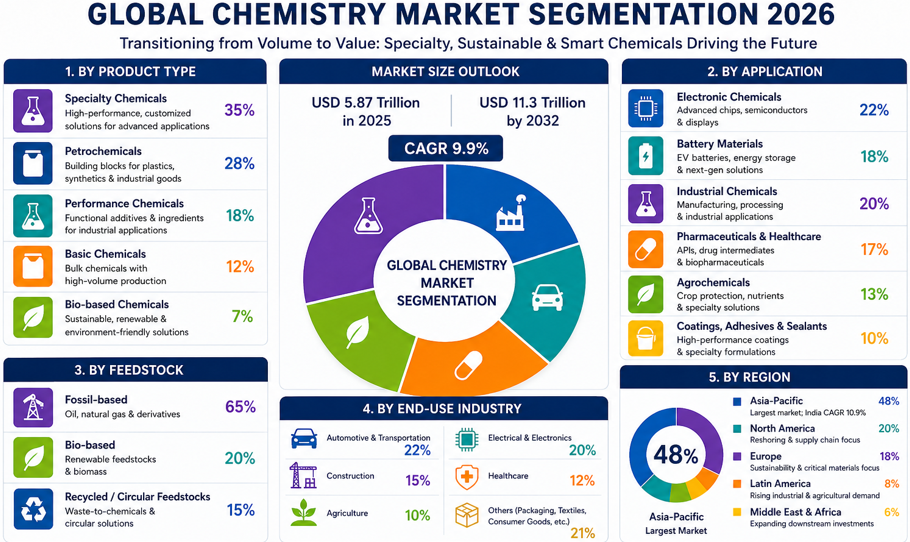
Market Insights of Chemistry in USA:
The United States chemical industry in 2027 is expected to exceed $820 billion in output, ranking among the top three globally. It employs over 1.1 million people and supports 4–6 million indirect jobs, contributing around 12–15% of manufacturing GDP and $150–170 billion in exports.
Annual investments include $25–30 billion in R&D and $15–20 billion in sustainability initiatives, while the sector accounts for 20–25% of industrial energy use.
Specialty chemicals lead with 40–45% share and 8–10% CAGR, followed by petrochemicals (25–30%) and basic chemicals (15–20%). Digitalization is expected to improve efficiency by 25–35% by 2030, while high-growth segments like semiconductor and EV battery chemicals are expanding at 10–15% CAGR, driving a shift toward high-value production.
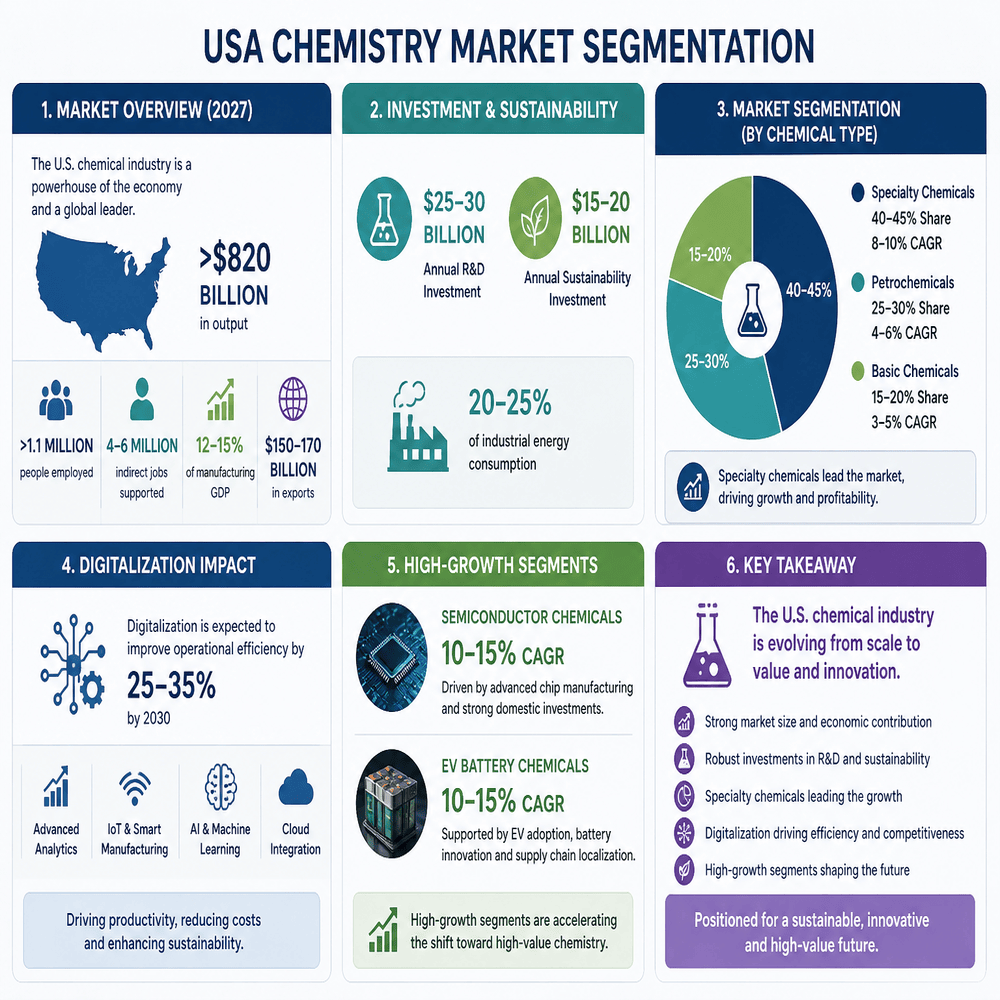
Market Insights of Chemistry in Europe:
The European chemical industry in 2027 is projected to exceed $750–780 billion in output, ranking among the top global producers. It employs over 1.2 million people and supports 5–7 million indirect jobs, contributing around 10–12% of manufacturing GDP and generating $120–140 billion in exports.
Annual investments include $20–25 billion in R&D and $18–22 billion in sustainability and decarbonization initiatives, with the sector accounting for 15–20% of industrial energy consumption.
Specialty chemicals dominate with a 45–50% market share and 7–9% CAGR, followed by petrochemicals (20–25%) and basic chemicals (15–20%). Bio-based and circular chemicals account for 10–15% and are expanding rapidly due to strict EU regulations.
Digitalization is expected to improve efficiency by 20–30% by 2030, while high-growth segments such as green hydrogen chemicals, EV battery materials, and sustainable polymers are growing at 9–13% CAGR, driving Europe’s transition toward a low-carbon, high-value chemical industry.
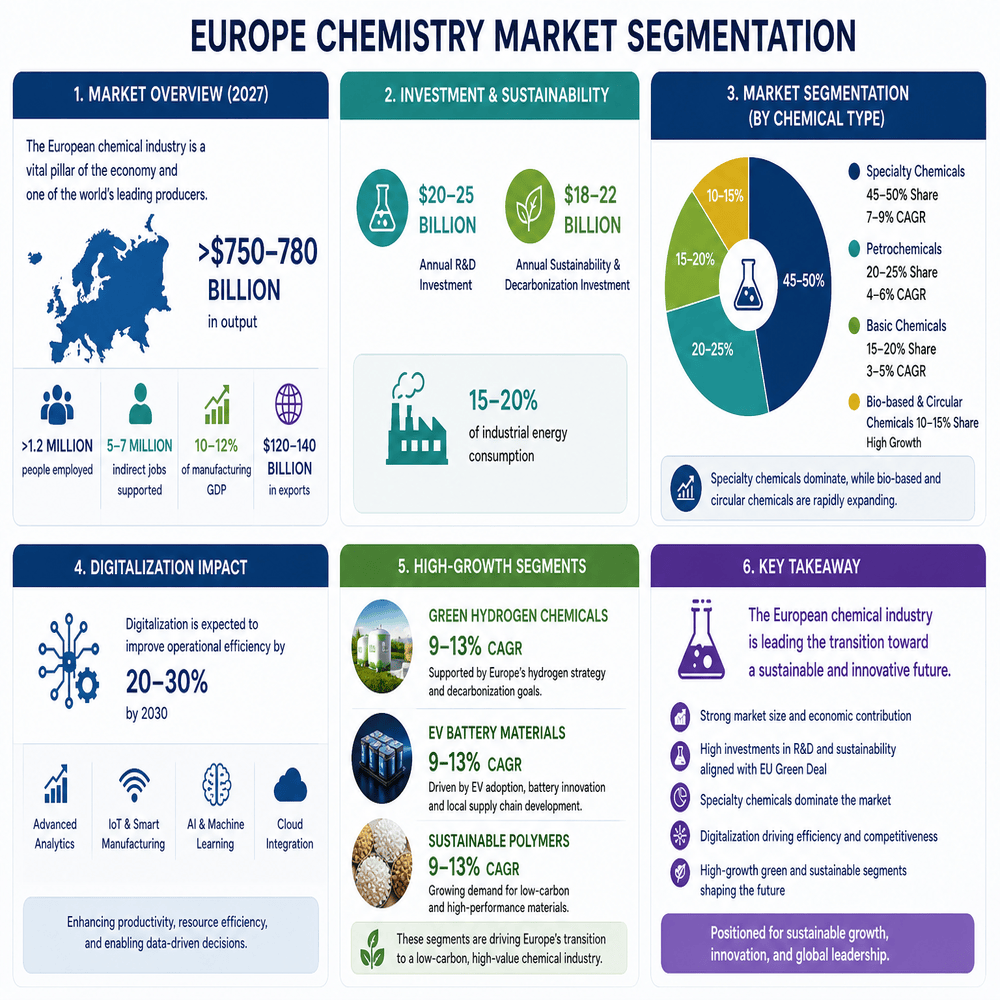
Market Insights of Chemistry in Middle East:
The Middle East chemical industry in 2027 is strongly driven by its vast petrochemical resources and strategic global position, making it a key supplier of feedstock and downstream chemicals. The region’s petrochemical market was valued at around $16.5 billion in 2024 and is projected to reach nearly $29.5 billion by 2033, growing at a 6.7% CAGR.
The industry is a major economic pillar across GCC countries, supported by large-scale industrial hubs in Saudi Arabia, UAE, and Qatar. It generates millions of direct and indirect jobs and plays a critical role in exports and industrial diversification under programs like Vision 2030. Chemical distribution alone was valued at about $3.0 billion in 2024, expected to reach $4.1 billion by 2033.
Investment is focused on downstream expansion, sustainability, and industrial diversification, with increasing adoption of digitalization, projected to grow from $362 million in 2024 to $572 million by 2033 (5.3% CAGR).
Specialty chemicals represent a growing segment, valued at $36.7 billion in 2024 and expected to reach $51.6 billion by 2033, driven by construction, oil & gas, and water treatment demand.
Overall, the Middle East is shifting from bulk petrochemicals to higher-value specialty chemicals, sustainability initiatives, and integrated supply chains, strengthening its global competitiveness.
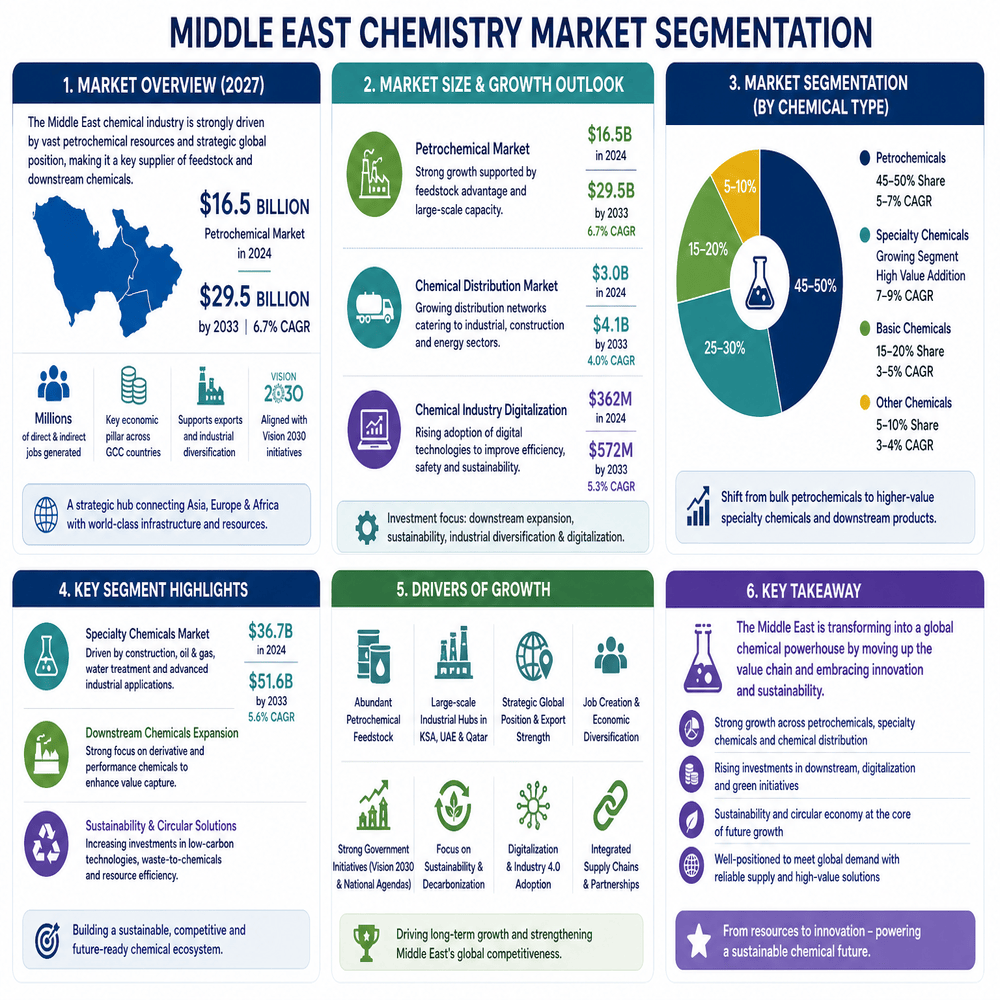
Market Insights of Chemistry in Asia Pacific:
The Asia-Pacific chemical industry in 2027 is projected to exceed $4.5–5 trillion, accounting for over 48–50% of the global market, making it the largest regional contributor worldwide. The sector employs millions of workers and supports a vast industrial ecosystem across manufacturing, agriculture, electronics, and construction.
The region is growing at a CAGR of 9–11%, led by countries like China, India, Japan, and South Korea. Exports remain strong, contributing over $1.5 trillion annually, supported by large-scale production capacity and cost advantages.
Annual investments include $40–60 billion in R&D and $30–50 billion in sustainability and clean technologies, with increasing focus on green chemistry and emissions reduction. The industry accounts for approximately 35–40% of global industrial energy consumption.
Specialty chemicals hold 35–40% share with 10–12% CAGR, while petrochemicals dominate with 30–35%, and basic chemicals contribute 20–25%. Bio-based and circular chemicals account for 5–10% and are rapidly expanding.
Digitalization is expected to drive 30–40% efficiency gains by 2030, while high-growth segments like semiconductor chemicals and EV battery materials are expanding at 12–18% CAGR, positioning Asia-Pacific as the global growth engine.
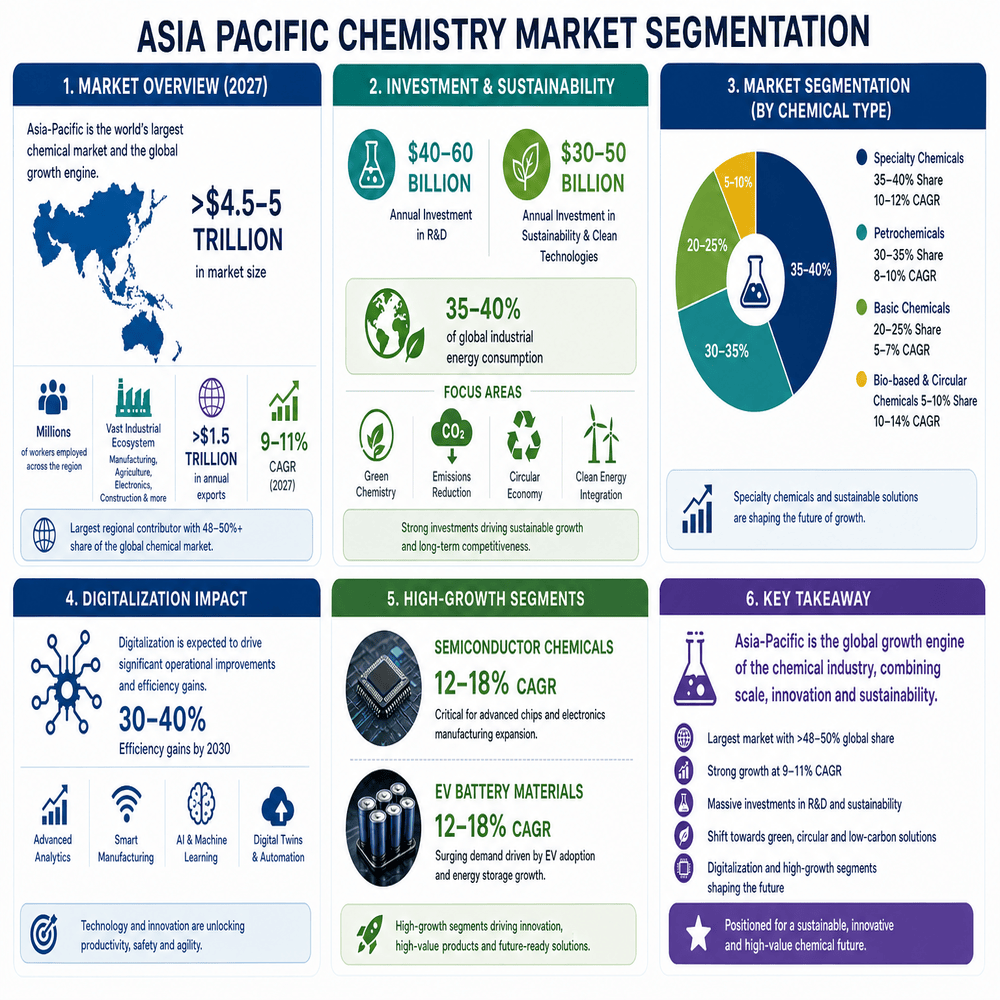
List of Journals:
Accounts of Chemical Research / Acta Chemica Scandinavica / Acta Chimica Slovenica / Chemistry Conferences / Advanced Functional Materials / Aldrichimica Acta / The Analyst / Analytica Chimica Acta / Chemistry Conferences 2020 Europe / Analytical and Bioanalytical Chemistry / Analytical Chemistry / Annual Review of Physical Chemistry / Applied Catalysis A: General / Chemistry Conferences / Applied Organometallic Chemistry / Chemistry Conferences / Applied Spectroscopy Reviews / Arkivoc (Archive for Organic Chemistry) / Australian Journal of Chemistry / Australian Journal of Education in Chemistry / Chemistry Conferences 2020 / Beilstein Journal of Organic Chemistry / Biochemical Journal / Bioconjugate Chemistry / Chemistry Conferences USA / Biomacromolecules / Biomedical Chromatography / Bioorganic & Medicinal Chemistry / Bioorganic & Medicinal Chemistry Letters / Chemistry Conferences Asia / Bulletin of the Chemical Society of Japan / Canadian Journal of Chemistry / Catalysis Science & Technology / Chemistry Conferences / Catalysts and Catalysed Reactions / Central European Journal of Chemistry / ChemBioChem / Chemistry Conferences 2020 Germany / Chemical Communications / Chemical News and Journal of Physical Science / Chemical Physics Letters / Chemistry Conferences / Chemical Science Review and Letters / Chemical Reviews / Chemical Science / Chemical Society Reviews / Chemische Berichte / Chemistry Education Research and Practice / Chemistry: A European Journal / Chemistry Letters / Chemistry of Materials / ChemistrySelect / ChemMedChem / Chemometrics and Intelligent Laboratory Systems / ChemPhysChem / ChemPlusChem / Chimica Oggi - Chemistry Today / Chemik Polski / Chemistry Conferences / Collection of Czechoslovak Chemical Communications / CrystEngComm / Dalton Transactions / Education in Chemistry / Energy and Environmental Science / Energy & Fuels / Environmental Chemistry / European Journal of Inorganic Chemistry / European Journal of Medicinal Chemistry / European Journal of Organic Chemistry / Faraday Discussions / Faraday Transactions / Geostandards and Geoanalytical Research / Green Chemistry / Helvetica Chimica Acta / Inorganic Chemistry / Inorganic Chemistry Frontiers / International Journal of Hydrogen Energy / Chemistry Conferences / International Journal of Quantum Chemistry / Ion Exchange Letters / JAAS Journal of Analytical Atomic Spectrometry / Journal of Agricultural and Food Chemistry / Journal of the American Chemical Society / Journal of AOAC INTERNATIONAL / Journal of Applied Polymer Science / Journal of Biological Chemistry / Journal of Biological Inorganic Chemistry / Journal of the Brazilian Chemical Society / Journal of Catalysis / Journal of Chemical Education / Journal of Chemical Information and Modeling / Journal of Chemical Physics / Journal of Chemical Sciences / Journal of the Chemical Society / Chemistry Conferences 2020 / Journal of the Chemical Society of Pakistan / Journal of Chemical Thermodynamics / Journal of Cheminformatics / Journal of Chemometrics / Journal of Chromatography / Journal of Cluster Science / Journal of Combinatorial Chemistry / Journal of Computational Chemistry / Journal of Electroanalytical Chemistry / Journal of Environmental Monitoring / Journal of Heterocyclic Chemistry / Journal of Mass Spectrometry / Journal of Materials Chemistry / Journal of Medicinal Chemistry / Journal of Molecular Structure / Journal of Molecular Structure: THEOCHEM / Journal of Natural Products / Journal of Organic Chemistry / Journal of Organometallic Chemistry / Journal of Physical Chemistry A / Journal of Physical Chemistry B / Journal of Physical Chemistry C / Journal of Physical Chemistry Letters / Journal of Polymer Science Part A: Polymer Chemistry / Journal of Polymer Science Part B: Polymer Physics / Journal of Radioanalytical and Nuclear Chemistry / Journal of the Royal Institute of Chemistry / Journal of the Electrochemical Society / Journal of Thermal Analysis and Calorimetry / Lab on a Chip / Langmuir / Liebigs Annalen / Macromolecules / Magnetic Resonance in Chemistry / Chemistry Conferences 2020 / Metallomics / Methods in Organic Synthesis / Microchimica Acta / Molbank / Molecular BioSystems / Molecular Physics / Molecules / Nano Letters / Natural Product Reports / Nature Chemical Biology / Nature Chemistry / Nature Materials / Nature Protocols / Chemistry Conferences / New Journal of Chemistry / Open Chemistry / Organic and Biomolecular Chemistry / Organic Letters / Organometallics / Perkin Transactions / Photochemical and Photobiological Sciences / Physical Chemistry Chemical Physics / Polish Journal of Chemistry / Polyhedron / Proceedings of the Chemical Society / RSC Advances / Revista Boliviana de Quimica / Revista de la Sociedad Venezolana Química / Scientia Pharmaceutica / Soft Matter / Spectroscopy Letters / Surface Science Reports / Chemistry Conferences 2020 / Synlett / Synthesis / Talanta / Tetrahedron / Tetrahedron Letters / Theoretical Chemistry Accounts / Zeitschrift für Naturforschung / Zeitschrift für Naturforschung B / Zeitschrift für Physikalische Chemie
List of Chemistry Societies
USA & Canada
Alpha Chi Sigma (ΑΧΣ) / American Association for Clinical Chemistry / American Chemical Society / American Crystallographic Association / Chemistry Conferences / American Institute of Chemical Engineers (AIChE) / American Institute of Chemists(AIC) / American Oil Chemists' Society / American Society of Brewing Chemists / American Society for Mass Spectrometry / Association of Analytical Communities (AOAC International) / Canadian Society for Chemical Technology (CSCT) / Canadian Society of Clinical Chemists - (CSCC) / Biochemical Society / Chemical Abstracts Service (CAS) / Chemical Heritage Foundation (CHF) / Chemical Institute of Canada (CIC) / Chinese-American Chemical Society / Faraday Society / The Electrochemical Society / International Mass Spectrometry Foundation / International Union of Crystallography / Iota Sigma Pi / Institution of Chemical Engineers (IChemE) / National Organization for the Professional Advancement of Black Chemists and Chemical Engineers / Royal Society of Chemistry (RSC) / Society of Chemical Industry (American Section) / Society of Chemical Manufacturers and Affiliates / Society of Cosmetic Chemists / Swedish Chemical Society / ACS Division of Analytical Chemistry / World Association of Theoretical and Computational Chemists / Subdivision of Chromatography and Separations Chemistry / Society for Analytical Chemists of Pittsburgh / Canadian Society for Mass Spectrometry / Canadian Society for Analytical Science and spectrometry
Europe
Association of Greek Chemists / Belgian Society of Biochemistry and Molecular Biology / Council for Chemical Research (CCR) / European Association for Chemical and Molecular Sciences / Chemistry Conferences / Danish Chemical Society / Federation of European Biochemical Societies / Gesellschaft Deutscher Chemiker (GDCh) / Hungarian Chemical Society / Institute of Chemistry of Ireland / International Union of Pure and Applied Chemistry (IUPAC) / Italian Chemical Society(SCI) / Polish Chemical Society / Royal Netherlands Chemical Society (KNCV) / Société Chimique de France / Society of Chemical Industry (SCI) / ANACHEM Association of Analytical Chemists / Division of Analytical Chemistry EuCheMS / German Association of Independent Testing Laboratories / Belgian Society for Mass Spectrometry / Czech Chemical Society / European Association for Chemical and Molecular Sciences / European Federation for Pharmaceutical Sciences / European Society for Separation Science Italian Chemical Society / Swedish Mass Spectrometry Society / Swedish Chemical Society / Chromatography and Electrophoresis Group of the Czech Chemical Society / German Chemical Society / Hungarian Society for Separation Science / Italian Society for Separation Science / Spanish Society for Chromatography and Associated Techniques / Slovenian Chemical Society / Slovenia Polish Chemical Society / Norwegian Chromatographic Group / Norwegian Chemical Society
Asia
Chemical Society Located in Taipei (CSLT) / Chemical Society of Japan (CSJ) / Chemical Society of Pakistan / Chemistry Conferences / Chinese Chemical Society (Beijing) (CCS) / Chinese Chemical Society (Taipei) (CSLT) / Chemical Research Society of India / Indian Chemical Society / Institute of Chemistry, Ceylon (Sri Lanka) / Japan Association for International Chemical Information / The Korean Chemical Society / Laboratory Robotics Interest Group / Analytical Chemistry Springboard / The Japan Society for Analytical Chemistry / Association of Environmental Analytical Chemistry of India / Indian Society for ElectroAnalytical Chemistry / Asian Network of Analytical Chemistry / Indian Analytical Instruments Association / Japan Analytical Instruments Manufacturers Association / Hong Kong Society of Mass Spectrometry / Federation of Asian Chemical Societies / Indian Society for Mass Spectrometry / Indian Society for Electro analytical Chemistry / The Japan Society for Analytical Chemistry / Chromatographic Society of India
Middle East
Iranian Chemists Association / Israel Analytical Chemistry Society / Egyptian Society of Analytical Chemistry / ChemistryConferences / Egyptian Society Of Analytical Chemistry / Leibniz Institute for Analytical Sciences / African Network of Analytical Chemists / Egyptian Chemical Society / Egyptian Society of Analytical Chemistry / Egyptian Society of Biochemistry and Molecular Biology / Israel Society for Analytical Chemistry / The Israeli Society for Mass Spectrometry / South African Chromatography Society
List of Chemistry Universities
USA
Massachusetts Institute of Technology (MIT) / University of California, Berkeley (UCB) / Stanford University / Harvard University / Chemistry Conferences / California Institute of Technology (Caltech) / University of California, Los Angeles (UCLA) / Northwestern University / Yale University / Princeton University / University of Texas at Austin / Georgia Institute of Technology / University of Michigan / Cornell University / University of Chicago / University of Illinois at Urbana-Champaign / University of Pennsylvania / Columbia University / University of California, San Diego (UCSD) / Purdue University / University of North Carolina, Chapel Hill / Carnegie Mellon University / Duke University / Johns Hopkins University / Pennsylvania State University / Rice University / Chemistry Conferences / Texas A&M University / The Scripps Research Institute (TSRI) / University of California, Davis / University of California, Santa Barbara (UCSB) / University of Minnesota / University of Washington / University of Wisconsin-Madison / Boston University / The Ohio State University / University of California, Irvine / University of Florida / University of Illinois at Chicago (UIC) / University of Massachusetts Amherst / Arizona State University / Michigan State University / New York University (NYU) / North Carolina State University / Rutgers University–New Brunswick / University of California, Riverside / University of Colorado Boulder / University of Maryland, College Park / University of Pittsburgh / University of Southern California / Washington University in St. Louis / Brown University / Case Western Reserve University / Emory University / Florida State University / Iowa State University / Northeastern University / University of Delaware / University of Notre Dame / University of Utah / Washington State University / Colorado State University / Chemistry Conferences / Rensselaer Polytechnic Institute / The University of Georgia / University of Houston / University of Virginia / Vanderbilt University / Virginia Polytechnic Institute and State University / Boston College / City University of New York / Indiana University Bloomington / University at Buffalo SUNY / The University of Arizona / University of Kansas / The University of Tennessee, Knoxville / Drexel University / Georgetown University / Lehigh University / University of Akron / University of Alabama / University of Connecticut / University of New Mexico / University of Rochester / University of South Carolina / University of Texas Dallas / Colorado School of Mines / Dartmouth College / Kansas State University / Louisiana State University / Tufts University / University of California, Santa Cruz / University of Iowa / University of Nebraska-Lincoln / University of South Florida / Baylor College of Medicine / Brandeis University / Clemson University / George Washington University / Kent State University / Stony Brook University, State University of New York / The University of Texas Southwestern Medical Center at Dallas / University of Central Florida
Europe
University of Cambridge / University of Oxford / ETH Zurich - Swiss Federal Institute of Technology / Chemistry Conferences / Imperial College London / EPFL - Ecole Polytechnique Federale de Lausanne / The University of Manchester / Technical University of Munich / UCL / RWTH Aachen University / Delft University of Technology / Durham University / Eindhoven University of Technology / Freie Universitaet Berlin / Humboldt-Universität zu Berlin / KU Leuven / KIT, Karlsruhe Institute of Technology / Ludwig-Maximilians-Universität München / Ruprecht-Karls-Universität Heidelberg / Technical University of Denmark / Technische Universität Berlin (TU Berlin) / The University of Warwick / Trinity College Dublin / The University of Dublin / Universitat de Barcelona / Université de Strasbourg / University of Amsterdam / University of Bath / University of Bristol / The University of Edinburgh / Aarhus University / University of Göttingen / Chemistry Conferences / KTH Royal Institute of Technology / Leiden University / Lomonosov Moscow State University / Lund University / Stockholm University / Technische Universität Dresden / University of Nottingham / Universidad Autónoma de Madrid / Complutense University of Madrid / Alma Mater Studiorum - University of Bologna / Universitat Autònoma de Barcelona / Friedrich-Alexander-Universität Erlangen-Nürnberg / Université Pierre et Marie Curie (UPMC) / University of Birmingham / University of Copenhagen / Ghent University / University of Glasgow / University of Groningen / University of Leeds / University of Liverpool
Asia
National University of Singapore (NUS) / The University of Tokyo / Nanyang Technological University, Singapore (NTU) / Chemistry Conferences / Peking University / Kyoto University / Tsinghua University / Seoul National University / KAIST - Korea Advanced Institute of Science & Technology / The Hong Kong University of Science and Technology / Fudan University / The University of Hong Kong / Osaka University / Tokyo Institute of Technology (Tokyo Tech) / National Taiwan University (NTU) / Shanghai Jiao Tong University / University of Science and Technology of China / Hanyang University / Hokkaido University / Korea University / Kyushu University / Nagoya University / Nanjing University / National Tsing Hua University / Pohang University of Science And Technology (POSTECH) / Sungkyunkwan University (SKKU) / The Chinese University of Hong Kong (CUHK) / The Hong Kong Polytechnic University / Tohoku University / Yonsei University / Chemistry Conferences / Zhejiang University / City University of Hong Kong / Dalian University of Technology / Ewha Womans University / Indian Institute of Science / Indian Institute of Technology Bombay (IITB) / Jilin University / King Abdullah University of Science & Technology (KAUST) / Universiti Malaya (UM) / Waseda University / Wuhan University / Beijing Institute of Technology / Chulalongkorn University / East China University of Science and Technology / Nankai University / National Chiao Tung University / Shanghai University / Sun Yat-sen University / Universiti Putra Malaysia (UPM) / Universiti Sains Malaysia (USM) / University of Chinese Academy of Sciences (UCAS)
Middle East
King Abdulaziz University / Khalifa University / Alfaisal University / Jordan University of Science and Technology / Chemistry Conferences / United Arab Emirates University / Qatar University / American University of Beirut / King Saud bin Abdulaziz University for Health Sciences / King Saud University / Lebanese American University / Suez Canal University / King Fahd University of Petroleum and Minerals / Beni-Suef University / Mansoura University / Kafrelsheikh University / American University in Cairo / Benha University / University of Béjaïa / Sidi Mohamed Ben Abdellah University / American University of Sharjah / Tanta University / University of Sharjah / Sohag University / Cairo University / Kuwait University / Mohammed V University of Rabat / University of Baghdad / Chemistry Conferences / Sultan Qaboos University / Ferhat Abbas Sétif University / University of Sfax / Alexandria University / University of Marrakech Cadi Ayyad / Fayoum University / University of Jordan / University of Tunis El Manar / University of Tlemcen / Ain Shams University / Assiut University / South Valley University / Imam Abdulrahman Bin Faisal University / University of Monastir / Helwan University / Université Hassan II de Casablanca / Zagazig University / Yarmouk University / Al-Azhar University / Minia University / Menoufia University / Badji Mokhtar University – Annaba / University of Constantine / University of Sciences and Technology Houari Boumediene / Hashemite University
List of Chemistry related Companies
USA
A. Schulman / Access Industries / AdvanSix / Afton Chemical / Air Products & Chemicals / Airgas / Alamanda Polymers / Chemistry Conferences / Albemarle Corporation / Allied Chemical and Dye Corporation / Allied Corporation / AlliedSignal / Amcol International Corporation / American Cyanamid / American Elements / American Potash and Chemical Company / American Vanguard Corporation / ANSAC / Archer Daniels Midland / Armor All / Ashland Inc. / Associated Oil Company / Axiall / Baltimore Chrome Works / Bergstrom Nutrition / Bio Pac Inc / Biopure / Buckman (company) / Cabot Corporation / Calgon Carbon / Caltex / Castrol / Celanese / Chemours / Chemtura / Chevron Corporation / Church & Dwight / Ciner Wyoming / Clorox / Columbia-Southern Chemical Corporation / Commercial Solvents Corporation / Conoco / ConocoPhillips / ConverDyn / Cooper Chemical Company / CRC Industries / Crompton Corporation / Cyclo Industries / Cytec Industries / Delta Carbona L.P. / Diamond Alkali / Dioxide Materials / Diversey, Inc. / Dow Corning / Dow Inc. / Drackett / DuPont / DuPont Central Research / Durcon / Dyno Nobel / Eastman Chemical Company / Ecolab / Eikos / Engelhard / ERHC / Esso / Ethyl Corporation / ExxonMobil / Ferro Corporation / Fireworks by Grucci / FMC Corporation / Frontier Energy Group / H.B. Fuller / FutureFuel / G. H. Nichols and Company / GCP Applied Technologies / Genovique Specialties Corporation / GFS Chemicals / W. R. Grace and Company / Great Lakes Chemical Corporation / Gulf Oil / Hachmeister-Lind / Haden Drysys / Halowax / Hercules Inc. / Hexion Inc. / Hoffman-Taff / Hooker Chemical Company / Hosokawa Micron Powder Systems / Houston Refining / Huntsman Corporation / IMC Globa / Innospec / INOLEX / International Flavors & Fragrances / S. C. Johnson & Son / K-Dow Petrochemicals / Kimble Chase / Koppers / Krebs Pigments and Chemical Company / Liquid Light / Lubrizol / LyondellBasell / Marathon Oil / Marion Merrell Dow / Martin Marietta Inc. / Matheson (compressed gas & equipment) / MDL Information Systems / Michigan Limestone and Chemical Company / Milchem / Millennium Chemicals / Mobil / Monsanto / Nalco Holding Company / NEPACCO / New Market Corporation / Northfield Laboratories / Nova Color Artists Acrylic Paint / Novadel-Agene / NutraSweet / Occidental Petroleum / Olin Corporation / OMNOVA Solutions / Pacific Coast Borax Company / Peak (automotive products) / Pemaco Maywood / Pennzoil / Pillsbury Chemical and Oil / Element Solutions / PPG Industries / Praxair / PROSOCO / Quaker Chemical Corporation / Rare Earths Facility / Rayonier Advanced Materials / Red Line Synthetic Oil Corporation / Resperion / Richman Chemical / Rochester Midland Corporation / Rohm and Haas / Chemistry Conferences / Royal Purple (lubricant manufacturer) / Searles Valley Minerals / Sensient Technologies / Seventh Generation Inc. / The Seydel Companies, Inc. / Sigma-Aldrich / Solenis / Solutia / Solvay Process Company / Standard Chemical Company / Stauffer Chemical / Stepan Company / Sterling Chemicals / STP (motor oil company) / Strem Chemicals / Sun Chemica / Swann Chemical Company / Symyx Technologies / T.H. Agriculture & Nutrition Co. / Texaco / Texize / Total Petrochemicals USA / Trammo / Trojan Powder Company / Tronox / Union Carbide / United Nuclear / United States Industrial Alcohol Company / Univar Solutions / Vanadium Corporation of America / Vantage Specialty Chemicals / Velsicol Chemical Corporation / Versum Materials / Vulcan Corporation / WD-40 Company / Zyvex Technologies
Europe
i3 Membrane GmbH / instrAction GmbH / Pyrolyx AG / Syngulon SA / Oxford Nanopore Technologies / Coldplasmatech GmbH / Cytosurge AG / Chemistry Conferences / NanoSaar AG / Elementar Analysensysteme GmbH / BIOINICIA / Abberior Instruments GmbH / Beneq / BRAIN AG / Ceritech AG / COVENTYA GmbH / De Smet Engineers & Contractors SA / DexLeChem Gmb / Faradion Ltd. / G7 Therapeutics AG / GlycoUniverse GmbH & Co KGaA / Hydrogenious Technologies GmbH / it4ip s.a. / Li-Tec Battery GmbH / Namos GmbH / Nanopartica GmbH / Next-Tip S.L. / Novamem LLC / Profector Life Sciences Ltd / rhd instruments GmbH & Co.KG / SPINOMIX SA / SunCoal Industries GmbH / sunfire GmbH / SwissLitho AG / Chemistry Conferences / ThalesNano Nanotechnology Inc / Thin Film Electronics ASA / IneraTec GmbH / StoREgio Energiespeichersysteme e.V. / Hermann Römmler-Kunststofftechnik GmbH & Co. KG / Ilmsens GmbH / Plasmion GmbH / Microdyn-Nadir GmbH / Nyatec / Orege SA / Jet Metal Technologies / Atlantium Technologies Ltd. / Ergosup / Allegro Technologies Ltd. / Nanon A/S / Avantes B.V. / Concentris GmbH / Amminex A/S / Chromafora AB / Insplorion AB / Accurion GmbH / Acutance Scientific Ltd. / Aurea Technology / Biolin Scientific / BioNavis Ltd / Capres A/S / Bionica / NanoVation GS / Hielscher Ultrasonics GmbH / Aquamarijn Micro Filtration BV / Multicoats / Nanomend / NanoScan AG / Filtrox AG / NANOVIS GmbH / NiTech Solutions Ltd. / Noivion S.r.L. / Scriba Nanotechnologie S.r.L. / XanTec Bioanalytics GmbH / Xenocs / Sphere Fluidics Ltd / Infinitesima Ltd / Nafici / Gasera Ltd. / Biolan Microbiosensores S.L. / Hydrokemos / Kerionics / Kromek Ltd / Magnomics / Neozeo AB / Nextsense GmbH / Millidrop / CustoMem / Imperial College London / CatalySystems Ltd. / Helbio S.A. / Kerecis / Menlo Systems GmbH / Climeworks AG / Jenacell GmbH / Viking Advanced Materials GmbH / AMSilk GmbH / amynova polymers GmbH / Lithoz GmbH / Recyclatech Group Ltd. / Nanogate / Nano GmbH / Mathym
Asia
BASF / DowDuPont / SINOPEC / SABIC / Ineos / Formosa Plastics / ExxonMobil / LyondellBasell / Mitsubishi Chemical / LG Chem / Air Liquide / Reliance Industries / The Linde Group / Toray Industries / AkzoNobel / Evonik Industries / Covestro / Braskem / PPG Industries / Sumitomo Chemical / Lotte Chemical / Shin-Etsu Chemical / Solvay / Mitsui Chemicals / Praxair / Yara International / Lanxess / Bayer / Chemistry Conferences / DSM / Asahi Kasei / Eastman Chemical / Arkema / Syngenta / Chevron Phillips Chemical / Borealis / Indorama Ventures / SK Innovation / Huntsman / Air Products & Chemicals / Ecolab / Westlake Chemical / Wanhua Group / Sasol / Mosaic / PTT Global Chemical / Tosoh / DIC / Hanwha Chemical / Clariant / Chemistry Conferences / Sineo Microwave Chemistry Technology Co., Ltd / Buchiglas China Corp / Taixing WTR Chemical Plant / Skyray Instrument Inc / L & W Optics Electronics Co., Ltd / HB Optical Technology Co. Ltd / Beijing Rayleigh Analytical Instruments Corp / Tianjin Bonna Agela Technologies Cs / Shanghai Xu Hang Pharmarcetical Co. Ltd / Infinium Pharmachem Pvt. Ltd / TTL Technologies Pvt. Ltd / AIMIL LTD / Electrolab / Fine Care Biosystems / Netel India Limited / Agilent Technologies India Pvt. Ltd / Hitachi High-Tech Science Corporation / T&D Corporation / Alfa Mirage Co., Ltd / Hamamatsu Photonics K.K / BDH Middle East LLC / ALS Arabia
Middle East
Enduro Systems Inc. / Arabian Explosives Company LLC / Hydromagx Technology Group / Korvan Middle East LLC / Oscar Lubricants LLC / Ducast Factory LLC / Al Reshad Scientific Equipment LLC / Limbada Steel / Hana Gulf LLC / Ocma Emirates Industries / Modern Cladding Industry LLC / Chemistry Conferences / Symrise Middle East Limited / Trident Precision Dies & Plastic Caps Mfg LLC / Gotrade LLC / Petrochem Performance Chemicals LLC / Belleli Energy FZE / RishiChem Mideast Limited / Al Mubarak Agro Chemicals Est / Al Khaleej Bitumen Company (KHABCO) / Trice Chemicals IND LLC / Winchem Middle East Chemical Industries LLC / Sadara Chemical Company / WACKER CHEMICALS MIDDLE EAST / Midpharma – Middle East Pharmaceutical & Chemical Industries & Medical Appliances P.L.C / Eastern Petrochemical Company – Sharq / Somicon Middle East FZC / Tytan Organic Chemicals (ME) FZC / Trice chemicals / WEICON Middle East L.L.C / House of Chemicals Middle East FZE / Petrochem Middle East FZE / SACHLO / ADDAR CHEMICAL COMPANY ( ACC ) / Al Nahda International Chemicals Company / Emirates national chemicals company emochem / Chemanol / Recon Chemicals / BASF / Chemistry Conferences / man chemical / Synthomer / Polychem Middle East, Ajman / Envirocon / Nalco Saudi Company Limited / Cortec / Ar Razi Saudi Methanol / The Dow / Maaden Ammonia / Mapei Construction Chemicals LLC / Soda - Arabian Alkali Company / Hira Chemicals / Colmef Construction Chemicals
Peers Alley Media, the global leader of international conferences has been successfully delivering annual conferences, which are the meeting ground for industry stalwarts such as international speakers, researchers, educators and stakeholders from around the world. These annual conferences catering across the spectrum of chemistry like directors, presidents & CEO’s from companies, chemists, academic groups, directors from pharmaceutical companies. Laboratory scientists who identifies, quantifies, analyzes or tests the chemical or biological properties of compounds or molecules or who manages these laboratory scientists. Chemical researchers, molecular diagnostics, clinical laboratories, health care industry, quantitative analysts, qualitative analysts, editorial board members, students, faculty members, chemical instrument vendors, professors and students from academia in the field of analytical and bioanalytical sciences. Delegates from various pharma & instrumental companies and an extraordinary community of thoughtful leaders from 50+ countries around the world.
In addition to the conference agenda, Adv. Chemistry 2027 will be hosting conference workshops, symposia intended to achieve learning outcomes for participants through deep discussions on the latest trends, tools, and developments in this sector. Adv. Chemistry 2027 encourages proposals and submissions on variety of topics revolving around the present and future of pharma & chemistry.
Rainers Hotel Vienna
Gudrunstraße 184, 1100 Wien, Austria
Vienna, the capital of Austria, is a city renowned for its imperial grandeur, rich cultural heritage, and timeless elegance. Often called the “City of Music,” Vienna harmoniously blends its historic legacy with a modern, sophisticated lifestyle, making it one of Europe’s most enchanting destinations.
As the former heart of the Habsburg Monarchy, Vienna has a history spanning over two millennia. Magnificent landmarks such as Schönbrunn Palace, Hofburg Palace, and St. Stephen’s Cathedral stand as symbols of its imperial past. The city’s grand boulevards, especially the famous Ringstrasse, showcase stunning architecture from the Baroque, Gothic, and Renaissance periods.
Vienna is a paradise for music and art lovers. It has been home to legendary composers like Wolfgang Amadeus Mozart, Ludwig van Beethoven, and Johann Strauss II. The city continues to celebrate this legacy through world-class venues such as the Vienna State Opera and the Musikverein. Art enthusiasts can explore renowned institutions like the Belvedere Palace and the Albertina Museum, which house masterpieces by artists including Gustav Klimt and Egon Schiele.
Viennese cuisine is equally delightful, offering traditional dishes such as Wiener Schnitzel, Sachertorte, and Apfelstrudel. The city’s historic coffee houses, like Café Central, provide a cozy atmosphere where visitors can enjoy coffee culture that dates back centuries.
Vienna’s charm extends to its elegant public spaces and lively districts. Squares such as Stephansplatz and Karlsplatz are bustling with activity, while neighborhoods like Neubau and Leopoldstadt offer trendy boutiques, markets, and vibrant nightlife.
Despite its deep historical roots, Vienna is a forward-looking city known for its high quality of life, efficient public transport, and innovative spirit. This seamless blend of tradition and modernity gives Vienna a unique allure that captivates visitors from around the globe.
From its imperial palaces to its melodic streets, Vienna embodies the cultural and artistic soul of Austria. Whether attending a classical concert, exploring grand museums, or savoring its culinary delights, Vienna promises an unforgettable experience for every traveler.


Chemists 24%
Faculty Members 22%
Research Scientists 12%
PhD Scholars 10%
Pharmaceutical & Drug Development Professionals 13%
Materials Science & Nanotechnology Industry Experts 9%
R&D Managers Innovation Heads Product Development Teams 5%
Biotechnology & Life Sciences Professionals 5%



“Stay updated with the latest insights, highlights, and key takeaways from global conferences and business meetings.”
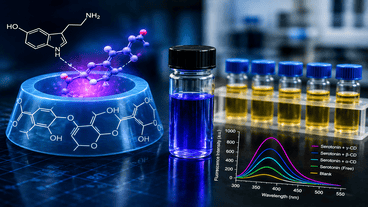
A sensitive and robust spectrofluorimetric method for the determination of serotonin (5-HT) in human urin...
View More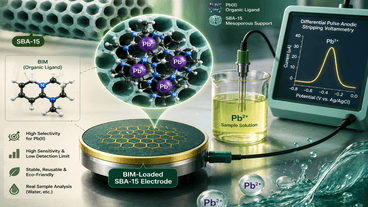
The electrochemical sensor was developed by physical immobilisation of bis-indolylmethane (BIM) derivativ...
View More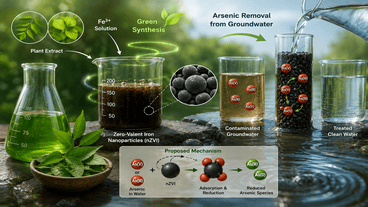
The present study presents the synthesis and characterisation of nanoscale zero-valent iron particles tha...
View More
Objectives: The synthesis of stereochemically and skeletally diverse nature-inspired products provides a ...
View More
Microplastics (MPs) have emerged as a significant public health concern due to their widespread presence ...
View More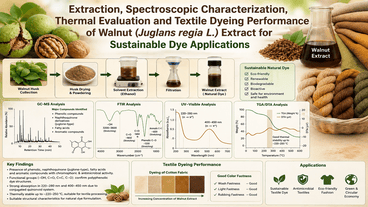
As global demand for sustainable and eco-friendly dyes grows, researchers are focused on finding natural ...
View More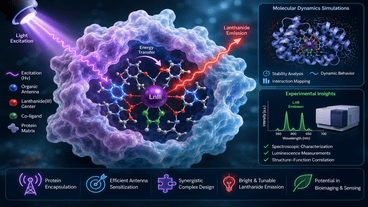
Globular proteins provide just the right sized nanocavity, ideal for encapsulating specific ligands and t...
View More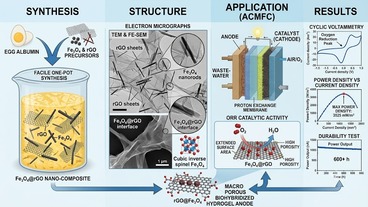
Fe3O4@rGO nanocomposites were amalgamated via a facile and simple bio hybridized method and its catalytic...
View More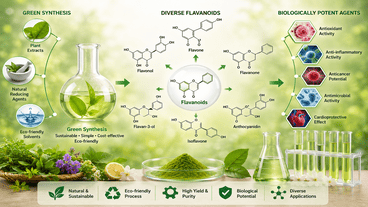
Heterocyclic compounds are the most often encountered scaffolds in pharmaceutically relevant substances a...
View More
The rapid appearance of semi-synthetic cannabinoids (SSCs) in consumer CBD products presents an emerging ...
View More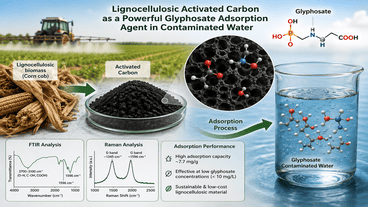
One of the main contaminants in water sources is glyphosate, a broad-spectrum, non-selective herbicide wh...
View More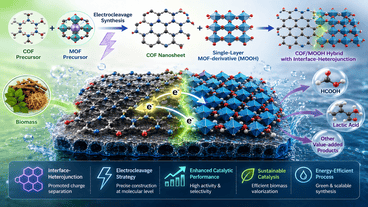
A molecular-level hierarchical interface-heterojunction (IHJ) electrode of hybrid COF/single-layer MOF-de...
View More